Why Haenyeo Have Stronger Knees Despite Grueling Diving [Health Check]
- Input
- 2026-11-25 08:27:54
- Updated
- 2026-11-25 08:27:54
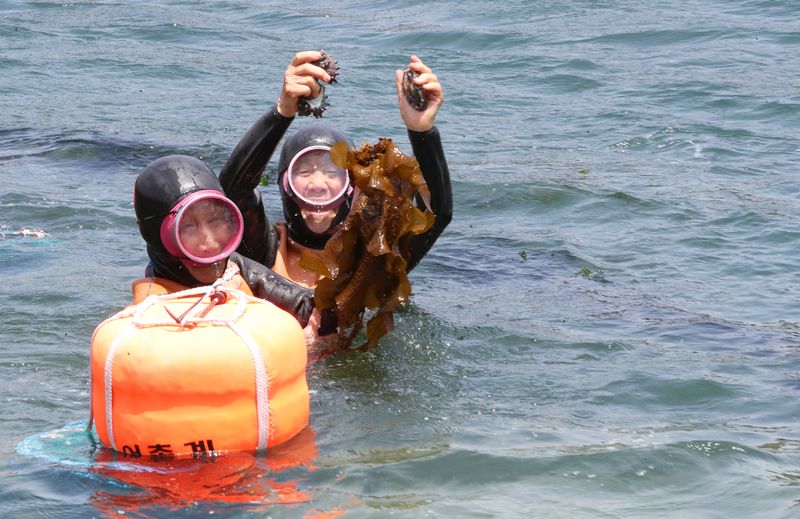
[Financial News] A study has found that moving in water may help protect the knee joints. A joint research team from Samsung Medical Center and Jeju National University Hospital analyzed 16,763 women with knee osteoarthritis and found that Jeju haenyeo had a 14% lower risk of joint replacement surgery than women in the general population.
Researchers from the Center for Clinical Epidemiology at Samsung Medical Center and the Haenyeo Health Research Center at Jeju National University Hospital analyzed clinical data from women aged 50 or older who received care for knee osteoarthritis at Jeju National University Hospital from 2004 to 2023. Of these women, 2,390 (14.2%) were haenyeo. The researchers compared the age at first treatment for knee osteoarthritis, the risk of joint replacement surgery, and recovery after surgery among haenyeo and women in the general population.
Lower Surgery Risk and Faster Recovery
The average age at which haenyeo first sought care for knee osteoarthritis was 69.4, 2.8 years older than that of women in the general population (66.6). The finding that their risk of total knee replacement was 14% lower was based on an analysis that took into account factors including the affected areas and severity of osteoarthritis, as well as comorbidities. Among patients with the most severe, grade 4 disease on radiographic examination (K-L grade 4), the risk reduction was even greater, at 22%.
There was also a difference in recovery after surgery. An analysis of 3,989 patients who underwent joint replacement surgery found that although the haenyeo were older and had a greater burden of comorbidities than women in the general population, their risk of readmission within 30 days of surgery was 30% lower.
Buoyancy Reduces Strain, Resistance Builds Strength
The research team focused on the haenyeo’s long years of underwater activity. Without breathing equipment, haenyeo hold their breath for about 50 seconds to two minutes at a time and dive to depths of 7 to 20 meters, repeating this dozens of times a day. They do considerable physical labor, including moving continuously underwater and hauling up heavy nets.
The researchers explained that water’s buoyancy may reduce the strain on joints, while its resistance may help build muscle. They said the strength and cardiorespiratory endurance developed through years of underwater activity may have had a positive effect on joint stability and recovery after surgery.
However, this was an observational study analyzing past clinical data, so it cannot establish that underwater activity directly slowed the progression of knee osteoarthritis. The research team also explained that the difference in age at first treatment does not mean there was a difference in the actual age at which the disease began.
Joo Jin-deok, a professor of neurosurgery at Jeju National University Hospital, said, “Jeju haenyeo are a very important study population for examining the effects of prolonged, repeated underwater activity on the human body,” adding, “This study compared the progression of knee osteoarthritis and recovery after surgery in haenyeo and women in the general population, providing new evidence to help understand the effects of long-term occupational physical activity on health.”
Cho Ju-hee, director of the Center for Clinical Epidemiology at Samsung Medical Center, added, “Large-scale clinical data confirmed that haenyeo who have engaged in underwater activity for many years have a lower risk of joint replacement surgery than women in the general population,” and “Further research is needed to explore how underwater exercise can be used to prevent and manage knee osteoarthritis in older women.”
The study was conducted through collaboration between the Haenyeo Health Research Center at Jeju National University Hospital, which opened in 2024, and the Center for Clinical Epidemiology at Samsung Medical Center. The findings were published in Occupational Medicine, an international journal in the field of occupational and environmental medicine.
[email protected] Jeong Myeong-jin, Medical Correspondent Reporter