U.S. Military Weighs 'Decapitation Operation' Targeting Iran's Leadership ... Opponents Warn Talks Could Become Harder
- Input
- 2026-11-25 06:59:57
- Updated
- 2026-11-25 06:59:57
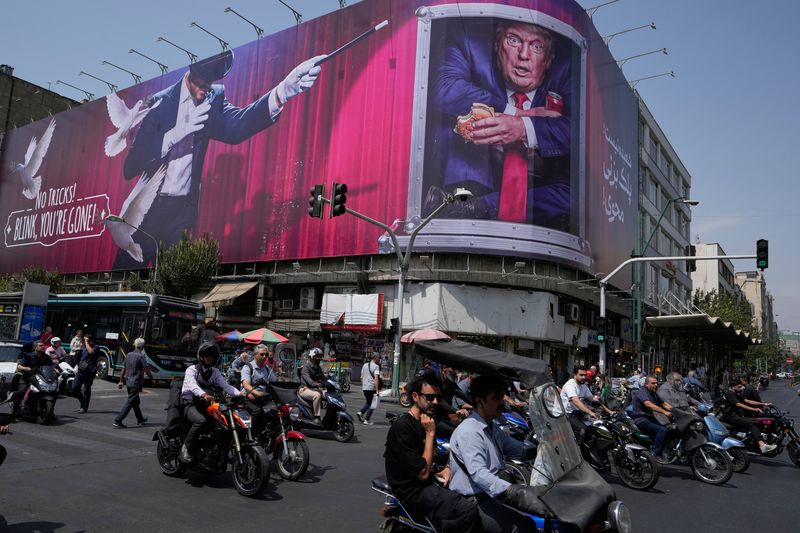
[Financial News] NBC reported on the 24th (local time) that the U.S. military is also considering a “decapitation operation” to eliminate Iran’s top leaders in preparation for a possible resumption of attacks against Iran.
A Trump administration official and a person familiar with the matter told NBC that discussions are underway within the U.S. military about whether to target Iran’s top leaders.
U.S. government officials who support such an operation are said to emphasize that it could be a way to end the war by eliminating Iran’s hard-liners and declaring victory. With the war dragging on, President Trump also needs an exit strategy.
Using a decapitation operation as an exit strategy ... sending a clear message to the next leadership
Another argument in favor is that the operation would send the next leadership a clear message that the United States can find, target and eliminate Iranian leaders at any time.
At a press conference on the 20th, President Trump stressed, “We know a lot about what is happening in Iran. We know everything they say. We know who they are and where they are.”
There is also substantial opposition to the operation. Although the U.S. military succeeded in eliminating Iran’s Supreme Leader Ali Hosseini Khamenei on the first day of the war, the leadership that his son Mojtaba took over has become more hard-line.
Other risks cited include the possibility that the leaders who are eliminated could acquire a “martyr” image, concerns that the other side may not trust the United States in subsequent peace negotiations, and the risk that senior U.S. officials could be exposed to Iranian retaliatory attacks.
Scott Bessent, the U.S. Treasury secretary who is leading economic sanctions against Iran, reportedly moved his residence to a military base in the Washington, D.C., area after threats to his personal safety emerged, according to recent media reports.
NBC reported that a decapitation operation targeting Iran’s top leadership is not a new option, but is being discussed again as President Trump considers resuming attacks on Iran to end the war.
One official said, “President Trump has many options at his disposal, and he will make the best decision possible to ensure that Iran can never possess nuclear weapons.”
Trump: “We’ll See What Happens in the New Year”
After the Asia-Pacific Economic Cooperation (APEC) summit on the 19th, President Trump told the media in an interview that “we have time,” signaling there was no rush to resume airstrikes against Iran, while also saying, “We’ll see what happens after the new year begins.”
If the U.S. military carries out another operation to decapitate Iran’s top leadership, Mojtaba Khamenei is likely to be the top target. He is reportedly seriously injured in the U.S. airstrike that killed his father and has not appeared in public to date.
Eliminating Mojtaba, who continues to live in seclusion, would require detailed and reliable “highly precise intelligence.” The United States is said to use both its own intelligence and information from Israel when selecting targets inside Iran.
Mossad chief Roman Gofman was understood to have visited the United States last week and shared information on Iran in meetings with senior officials, including CIA Director John Ratcliffe.
[email protected] Lee Seok-woo, international affairs correspondent Reporter