U.S. to Announce 'Overcapacity Tariffs' as Early as Today... Foreign Media Expect 15% Cap for South Korea to Hold
- Input
- 2026-11-25 06:52:59
- Updated
- 2026-11-25 06:52:59
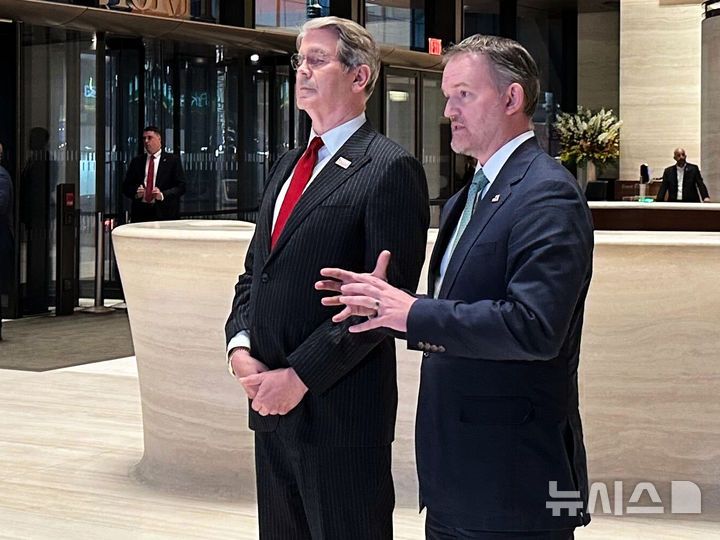
[Financial News] The U.S. media have reported that the Office of the United States Trade Representative (USTR) may announce the results of its investigation into “overcapacity tariffs” on 16 economies, including South Korea, as early as the evening of the 24th (local time).
That would be the morning of the 25th in Korea. The prevailing view is that South Korea’s combined tariff rate, including the 12.5% “forced-labor tariff” introduced last July and the new tariff, will not exceed the 15% cap.
The U.S. political news outlet Politico reported that the results of the Section 301 investigation the USTR has been conducting into 16 economies, including China, the European Union (EU), South Korea and Japan, would be announced that evening.
The U.S. Wall Street Journal (WSJ) also reported that the results are expected as early as this week.
If the U.S. media reports are accurate, the USTR is expected to announce plans to impose tariffs as early as that evening and finalize them after gathering responses from the targeted economies.
Announcing the findings could divert attention from the controversy over the Jensen Huang scandal.... WSJ
The WSJ reported that China is more likely than several other countries to face higher tariffs. The United States has taken issue with the Chinese government’s broad industrial support policies.
The announcement may also include a provision allowing tariffs to be raised if the overcapacity problem worsens or there is no change in policy, reports said.
The WSJ noted that announcing the findings could divert attention from the controversy surrounding allegations that advanced artificial intelligence (AI) chips made by NVIDIA were smuggled into China. The possibility of involvement in the allegations has been raised not only in connection with NVIDIA CEO Jensen Huang but also President Donald Trump.
The USTR opened a Section 301 investigation in March, saying that 16 economies had created an unfair environment for U.S. companies through overproduction supported by subsidies and other measures.
It also opened an investigation in March into 60 economies over imports of products made with forced labor or inadequate related regulations, announced tariffs in June and finalized them in July. The tariff on South Korea was 12.5%.
Last year, South Korea pledged $350 billion in investment in the United States and reached an agreement to lower tariffs from 25% to 15%. Since the United States has said it will honor the existing agreement, the prevailing view is that even if overcapacity tariffs are imposed, the combined rate with the 12.5% forced-labor tariff will not exceed 15%.
The WSJ also forecast that “South Korea, Japan and the EU are likely to face tariffs of 15% or less.”
Reuters also cited sources as saying that the 15% tariff cap for South Korea is expected to be honored.
Digital regulation probe could be a wild card in Section 301 investigation ... Republican lawmakers’ claims
However, a potential USTR decision to launch a Section 301 investigation over digital regulations is a wild card.
The U.S. political news outlet Politico reported that the USTR is considering Section 301 investigations into the digital regulations of South Korea, the EU and Australia. There are also concerns that if an investigation leads to additional tariffs, uncertainty over the “15% tariff cap” could grow.
Politico reported that 18 Republican lawmakers, including Adrian Smith, chair of the Trade Subcommittee of the U.S. House Committee on Ways and Means, recently claimed in a letter to the USTR that South Korea’s digital regulations could cause the U.S. economy losses of up to $525 billion (705 trillion won) over the next 10 years.
The figure appears to have been cited from an estimate put forward in October last year by the Competere Foundation, a small U.S. nonprofit.
U.S. business groups also sent a letter to the USTR early this month, arguing that three bills being advanced in South Korea, including the Online Platform Transaction Fairness Act, could discriminate against U.S. companies.
Section 301 of the Trade Act of 1974 allows the U.S. government to take retaliatory measures, including tariffs, when it determines that a foreign government’s trade practices are unfair. The president has broad discretion over investigations and measures under Section 301.
[email protected] Lee Seok-woo, international affairs correspondent Reporter