U.S. to Announce New Tariffs as Early as This Week ... U.S. Moves to Crack Down on Overproduction
- Input
- 2026-11-24 22:42:40
- Updated
- 2026-11-24 22:42:40
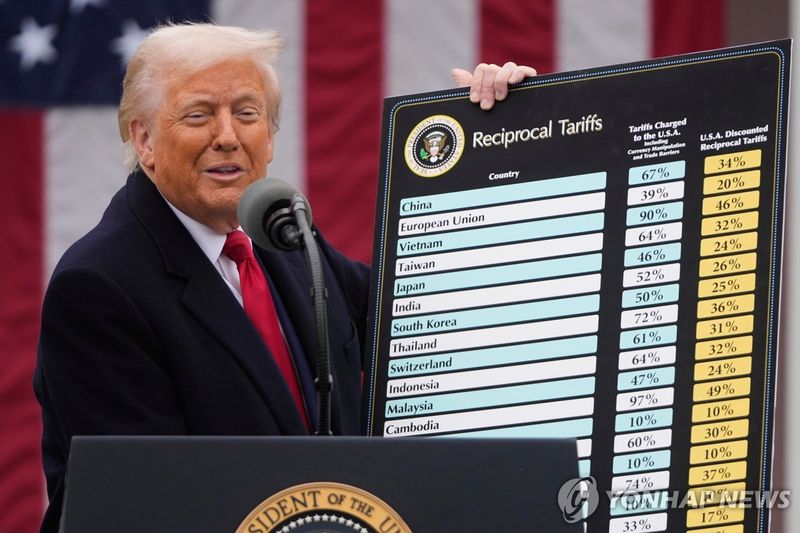
【Financial News, New York — Correspondent Lee Byung-chul】 The administration of U.S. President Donald Trump is pursuing tariff increases on some countries, including China. It says government support, such as subsidies for domestic industries, has led to overproduction and harmed U.S. companies. The overall tariff rates for countries that have trade agreements with the United States, including South Korea, Japan and the EU, are expected to be set at 15% or less.
The Wall Street Journal (WSJ), citing multiple people familiar with the matter, reported on the 24th (local time) that Jamieson Greer, the U.S. trade representative, is expected to announce the results of investigations into industrial subsidies in China, the EU and 14 other countries as early as this week.
Greer has long argued that industrial subsidies and various support policies by governments have led to overproduction. He says companies receiving government support are weakening the competitiveness of U.S. manufacturers by supplying large quantities of low-priced products to global markets.
The new tariffs are expected to apply to most products imported from dozens of countries, including South Korea, China, Japan and the EU’s 27 member states. Steel, aluminum and automobiles, among other products already subject to separate tariffs on national security grounds, are likely to be exempt.
The final tariff rates have not yet been set. The Trump administration has said it would impose tariffs at levels similar to those in place last year, before the U.S. Supreme Court struck down the existing tariffs in February. The new tariffs would effectively restore last year’s system of reciprocal tariffs.
Tariff rates for countries that have trade agreements with the United States are expected to be determined by the terms of their existing agreements. The WSJ reported that the overall tariff rates for South Korea, Japan and the EU are likely to be set at 15% or less. Vietnam and India, among others, are expected to face higher rates under their trade agreements with the United States.
China is likely to face higher tariffs than other countries. The Trump administration believes China’s large-scale industrial subsidies are disrupting the global economic order.
The Trump administration is also reportedly preparing a provision allowing it to raise tariffs further if industrial overproduction in various countries worsens or if those countries do not change their industrial policies in future negotiations with the United States.
The new tariffs are likely to be imposed in addition to the tariffs related to forced labor announced last July. At the time, the Trump administration decided to impose tariffs of 10% to 12.5% on 60 economies that had not blocked trade in products made with forced labor. Legal challenges to the measures are currently underway.
The WSJ also said the tariff announcement could help divert public attention from the scandal surrounding NVIDIA CEO Jensen Huang.
[email protected] Correspondent Lee Byung-chul Reporter