[Editorial] Jensen Huang’s ‘Comeback’: Structural Risks in the AI Industry Remain
- Input
- 2026-11-24 18:29:12
- Updated
- 2026-11-24 18:29:12
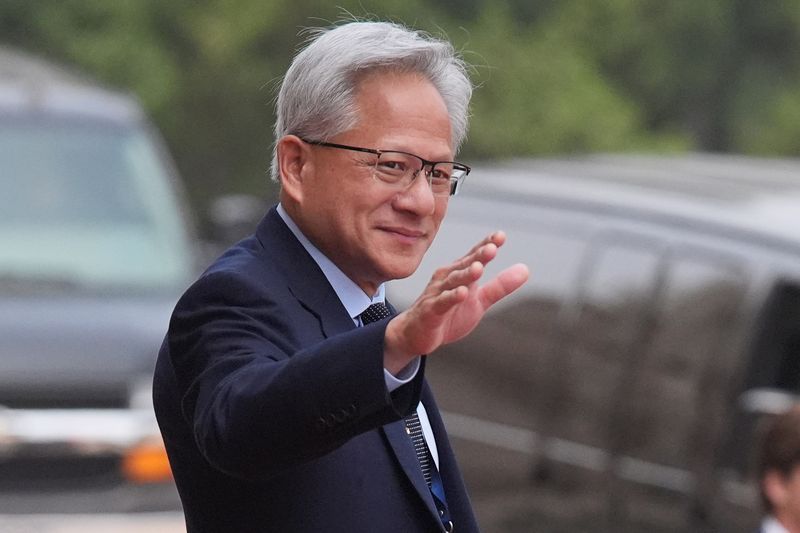
The circumstances surrounding Huang’s return have once again underscored the standing of the AI industry in the global economy. U.S. President Donald Trump reportedly made an unusual appearance by phone at the board meeting of a private company and called for Huang’s return. A sense of crisis that NVIDIA’s faltering could hurt not only U.S. dominance in AI but the broader economy likely played a role. Yet the fact that the markets and growth engine of the world’s largest economy depend so heavily on a single company and a single executive is troubling in itself.
Nor can the matter be considered settled simply because Huang has returned. Democrats are preparing to investigate thoroughly the Trump administration’s intervention and allegations that NVIDIA violated export controls on sales to China. There is no shortage of critical voices within the Republican Party, either. Huang said, “I’ll be a better CEO the second time around,” but political and legal uncertainties surrounding him remain.
It is also important to recognize that the recent plunge in global stock markets was not merely a temporary shock stemming from Huang’s personal scandal. Wall Street had repeatedly warned, even before his resignation, that AI companies’ shares were overvalued. Big Tech companies are pouring in enormous sums, but doubts remain about whether they can generate returns commensurate with that investment.
Concerns persist that a circular investment structure—in which AI companies invest in one another and buy one another’s products and services—is inflating actual demand. The burden of large-scale borrowing and financing costs for data center construction is also substantial. Even Elon Musk, Tesla’s CEO, who has strongly backed Huang’s return, recently warned that delays in bringing data centers online could leave AI companies facing a severe cash crunch next year.
South Korea should take this situation especially seriously. The Korean economy is becoming increasingly dependent on semiconductor exports, while AI and semiconductor stocks are now driving the stock market as well. If the global AI investment boom cools, exports and capital investment could contract and growth could plunge. Foreign capital outflows could compound the problem, adding to instability in financial and foreign-exchange markets.
The government should thoroughly assess the impact that a slowdown in AI investment could have on the domestic real economy and financial markets, and prepare a response. It also needs to make advance preparations for the possibility that the Jensen Huang affair could lead the United States to tighten semiconductor export controls on China. Problems of financial weakness in other industries, obscured by strong semiconductor exports, are already serious. Efforts to restore the competitiveness of key industries and diversify exports need to move faster.
Semiconductor companies should make the most of this long-awaited opportunity while closely monitoring the investment capacity of global Big Tech companies and shifts in medium- and long-term demand. They also need to work to reduce their dependence on particular customers and products. Rather than reacting to every rise and fall in stock indexes, financial regulators should focus on managing potential market risks, including excessive borrowing to invest. Instead of taking comfort in the semiconductor boom and the stock market rebound, they should take a clear-eyed look at reality.