"Older Residents Have Started Expressing Themselves, Little by Little"... 'Chonchon Rakrak'
- Input
- 2026-11-24 17:49:02
- Updated
- 2026-11-24 17:49:02
[Financial News] “I was deeply moved imagining an older resident, who usually seemed to respond rather indifferently, introducing their work in front of their family.”
Ko Young-ho, head of Kunstpai, a private arts organization who planned the Hadong County program under the 2026 everyday-life-centered arts and culture education support initiative 'Chonchon Rakrak,' shared a story he had heard over Chuseok. An older participant, he said, had brought their grandson and daughter-in-law to Bukcheon Healing Center in Bukcheon-myeon, Hadong County, South Gyeongsang Province, to show them their work on display. When we met him at the site on the 14th, he said, “The story stayed with me: an older person who had spent a lifetime caring for their family took the time to make a work of art and then introduced it to their family.”
If the Kosmos at Bukcheon Station had been captured in a photograph
Building on its experience with 'Gagahoho,' a family-focused arts and culture education program in 2025, the Ministry of Culture, Sports and Tourism and the Korea Arts & Culture Education Service are adding 'Chonchon Rakrak' in 2026 for residents of culturally underserved areas and expanding opportunities to enjoy culture. The initiative is being carried out in cooperation with the Ministry of Agriculture, Food and Rural Affairs. Private arts organizations selected through an open call run classes tailored to local conditions at multi-purpose centers for everyday social overhead capital (SOC). In Hadong County, the program was based at Bukcheon Healing Center in Bukcheon-myeon and Dahyang Culture Center in Hwagae-myeon. In Bukcheon, the arts education group Kunstpai planned and ran poetry-writing (dikasi) and film classes.
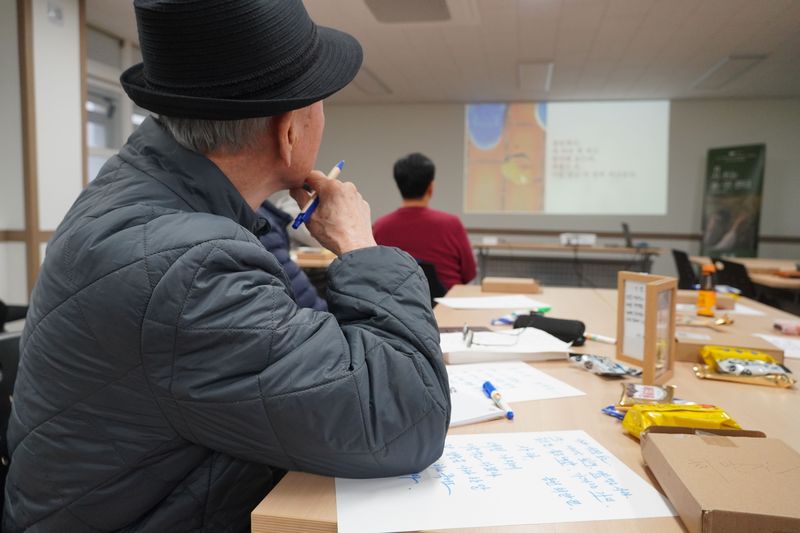
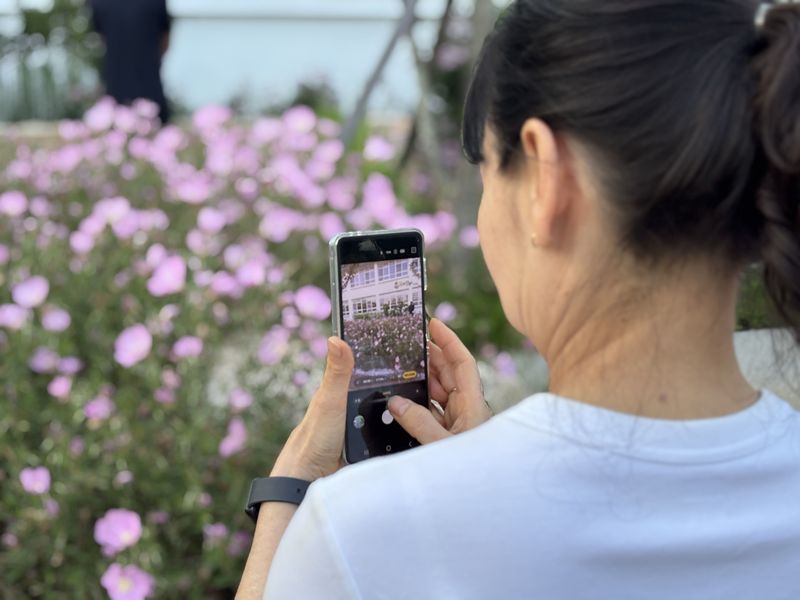
Dikasi is a literary genre in which people express their impressions in a poem of no more than five lines alongside a photograph they have taken themselves with a digital camera or smartphone. While planning the program, Ko recalled visiting Bukcheon Station with his family as a child. The landscape of Kosmos flowers in full bloom had grown hazy over the years, but the memory of that day had lingered. What if he had preserved the scene and his feelings in a photograph or in writing? That was what inspired the dikasi class, where residents paired short poems with photos they had taken themselves.
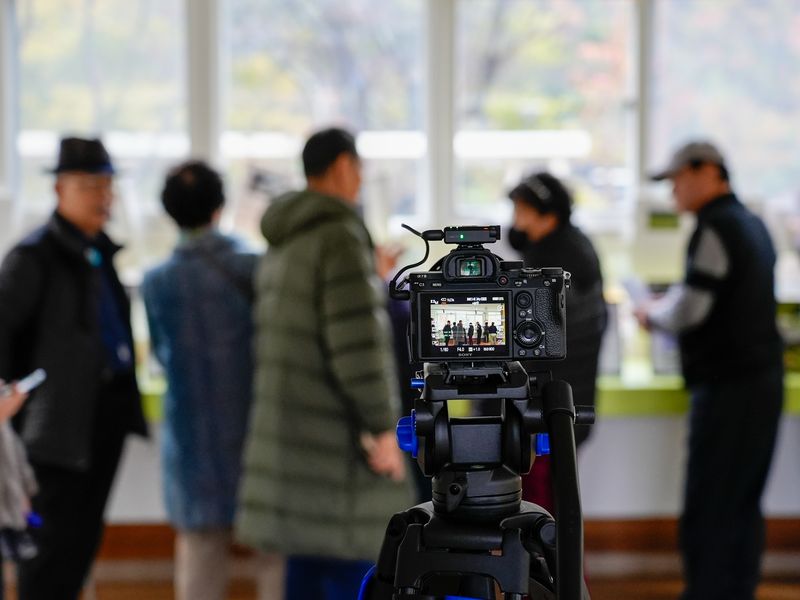
The film-making class was first proposed by Bukcheon Healing Center. Ko identified “memory” and “record” as the themes running through both classes. He felt that the landscapes residents encounter every day hold the stories and time of each person. “I hoped this program would turn those ordinary moments into works of art and leave personal memories as part of the community’s record,” he said.
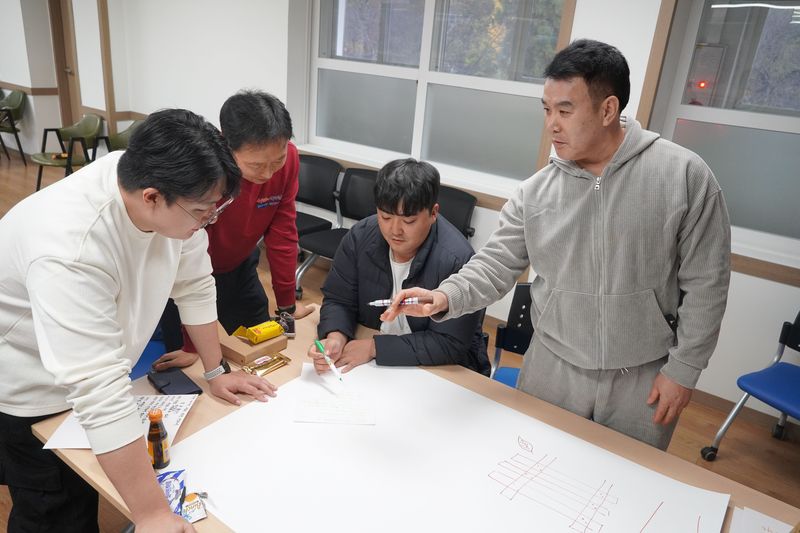
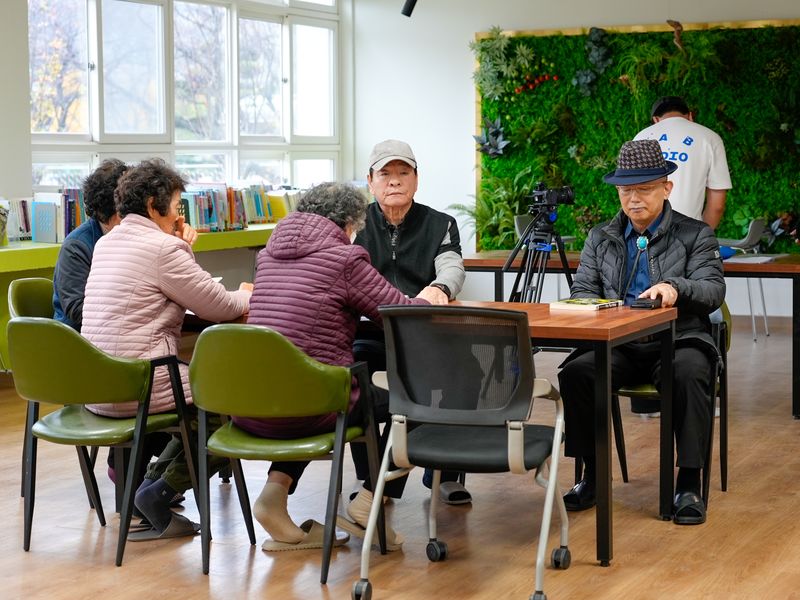
Around 12 residents took part in the film school each week. Older adults made up most of the participants, alongside residents in their 40s and 50s and people who had recently relocated to the countryside and settled in Bukcheon. Even when people live in the same village, opportunities to share their memories and feelings in depth are rare. The process of long-time residents and newcomers sharing their stories and making a film together became the class itself.
Lowering the barrier to arts classes with 'saecham'
Ko believed that getting residents involved first required narrowing the “psychological distance” they felt from art. That is why he designed the first open class, “The Wonderful Saecham,” around a familiar rural snack. Bukcheon Healing Center publicized the program through the women’s association, village heads, youth group, local agricultural cooperative and Bukcheon-myeon office.
Support from the Korea Arts & Culture Education Service helped secure professional instructors and keep the classes going. Ko said, “Small local organizations and cultural spaces face practical difficulties in securing professional arts educators and planning and running programs over the long term with their own resources alone.” He said it was especially important to take rural conditions fully into account when designing classes, since residents’ age groups and living environments, as well as the characteristics of their communities, differ from those in cities. “The most meaningful change I noticed while running this program was that older residents began expressing themselves little by little,” he said.
Ko felt that spaces like Bukcheon Healing Center should continue supporting residents’ creative activities even after the program ends.
“Art may not be able to change someone’s life all at once, but I believe it can help them see their life from a slightly different perspective than before. Ultimately, it is important for arts and culture education to take root as an activity that continues naturally in residents’ everyday lives, rather than as a special event held only during a particular program period.”
[email protected] Shin Jin-a Reporter