Europe's Auto Market Grew 3.4%, but Hyundai Motor Company Sales Fell 18.8% and Kia Corporation Sales Rose 15.7%
- Input
- 2026-11-24 14:55:05
- Updated
- 2026-11-24 14:55:05
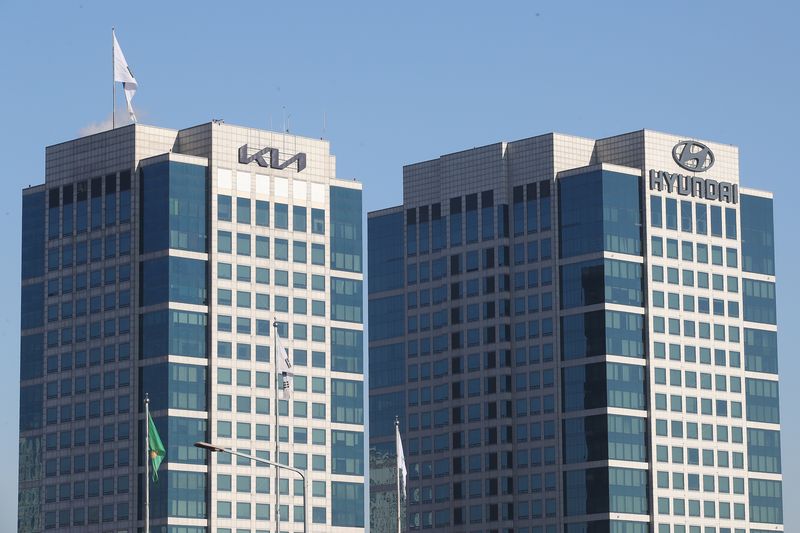
According to figures released by the European Automobile Manufacturers' Association (ACEA) on the 24th, Hyundai Motor Company and Kia Corporation sold 80,005 vehicles in Europe in October, down 1.7% from a year earlier. The European new-car market as a whole grew 3.4% to 1,128,252 vehicles. In other words, Hyundai Motor Group's sales actually fell even as the market expanded.
The contrast between the brands was stark. Hyundai Motor Company sold 33,245 vehicles in October, down 18.8%, while Kia Corporation sold 46,760, up 15.7%. Kia outperformed the market average, but its strong performance was not enough to make up for Hyundai Motor Company's weakness.
The combined market share also fell. Hyundai Motor Company and Kia Corporation had a combined share of 7.1% in October, down 0.4 percentage points from a year earlier. Hyundai Motor Company's share fell 0.9 percentage points to 2.9%, while Kia Corporation's rose 0.4 percentage points to 4.1%.
The trend was similar for the year to date. Hyundai Motor Company and Kia Corporation sold 850,830 vehicles in Europe from January through October, down 3.2%. Over the same period, the overall European market grew 6.0% to 11,682,800 vehicles.
Hyundai Motor Company sold 382,203 vehicles, down 13.7%, while Kia Corporation sold 468,627, up 7.4% and outpacing market growth. Kia Corporation's cumulative sales were 86,424 vehicles higher than Hyundai Motor Company's.
Their combined market share for the year to date also fell 0.7 percentage points to 7.3%. Hyundai Motor Company's share dropped 0.7 percentage points to 3.3%, while Kia Corporation maintained its 4.0% share from last year.
The models that supported Hyundai Motor Company's European sales in October were the SUVs Hyundai Tucson and Hyundai Kona. The Tucson sold 8,512 units; HEVs accounted for 4,063 and PHEVs for 1,402, with the two eco-friendly vehicle types together making up about 64% of sales.
The Kona sold 6,928 units. HEVs made up the largest segment, at 3,274, followed by 2,762 EVs and 892 internal-combustion vehicles. Electrified vehicles accounted for about 87% of sales. INSTER (known in South Korea as Hyundai Inster) sold 3,243 units.
Eco-friendly vehicles led by the Tucson and Kona held up well, but were not enough to stop Hyundai Motor Company's overall sales decline. With the market expanding, how quickly Hyundai Motor Company rebounds is expected to determine whether Hyundai Motor Company and Kia Corporation can recover their market share.
[email protected] Kim Dong-chan Reporter