K-Food Breaks Into Emerging Markets Beyond the U.S. and Japan... Sales Rise at 57 of 72 Overseas Subsidiaries
- Input
- 2026-11-24 14:59:38
- Updated
- 2026-11-24 14:59:38
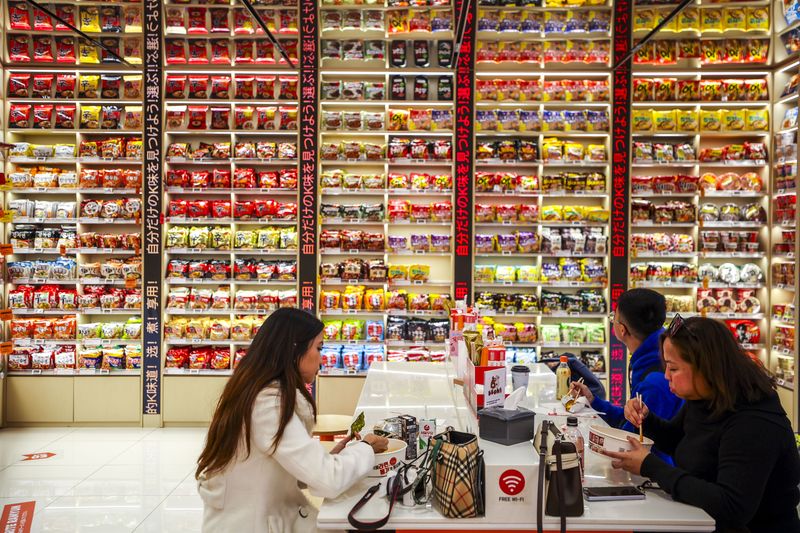
[Financial News] So far this year, roughly 80% of the overseas subsidiaries of eight major South Korean food companies have posted sales growth. As K-food’s global popularity spreads, the domestic food industry has expanded its business by moving beyond established major markets such as the United States, China and Japan and stepping up efforts to break into emerging markets.
According to the Financial Supervisory Service’s electronic disclosure system on the 24th, sales increased at 57 (79.1%) of the 72 overseas subsidiaries of eight major South Korean food companies—CJ CheilJedang, Daesang, Lotte Chilsung Beverage Co., Ltd., Lotte Wellfood Co., Ltd., Ottogi, Nongshim, Orion Corporation and HiteJinro Co., Ltd.—for which third-quarter sales could be compared with the same period a year earlier.
By region, while companies maintained stable performance in the United States and Japan, emerging markets such as China, Russia and Southeast Asia stood out for their gains.
Growth was particularly brisk in the Commonwealth of Independent States (CIS), including Russia. Lotte Wellfood Co., Ltd.’s subsidiary in Kazakhstan saw sales jump 31.3% from a year earlier. Orion Corporation’s Russian subsidiary (28.3%), Lotte Chilsung Beverage Co., Ltd.’s Russian subsidiary (23.4%) and Lotte Wellfood Co., Ltd.’s Russian subsidiary (14.8%) also all posted double-digit growth.
Strong growth continued in emerging Asian markets, including Southeast and South Asia. Lotte Wellfood Co., Ltd. saw sales at its Indian subsidiary rise 48.6%, reflecting the effect of its merger with Havmor, while sales at its Myanmar subsidiary increased 30.3%; both posted strong growth. In Pakistan, Lotte Chilsung Beverage Co., Ltd.’s subsidiary increased sales 17.5%, from 132.1 billion won to 155.2 billion won. In Vietnam, too, double-digit growth continued, with CJ CheilJedang up 20.8%, HiteJinro Co., Ltd. up 16.4% and Nongshim up 16.2%.
Even in China, where concerns over weak domestic demand had been high, 14 of the 15 subsidiaries increased sales, staging a rebound. With expectations growing that the Hallyu ban (China’s unofficial ban on Korean Wave cultural content) could in effect be lifted following the Asia-Pacific Economic Cooperation (APEC) meeting held in China, K-food companies are expected to gain further momentum in their push into the Chinese market.
Among the companies, Orion Corporation’s performance stood out the most. With operations in China, Russia and Vietnam, Orion Corporation saw growth at all seven of its overseas subsidiaries. Four subsidiaries in China posted growth of more than 20%, while its Russian (28.3%) and Vietnamese (13.3%) subsidiaries also supported the upward trend.
Nongshim’s sales rose across 10 of its 11 overseas subsidiaries, with Canada (-0.6%) the exception. Four subsidiaries in China led performance with double-digit growth, while its European subsidiary, established in March last year, saw sales rise at least threefold, from 32.9 billion won in the first three quarters of last year to 102.4 billion won in the same period this year. This has also raised expectations that the company could achieve ahead of schedule its target, set when the subsidiary was launched last year, of quadrupling European sales by 2030.
Six of Lotte Chilsung Beverage Co., Ltd.’s seven overseas subsidiaries grew, with the Philippines (-0.02%) the exception. Its Russian subsidiary’s sales rose by 16.5 billion won (23.4%), from 70.4 billion won in the first three quarters of last year to 86.9 billion won this year. Its Pakistani subsidiary also helped drive performance, increasing sales by 23.1 billion won (17.5%) over the same period. Lotte Wellfood Co., Ltd. likewise saw sales rise at five of its seven overseas subsidiaries. Thanks to balanced growth in India, Kazakhstan and Southeast Asia, its total overseas subsidiary sales increased 28.7%, the highest rate among the eight companies.
Eight of CJ CheilJedang’s 10 subsidiaries grew. Sales at its North American subsidiary, Schwan’s Company, rose 5.5%, from 3.5641 trillion won in the third quarter of last year to 3.76 trillion won in the same period this year, expanding the company’s overall scale. It also continued to post growth in the 20% range in emerging markets such as Vietnam. In addition, overseas subsidiary sales increased at four of Ottogi’s five subsidiaries, five of HiteJinro Co., Ltd.’s seven and 12 of Daesang’s 18.
The industry believes that after established markets such as the United States and Japan entered a stable growth trajectory, supported by demand from Korean communities abroad, K-food has also penetrated consumers’ everyday dining tables in emerging markets such as Russia and Southeast Asia, entering a structural growth phase. A food industry official said, “K-food is moving beyond one-off curiosity-driven purchases and establishing itself as an everyday food that local consumers return to repeatedly,” adding, “Surveys of actual purchasers in overseas households also show a marked increase in both the share who have tried K-food and the share who buy it again.”
[email protected] Park Kyung-ho Reporter