Military Brings in Wearable Robots and Drone Stations, Using Civilian Innovations to Transform Combat Power and Barracks Life
- Input
- 2026-11-24 15:07:21
- Updated
- 2026-11-24 15:11:28
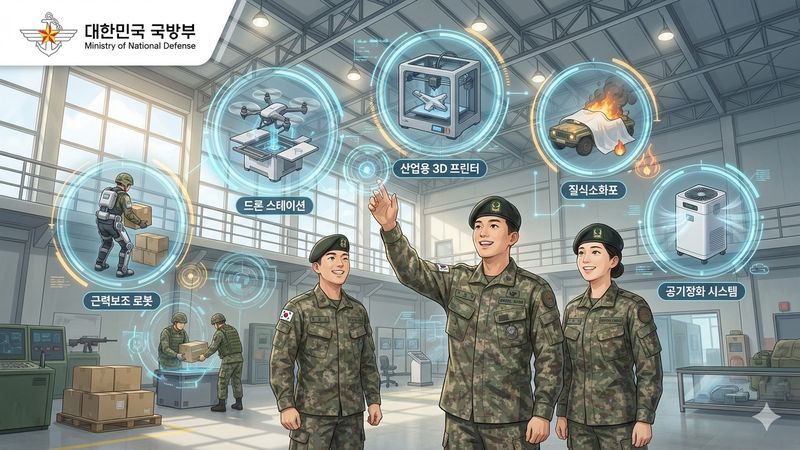
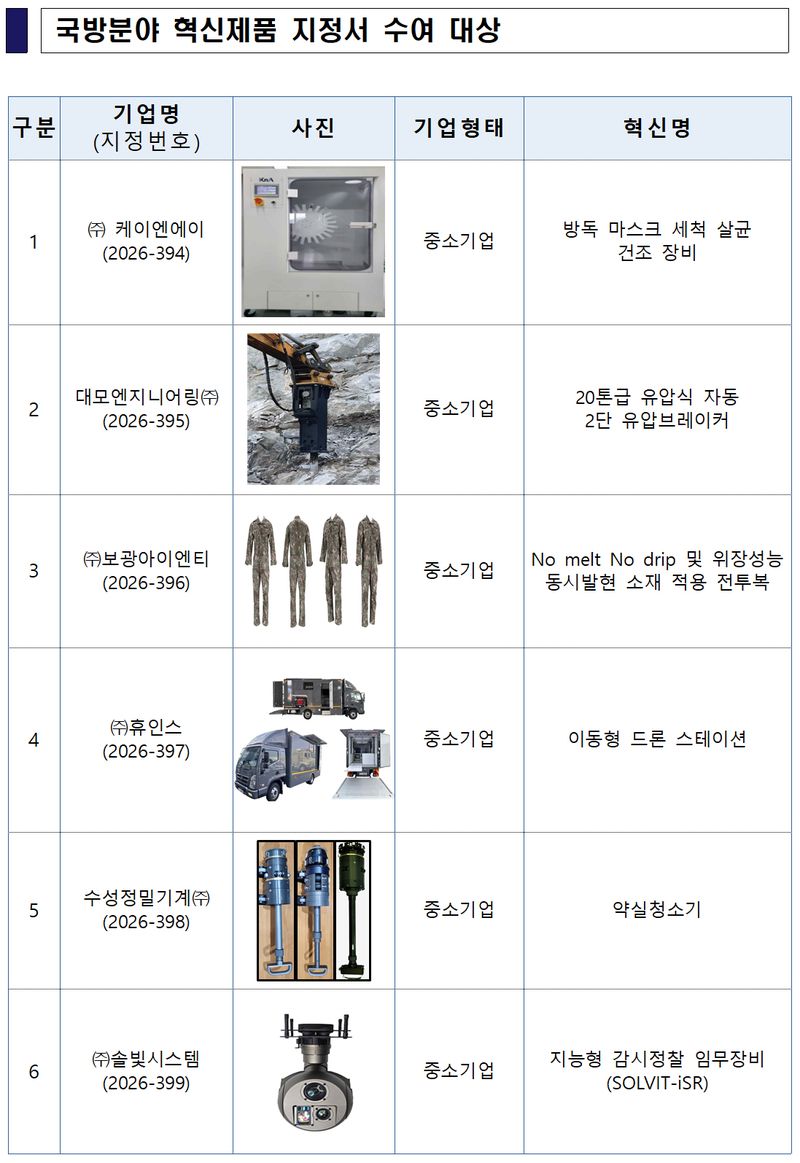
At the event, the ministry presented designation certificates to 33 companies for 36 items that had been deemed suitable for trial use after undergoing military trials and being recognized as operationally suitable. In particular, under the Guidelines for Designating Defense-Sector Innovation Products, established in February this year, certificates were presented for the first-ever defense-sector innovation products: six products from six SMEs that passed evaluations by the Korea Public Procurement Research Institute and the Civil-Military Cooperation Promotion Agency, as well as review by the Ministry of Finance and Economy’s Procurement Policy Deliberation Committee.■ Aircraft Parts Made with 3D Printing and Automated Loading and Unloading of Military Supplies: Services Share On-the-Ground InnovationsThe best practices from each service presented at the event showed clearly how civilian commercial technologies can improve military operational efficiency and safety.
The Air Force’s 82nd Aircraft Maintenance Depot greatly improved maintenance efficiency and the speed of parts supply by introducing industrial 3D printers for high-strength plastic and making nonmetallic aircraft parts in-house. The Navy’s Supply Depot Logistics Management Battalion introduced a manpower-saving loading and unloading aid for military food-supply vehicles, reducing the time needed to load and unload provisions and preventing safety incidents such as musculoskeletal injuries. The Army’s Quartermaster General Staff’s Food Service and Fuel Division adopted metal containers for transporting tactical fuel, improving the safety of fuel transport and storage in the field.■ A Look at 42 Designated Products: A Shift Toward Four Pillars—Advanced Capabilities, Safety, Manpower Reduction and Barracks WelfareAn analysis of the 36 excellent commercial products and six defense innovation products designated this time clearly shows how military procurement, once focused mainly on basic clothing and everyday necessities, has advanced into four key areas: △advanced future capabilities △disaster response and safety △manpower-saving automation △and barracks hygiene and welfare.
In advanced operations and future capabilities, the selections included ANGEL ROBOTICS Co., Ltd.’s wearable robot “Angel Gear Soft W10” (Air Force); Huins’ “Mobile Drone Station”; Solbit System’s “Intelligent Surveillance and Reconnaissance Mission Equipment (SOLVIT-iSR)”; Bokwang INT’s combat uniform combining flame resistance (“No melt No drip”) with camouflage performance; and Suseong Precision Machinery’s “Chamber Cleaner.” These are prime examples of “spin-on,” in which civilian technologies in robotics, drones and new materials directly enhance military capabilities.
Disaster response, fire prevention and workplace safety also featured prominently. Reflecting recent demand in the military for preventing battery and vehicle fires, Raji’s “fire blanket” (Air Force and Marine Corps), Elip’s “smoke- and gas-protective mask for fire evacuation” (Air Force), and Webgate’s “remotely monitored CCTV with flame-detection sensors” (Army) were selected as suitable products. The Navy introduced patent-based safety helmets and belts (Dongmyung), cable auto-alignment roller stands (POS Tech) and a non-powered automatic gas cutter (MIKT); the Air Force introduced one-touch safety shackles (EziLock) and breathable fire-resistant covers (Kwangwoon Technology).
A large number of products for reducing manpower and automating facility management in an era of population decline were also included. The Air Force adopted truck-mounted snowplows (Jadonggi), smart height-adjustable desks (Design Colors), vacuum shoe-cleaning mats (Daeshin MC) and a fuel carbon remover (Technobio). The Army selected the mobile cooling system “Coolspot” (Shinhan Technology Group), while the Navy adopted eco-friendly salt for weed removal (Yeolumul) and portable water-purification filters (Enbionia), easing the burden of routine manual work on service members.
Products to improve food service, hygiene and living conditions have also become more sophisticated. Selected items included a cooking-fume removal system to support the health and workload of kitchen staff (Bio Platech, Army); an air-sterilizing purifier for food-service kitchens (One Ace, Army); an ultrasonic electric fryer (DJT, Air Force); microbial food-waste processors (Hanmi Flexible, Navy; Geumgang Bio, Air Force); and detergent-free, eco-friendly meal trays (The Material, Navy). Also selected were antibacterial, deodorizing bedding designed for ships and remote locations where frequent washing is difficult (My House, Jinyoung CNS); deodorizing and moisture-control covers for military boots (J Solution); plasma disinfection equipment (Code Steri); UV-C and far-ultraviolet sterilizers (Solar Luce, Nano CMS); and equipment for washing, sterilizing and drying gas masks (K&A, designated as an innovation product).■ A Catalyst for Expanding the K-Defense Industry and Opening Procurement Channels for SMEs and Venture FirmsThe defense industry sees this move as a powerful catalyst for expanding the K-Defense Industry ecosystem—now focused on major companies’ exports of weapons systems—to include defense support systems (non-weapon systems) centered on SMEs and startups. All 39 companies designated this time, excluding duplicates, were SMEs or startups founded less than seven years ago.
Products designated as suitable for trial use as excellent commercial products or as defense innovation products receive tangible market-access benefits in military procurement, including exceptions allowing sole-source contracts and recommendations for priority purchasing. By securing a track record of reliability verified in the demanding military test bed, companies gain a foothold from which to pursue entry into the general public procurement market and overseas military supply markets.
The director general of the Ministry of National Defense’s Logistics Management Bureau said, “Today’s results presentation was a meaningful opportunity to share progress in implementing the military supplies commercialization policy and for the military and civilian sectors to explore future directions for development together. We will continue to advance the policy so that excellent civilian technologies and products lead to tangible results in military settings.”
[email protected] Lee Jong-yoon Reporter