Geun-sik Chung: “Assessment Is Not the Goal; Student Growth Is at the Center ... Caution Is Needed on Excessive Controls”
- Input
- 2026-11-24 14:30:00
- Updated
- 2026-11-24 14:30:02
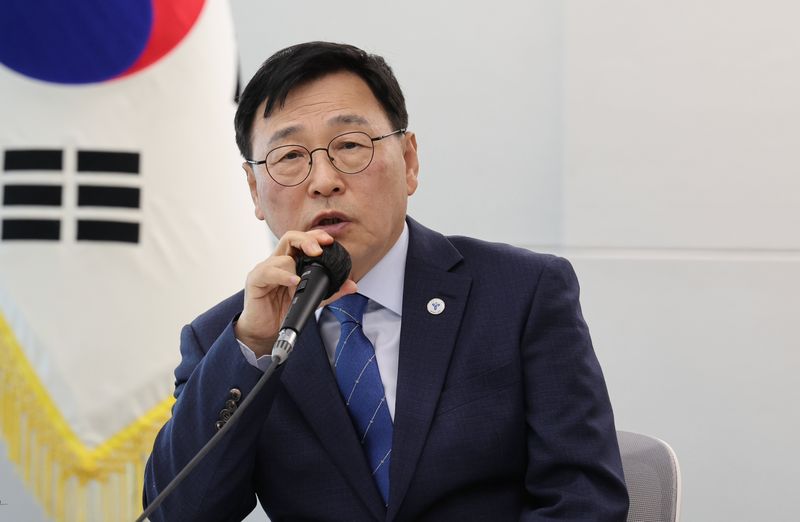
[Financial News] Seoul Metropolitan Superintendent of Education Geun-sik Chung expressed caution about policies focused on excessive controls in connection with the government’s newly announced measures to crack down on cheating in middle and high school internal assessments, saying, “The assessment itself should not be the goal; student growth through learning should be at the center.”
Superintendent Chung made the remarks on the 24th at a meeting held at the SMOE, in response to a question about the Education Ministry’s “Measures to Address Cheating in Middle and High School Internal Assessments,” announced that day in a report to the Cabinet.
The Education Ministry had earlier announced that, amid growing concerns about cheating that exploits artificial intelligence (AI) devices and other technologies, it would apply strict exam-management standards on par with those for the College Scholastic Ability Test (CSAT), starting with high school seniors currently taking their final exams. Key measures include tighter exam-room management, such as introducing metal detectors in classrooms and requiring bags to be stored separately, as well as pursuing revisions to the Higher Education Act and school rules to increase disciplinary penalties for students caught cheating.
Superintendent Chung acknowledged the need to ensure fairness in assessments but voiced concern that education’s essence could be undermined if enforcement and punishment were given priority. “Which should be at the center, studying or assessment? Of course, studying should be more central,” he said, stressing that “assessment is fundamentally conducted to help students grow; the assessment itself is not the goal.” He added, “It is not educationally appropriate to label students as potential cheaters,” and said, “It is important to let them take exams in a comfortable atmosphere so they can perform to the best of their ability.”
He also pointed to the increased workload for teachers and the social costs that could result from exam management focused on enforcement. Concerns have been raised that the burden of tighter exam supervision, along with handling parents’ objections and abusive complaints, is being shifted wholesale onto frontline teachers. Superintendent Chung said that “as social trust declines, the so-called ‘cost of managing distrust’ keeps growing,” and observed that “a system in which teachers shoulder all the responsibility, as they do now, is no longer sustainable.” In fact, the SMOE is spending heavily on expanding surveillance equipment and staffing, and is considering allocating an additional approximately 200 million won to provide one metal detector per classroom.
Superintendent Chung stressed that the response should go beyond short-term measures focused on control and catching cheaters, and move toward fundamental reform of the assessment system suited to the AI era. The SMOE plans to gradually increase the share of short-answer and essay-based assessments in school internal assessments from the current level of 30% to 35% next year, 40% in 2028, and 50% or more in 2029. To support this, it is sharing its in-house AI-based assessment support tool, Chaeum AI, with local education offices nationwide, with the aim of expanding its coverage to 60–70% nationwide. It is also providing teacher training to strengthen assessment-writing skills and developing specialized assessment teachers.
He also brought long-term discussions about reforming the college admissions system and abolishing the CSAT back into focus. Referring to the admissions reform roadmap announced last December, which includes “introducing short-answer and essay questions on the CSAT in 2033” and “abolishing the CSAT in 2040,” Superintendent Chung said, “With the rapid development of AI technology, the limitations of tests based on memorizing knowledge are becoming clear, and calls to abolish the CSAT or find alternatives are growing.” He also said that at a recent meeting with a student participation group, he learned that many students had already been exposed to AI smart glasses priced in the 700,000-won range, and that he would soon visit electronics markets in person to assess the state of the technology.
Superintendent Chung said, “We plan to hold a meeting of all academic affairs directors in the district on the 27th to discuss responses to the final exams on the ground and ways to improve the assessment system,” adding, “We will work to create a balanced assessment system that safeguards fairness while fostering students’ thinking skills and growth.”
[email protected] Kim Man-gi Reporter