₩100 Million in Consolation Damages for Forced Mobilization Victim Upheld... Supreme Court Says Limitations Period Began With 2018 En Banc Ruling
- Input
- 2026-11-24 14:00:16
- Updated
- 2026-11-24 14:00:16
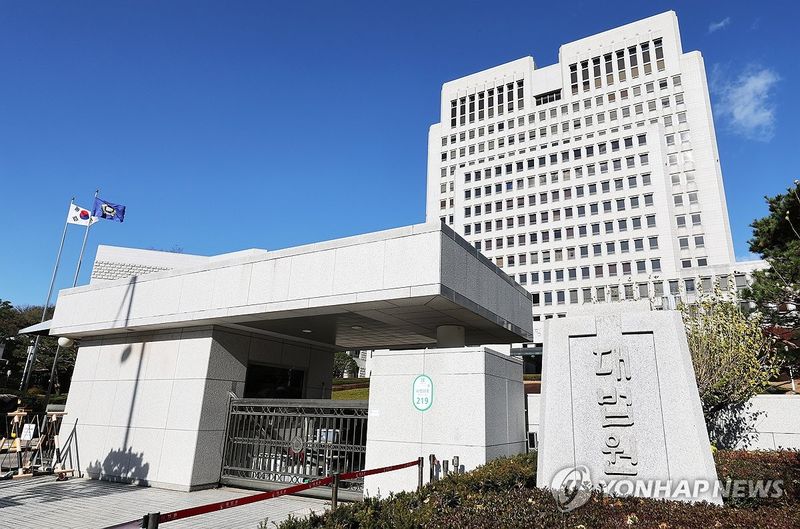
According to legal sources on the 24th, the Second Division of the Supreme Court of Korea, with Justice Park Young-jae as the justice in charge, dismissed Mitsubishi Heavy Industries’ appeal on the 30th of last month in the final appeal of a damages suit brought by forced mobilization victim Kim Han-su against the company. As a result, the lower court’s ruling ordering payment of 100 million won in consolation damages and damages for delay was finalized.
Kim, who was born in December 1918, was forcibly mobilized in July 1944 and worked until October 1945 at a shipyard in Nagasaki Prefecture, Japan, operated by a predecessor corporation of Mitsubishi Heavy Industries, before returning to Korea. In April 2006, the Committee for the Investigation of Damage from Forced Mobilization during the Anti-Japanese Struggle and Support for Overseas Forced Mobilization Victims and Others recognized Kim as a victim of forced mobilization under Japanese colonial rule. In March 2011, it approved a payment of 3 million won in compensation for an injury-related disability. Kim filed suit on April 4, 2019, after turning 100, and died in October last year.
The issue was when the statute of limitations began to run. On May 24, 2012, the Supreme Court remanded the case, holding in effect that victims of forced mobilization had not lost their right to seek damages from Japanese companies under the Korea-Japan Claims Agreement. The victims’ rights were then established by the en banc ruling issued on October 30, 2018, in the further appeal after remand. The key question was which of those points marked the disappearance of the obstacle to exercising their rights.
In February 2022, the Seoul Central District Court, ruling at first instance, dismissed the claim, finding that the obstacle had been removed when the 2012 ruling was issued. It held that the statute-of-limitations defense should be accepted because the suit was filed a considerable time later.
In May last year, the Seoul Central District Court, ruling at second instance, overturned the first-instance decision. It reasoned that controversy continued both in Korea and abroad after the 2012 ruling, and that the ruling had remanded the case rather than definitively recognizing the rights. The possibility of judicial relief became certain only with the 2018 en banc ruling, so the obstacle remained until that day; the court found that Kim’s filing of suit the following April was an exercise of the right within a reasonable period.
The Supreme Court fully adopted the second-instance ruling. The panel said the lower court had found that Kim “filed this suit within a reasonable period from the date the Supreme Court judgment was issued on October 30, 2018, making it possible to exercise the right,” and that it “committed no error affecting the judgment, such as by misunderstanding the legal principles concerning the statute of limitations.”
The Supreme Court also rejected all of Mitsubishi Heavy Industries’ remaining grounds for appeal. It upheld, in turn, the findings that forcible abduction and coercion into forced labor constituted torts; that Korean courts had international jurisdiction; that the claims and the right to sue had not been extinguished under the Claims Agreement; and that the defendant was legally the same company as the predecessor corporation. As for the amount of consolation damages, the panel cited an April 1999 precedent holding that a fact-finding court may set damages for mental suffering at its discretion, taking all relevant circumstances into account, and found that the amount had not been set in a manner that was manifestly unreasonable.
[email protected] Kim Dong-gyu Reporter