Labor Shortages in Semiconductor and Housing Construction...MOLIT to Form Public-Private Consultative Body
- Input
- 2026-11-24 13:37:08
- Updated
- 2026-11-24 13:37:08
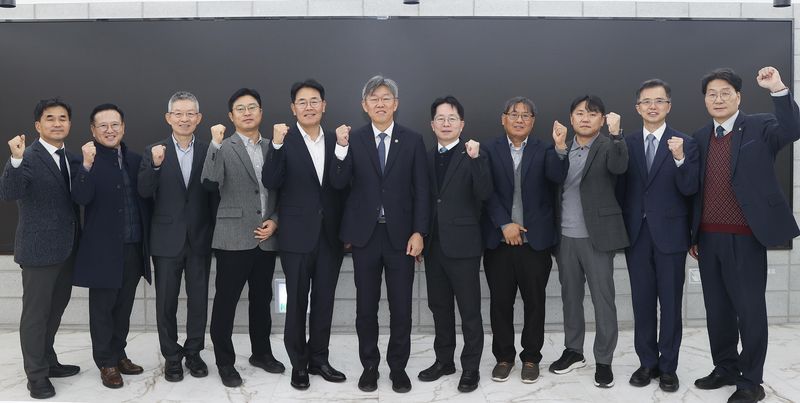
[Financial News] The Ministry of Land, Infrastructure and Transport (MOLIT) will form a public-private consultative body chaired by its first vice minister to address labor shortages at semiconductor factories and large-scale housing construction sites.
According to MOLIT on the 24th, First Vice Minister Kim Yi-tak held a construction industry meeting that morning at the Land Development Exhibition Hall in Seoul. The meeting reviewed progress on semiconductor factories and housing construction, heard about difficulties in securing workers, and discussed support measures. Attendees included Korea Land and Housing Corporation (LH), Samsung C&T, SK ecoplant, Samsung Electronics Co., Ltd., SK hynix and their major partner companies, as well as the Korea Construction Association, the Korea Specialty Contractors Association and the Korea Mechanical Construction Contractors Association.
Warning signs have also emerged in the housing sector. The government has set a target of starting construction on at least 1.5 million housing units in the Seoul metropolitan area over the five years from 2026 to 2030, a goal on a scale larger than any set by previous governments. Attendees said they must prepare not only for demand created by a concentration of construction starts, but also for potential labor gaps as workers move to semiconductor sites. Housing sites do not require as long a training period as semiconductor sites, they said, but the small influx of young workers means the workforce must be developed starting now.
The aging of the workforce on construction sites is stark. Among skilled construction workers in Korea, according to MOLIT figures as of the end of October, 33.5% were in their 50s and 29.4% were 60 or older, putting the combined share at around 63%. Those in their 20s and 30s accounted for just 18.0%. The occupations in which the industry reported shortages had 133,175 skilled workers in total, including 104,532 in plumbing, 15,821 in welding and 12,833 in ductwork.
The situation is even more urgent at semiconductor sites. Semiconductor factories require far greater specialization and skill than general construction projects. Even precision piping workers need at least one to two years of on-site experience and training before they can be deployed. Subcontractors requested government-led training, saying that even when they train workers themselves, those workers often move to other companies once their training is complete. Other issues cited for improvement included the lack of infrastructure for consolidating recruitment information and poor living conditions, including worker accommodations.
MOLIT plans to continue identifying industry requests through the consultative body and develop measures together with the industry. It will flesh out plans for the public and private sectors to jointly design training programs for specialized semiconductor construction workers so they can work on site immediately. For workers at general construction sites, including housing projects, it will make intensive use of construction associations and training institutions to run tailored programs by field. It will also develop ways to bring back construction workers who have left the field and retired military personnel. The aim is for an influx of workers and expanded employment to help revive local construction economies.
First Vice Minister Kim said, “With the public and private sectors having engaged in in-depth discussions on construction workforce supply and demand, a range of ideas for addressing the many challenges were put forward. Going forward, I will discuss the support measures needed on site with the relevant agencies and work to ensure that concrete solutions are put forward through the public-private consultative body for construction professionals. Furthermore, I will strive to ensure that these solutions translate into jobs and work for local construction companies, so that people can feel the recovery of local economies on the ground.”
[email protected] Jung Kyung-soo Reporter