“Disagreement Over a Ruling Must Not Set an Impeachment Precedent” ... KBA Pushes Back Against “Impeachment of Cho Hee-dae”
- Input
- 2026-11-24 13:57:13
- Updated
- 2026-11-24 13:57:13
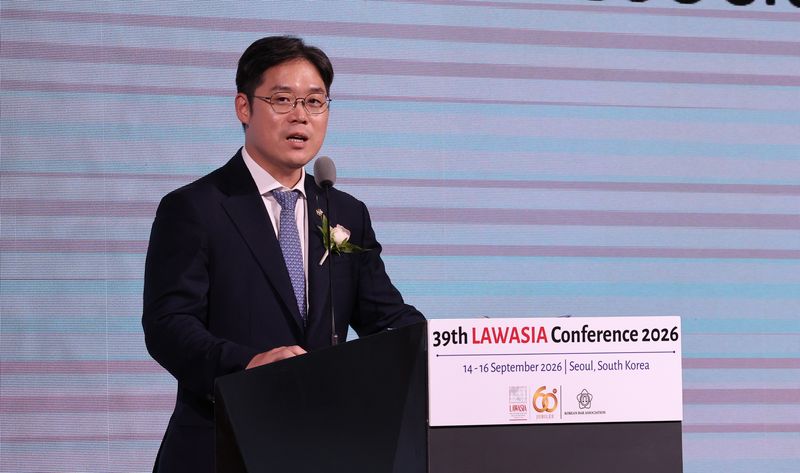
[Financial News] As the Democratic Party of Korea moves to speed up the process of filing an impeachment motion against Supreme Court Chief Justice Cho Hee-dae, the Korean Bar Association has officially urged the National Assembly to reconsider the matter carefully, citing concerns that it could undermine the separation of powers and judicial independence.
The Korean Bar Association, headed by President Kim Jung-wook, issued a statement on the 24th titled “We Express Concern Over the Push to Impeach the Chief Justice of the Supreme Court,” voicing deep concern about efforts to impeach Chief Justice Cho from the perspective of the constitutionally mandated separation of powers and judicial independence.
In its statement, the KBA noted that “impeachment is a mechanism for protecting the Constitution from unconstitutional or illegal conduct in office by high-ranking public officials, and it is clear that the power to initiate impeachment proceedings is a constitutional authority granted to the National Assembly.” It also pointed out that “Article 65 of the Constitution limits the grounds for impeachment to cases in which an official ‘violates the Constitution or laws in the performance of their duties,’ and the Constitutional Court of Korea has consistently held that a public official may be removed from office only when the violation is serious enough to justify removal.”
It went on to stress that “impeachment is a procedure for determining legal responsibility, not political responsibility.”
In particular, the KBA warned of the impact that impeaching the head of the judiciary could have on judicial independence and the public’s right to a trial. The concern was that Articles 103 (independence of judges) and 106 (security of judges’ tenure) of the Constitution, which are intended to ensure fair trials free from outside influence, could be undermined.
The KBA stressed that “if a precedent is set in which disagreements over trial outcomes or decisions in judicial administration lead to impeachment discussions, judges may become more concerned about the repercussions after a trial than about legal principles,” adding, “That burden ultimately falls on the people who go to trial.”
The KBA also raised concerns about a vacuum in the judiciary. It said that “if any of the allegations require investigation, establishing the facts through procedures prescribed by law should come first,” and pointed out that “if impeachment proceedings are approved before the facts have been sufficiently established, the Chief Justice’s exercise of authority will be suspended until the Constitutional Court of Korea issues a ruling, creating a vacuum in the operation of the Supreme Court of Korea’s en banc panel and judicial administration as a whole.”
This official statement from the KBA followed a series of objections from veteran figures in the legal community outside government and from lawyers’ groups. Earlier, the Council of Former Local Bar Association Presidents, comprising a former KBA president and 33 former presidents of local bar associations nationwide, issued a joint statement on the 22nd, criticizing the use of impeachment powers “on the basis of political interests without thorough review of specific grounds for illegality and objective evidence.” The conservative-leaning lawyers’ group People Who Make Good Laws had also called for the impeachment push to be halted on the 21st.
Meanwhile, political efforts to push for impeachment are gathering pace. On the 20th, the Democratic Party of Korea held a caucus, adopted pursuing the impeachment of Chief Justice Cho as its official party position, and formed a “Task Force to Push for Impeachment Proceedings Against Supreme Court Chief Justice Cho Hee-dae,” led by lawmaker Yang Bu-nam. This came the day after, on the 19th, the Supreme Court of Korea’s en banc panel issued a partial reversal-and-remand ruling in the case involving former Prime Minister Han Duck-soo’s alleged role in carrying out key tasks in an insurrection, indicating that conduct including the recommendation to convene a Cabinet meeting before martial law was declared warranted acquittal.
[email protected] Lee Chang-hoon Reporter