'10 Seoul National Universities' Targeted for 2027 Follow-Up Selection... Jeju National University Draws Up Plan to Restructure Departments and Enrollment Quotas
- Input
- 2026-11-24 10:42:47
- Updated
- 2026-11-24 10:42:47
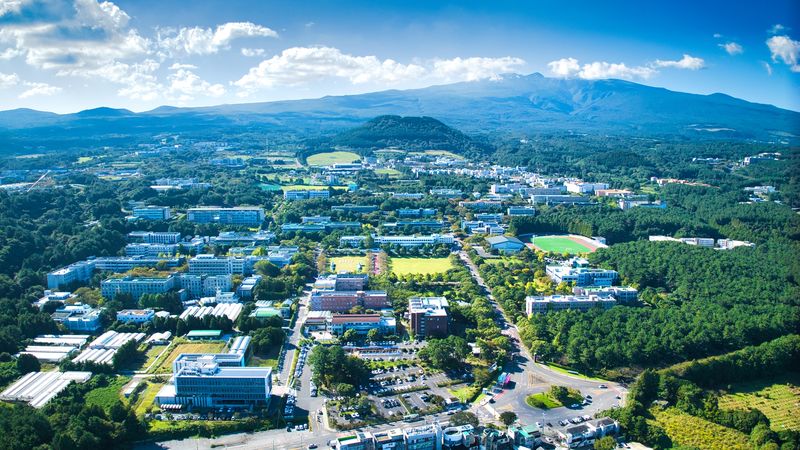
【Financial News, Jeju—Reporter Jeong Yong-bok】 Jeju National University, which was excluded from the first selection of universities for support under the government's “Building 10 Seoul National Universities” initiative, is redesigning its departments, enrollment quotas and college structure. The move is intended to develop a plan to reorganize its education and research units around artificial intelligence (AI) and Jeju Province's strategic industries, and to prepare for an additional round of government selections in 2027.
According to the Public Procurement Service's Korea Online e-Procurement System (KONEPS) and the request for proposals for Jeju National University's “Academic Structure Reorganization Project Linking Growth Engines and University Specialization,” issued on the 24th, Jeju National University commissioned a research project costing 260 million won to redesign the university-wide academic organization and enrollment quota allocation system.
The deadline for submitting proposals and price bids for the project, announced as an emergency tender on the 2nd, was 10 a.m. on the 24th. The contract period is 90 days from the date of signing. The organization carrying out the project will assess the university's education and research capabilities and develop a plan to reorganize its academic structure, along with a phased implementation plan.
The key is to link Jeju National University's areas of specialization with its academic organization in line with the government's policy of providing intensive support to regional flagship national universities.
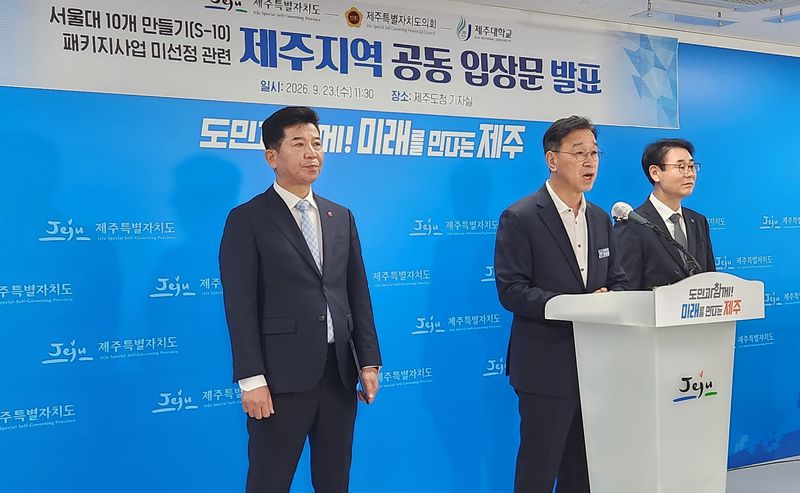
On September 1, the Ministry of Education selected three universities—Pusan National University (PNU), Chonnam National University (CNU) and Chungnam National University—as the first recipients of package support under the “Building 10 Seoul National Universities” initiative. Jeju National University was not included.
The selected universities will receive approximately 70 billion won each this year under a package that brings together branded colleges linked to regional strategic industries, AI hub universities and inter-university shared universities. The support program will run for five years, through 2030.
The government made a key selection criterion how concretely and feasibly each university presented an education and research innovation plan linked to regional industry.
The project specifications for Jeju National University state that the study should analyze why the university was not selected in each subcategory of the 2026 package support program and develop a plan for seeking selection in the additional round in 2027.
At the heart of the academic restructuring are Jeju Province's three growth engines: renewable energy convergence systems, small satellite systems and clean bio-wellness.
Jeju National University will consider establishing specialized colleges and interdisciplinary departments linked to these industries. The project also covers contract-based departments, where companies work with the university to design curricula and link them to hiring, as well as majors jointly run with companies.
The study will consider not only establishing related departments but also merging existing ones, shared instruction and reorganizing majors. It will also develop plans for curricula, faculty recruitment, practical training facilities and financial investment.
Reorganizing the AI education structure is another major task. The request for proposals calls for reviewing changes to the affiliation of existing departments related to AI, computer science and software, as well as organizational consolidation, and for developing the academic structure needed to establish an AI hub university.
The study will also design the functions and authority of an AI-focused body directly under the university president. It will include plans for basic AI education for students outside the field, AI interdisciplinary courses for each major, expanding double majors and operating microdegrees. A microdegree is a course of study in which students complete a set of courses in a particular field over a short period and receive certification for their learning outcomes. Jeju National University is exploring ways to connect AI education with a range of academic fields rather than limiting it to a few majors.
Research organizations are also due for restructuring. The study will establish criteria for consolidating and reorganizing existing research institutes and design an integrated education and research model linking specialized colleges, graduate schools and interdisciplinary research institutes.
The restructuring plan is not limited to advanced industries. Jeju National University will develop a separate plan to specialize its humanities and social sciences around Jeju studies, cultural tourism and local public policy.
The study will assess the competitiveness of departments in the College of Humanities, College of Social Sciences, College of Business and Economics and other units, and consider several options, including consolidation, expansion into broader units and retention. It will also establish principles for protecting basic academic disciplines and include plans for shared education and interdisciplinary research with AI and strategic-industry fields.
Departmental restructuring is linked to adjustments in enrollment quotas. The request for proposals calls for analyzing the competitiveness of each department and industry demand to establish quota-allocation criteria, and for presenting three scenarios—minimum, intermediate and ambitious—for quota changes resulting from the creation or merger of departments.
The study will also consider a “quota pool” system, under which a certain proportion of annual enrollment quotas would be managed centrally by the university and then reallocated according to each department's performance and demand. It will also analyze shifts in students' choices of majors and the effects on individual departments resulting from expanded admissions without a declared major or through open-major programs, as well as faculty reassignment and changes in educational facilities and tuition revenue.
Procedures for reconciling the interests of university members are also included in the project. Jeju National University is to conduct surveys and interviews with students, faculty and staff, alumni, high school students and parents, Jeju Island and local businesses. It plans to hold at least three information sessions and public hearings.
The study will also establish principles to guarantee current students' graduation and provide transitional measures for curricula in the event of department mergers or closures, allow transfers between departments and double majors, and guide changes to faculty affiliations and reassignment.
The timeline for implementing the plan is tied to the university admissions schedule. Jeju National University is considering a phased approach: revising academic regulations in 2027, launching pilot admissions units in 2028 and expanding the operation of specialized colleges in 2029. The plan is to extend the results of the restructuring across the university in 2030–2031.
In particular, given that the implementation plan for the 2029 academic-year university admissions must be announced by the end of April 2027, the study is to present an initial proposal for adjusting admissions units and enrollment quotas at the interim-report stage.
Earlier, in October, Jeju National University also invited proposals for its “Innovation-Leading College Support Program,” under which colleges directly propose initiatives such as establishing or consolidating departments, employment-linked education with companies and research projects.
The program provides a total of 750 million won to up to three colleges, focusing on helping individual colleges develop their own innovation initiatives. The research project differs in that it will comprehensively design the university-wide direction for specialization and principles for reallocating departments and enrollment quotas.
Jeju National University is also to develop a phased restructuring plan that can be implemented regardless of whether it is selected for the government's package support program. Even after the final research results are delivered, actual creation or consolidation of departments and adjustments to enrollment quotas will require consultation with university members, review by relevant bodies such as the university council, and amendments to university regulations.
A key challenge remains how Jeju National University's academic restructuring in response to the government's intensive-support policy can reflect demand for talent in regional strategic industries while safeguarding the competitiveness of existing academic disciplines and students' right to education.
[email protected] Jeong Yong-bok Reporter