96.2% of Jeju's Cardiovascular and Cerebrovascular Emergency Patients Use Local ERs ... Definitive-Treatment Capacity Remains a Challenge
- Input
- 2026-11-24 10:21:46
- Updated
- 2026-11-24 10:21:46
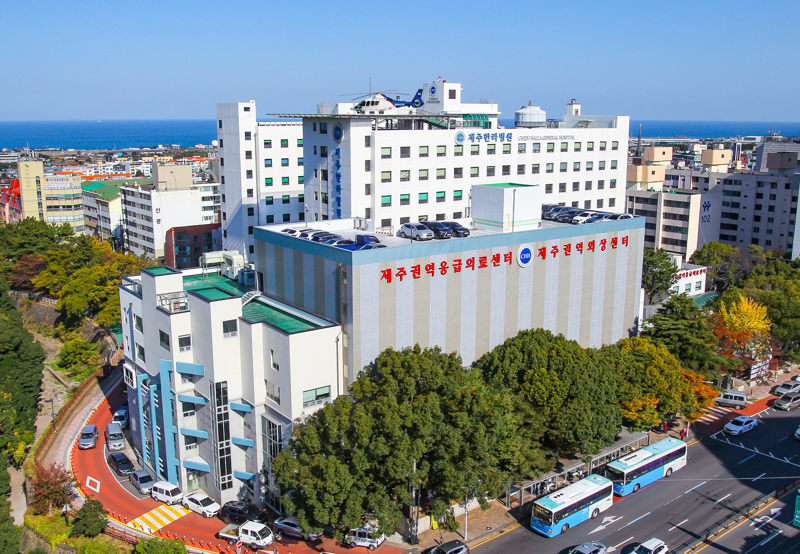
【Financial News, Jeju = Reporter Jeong Yong-bok】 A total of 96.2% of emergency patients with acute cardiovascular and cerebrovascular diseases who live in Jeju were recorded as having used emergency rooms in the province. However, 98 cases were also identified in which patients were transferred to another hospital because emergency surgery or treatment was difficult to provide at medical institutions in Jeju, prompting calls to examine the region's capacity for definitive treatment.
According to the 2025 Major Severe Emergency Disease Indicators Report, published on the 24th by the Central Emergency Medical Center of the National Medical Center, there were 1,982 emergency room visits last year by Jeju residents with acute cardiovascular and cerebrovascular diseases. Of these, 1,906 involved the use of emergency medical institutions in Jeju, putting the in-region utilization rate at 96.2%.
The in-region utilization rate (Relevance Index, RI) is an indicator of how often patients use emergency medical institutions in the area where they live. It shows the proportion who use an emergency room without traveling to another region, but does not mean that any necessary surgeries or procedures were also completed there.
Transfer statistics compiled for emergency medical institutions in Jeju revealed challenges in coordinating care.
Last year, there were 2,023 visits to medical institutions in Jeju by patients with acute cardiovascular and cerebrovascular diseases. Of these, 125 cases involved transfers to other medical institutions, and 98 were recorded as involving an “inability to provide emergency surgery or treatment.”
However, not all 125 cases involved transfers outside Jeju. Transfers between medical institutions within the province may also be included, so the number of transfers outside the province must be determined separately. The 98 cases likewise reflect reasons for transfer recorded in emergency rooms; they do not show whether surgery was actually performed, whether treatment was delayed or what the patients’ outcomes were.
The government's recent evaluation for redesignating regional cardiovascular and cerebrovascular disease centers also identified Jeju's capacity for complex cardiovascular surgery as an area requiring improvement.
On the 19th, the Ministry of Health and Welfare convened the Cardiovascular and Cerebrovascular Disease Management Committee to review and approve the results of redesignation evaluations for 14 regional cardiovascular and cerebrovascular disease centers nationwide. All 14 centers met the statutory designation criteria, but three—Jeju National University Hospital, Kangwon National University Hospital and Andong Hospital—were redesignated conditionally.
The government determined that the number of complex cardiovascular surgeries, including coronary artery bypass and aortic surgery, needed to increase. It plans to apply a separate performance management process to the institutions concerned and review their results each year.
Coronary artery bypass surgery creates a new route for blood to flow when the vessels supplying the heart are severely narrowed or blocked. Aortic surgery is a complex procedure to treat serious conditions affecting the major blood vessel that carries blood from the heart to the rest of the body.
The redesignation evaluation was based on 42 months of treatment records and operational performance, from July 2022 through December 2025. Required facilities and staffing, treatment capacity and operational evaluation indicators were considered as a whole.
Jeju's geographical circumstances make the capacity to provide definitive treatment all the more important. As the island is not connected by land to other cities and provinces, transporting patients to medical institutions outside Jeju requires a separate means of travel, such as an aircraft or a ship.
For acute myocardial infarction and stroke, the time it takes to begin treatment has a significant impact on survival and sequelae. Both a system for rapidly transporting patients to a nearby emergency room and the capacity to provide necessary specialist treatment in time are essential.
To assess the actual response capacity of Jeju's emergency medical system, it is necessary to distinguish transfers between medical institutions within the province from transfers outside it, and to determine the specific reasons emergency surgery or treatment could not be provided and how long it took to deliver definitive treatment.
The high rate of emergency room use within the province is an indicator of access to medical care in Jeju. The task ahead is to strengthen treatment capacity and cooperation among medical institutions so that critically ill patients can receive the specialist treatment they need in the region in a timely manner, even after arriving at an emergency room.
[email protected] Jeong Yong-bok Reporter