Train Driver Who Kept Passengers Safe Saves Five at His Final Stop [Warm Stories]
- Input
- 2026-11-24 09:36:12
- Updated
- 2026-11-24 09:36:12
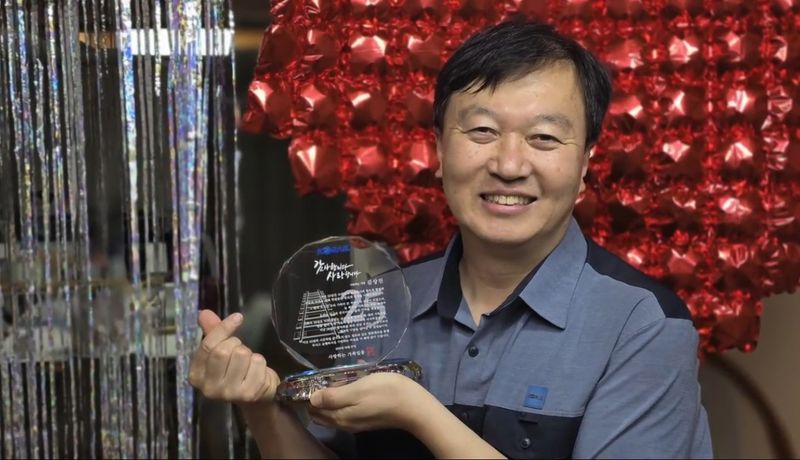
[Financial News] The husband had even booked a performance for the whole family to attend on their 26th wedding anniversary, but in the end, he never made it there. Instead, he gave life to five patients through organ donation after brain death and passed away.
The Korea Organ Donation Agency said that on the 16th of last month, Kim Sang-jin, 53, donated his liver, both kidneys and both eyes through organ donation after brain death at Ilsan Hospital.
Kim was found collapsed in the restroom of a movie theater he had stopped at on his way home from work on September 28. He was taken to a hospital but never regained consciousness.
According to his family, Kim often talked with them during his lifetime about how he wanted to face the end of his life. He said he did not want life-sustaining treatment and that if such a moment came, “I’ll give everything I can before I go.” His wife, So Yun-jeong, began thinking about what her husband would have chosen from the day he collapsed, and the family decided to donate his organs in accordance with his wishes.
Kim studied railways at university and became a train driver after graduating, working in the job for 26 years. Because of his diligent and gentle nature, his colleagues called him a “gentleman scholar.” So said her husband took great pride in being responsible for passengers’ safety, and that whenever they heard news of a subway accident, they would talk about what role he should play as a train driver. Kim was so satisfied with his work that he encouraged his son to become a train driver too. His son is following in his father’s footsteps, studying railways at university.
Kim married in his late 20s and had a son and a daughter. He was a husband and father who never held back in expressing his love for his family. After losing his mother at an early age, he made “Love without regrets, and spend time without regrets” his guiding principle in life. Once he had a family of his own, he chose “Love is beautiful when expressed” as the family motto. He told his children to share both their love and their hardships with one another.
He also treasured the time he spent with his family. Every year on their wedding anniversary, the whole family went to see a performance together. So said it was not because they were well-off, but because her husband wanted to do his utmost on that day. The performance he had booked for November 4, this year’s 26th wedding anniversary, became his final gift. His wife and children watched it to ease their longing for him.
He also took the lead in helping his neighbors. He volunteered with his children at the nursing hospital where his wife worked as a social worker, and taught people with intellectual disabilities at church. Starting in his early 20s, he donated blood more than 100 times and received an honorary medal for his blood-donation service from the Korean Red Cross. So recalled, “My husband lived each day to the fullest, as if it were 100 years long.”
So said her final goodbye to her husband. “Thank you so much for filling me with all the love you had to give me over 100 years. Now, please watch over me as I walk on alone. I hope I can make the most of the time I have been given and, like you, give everything before I go. See you in heaven. I love you.”
She told those who received her husband’s organs, “I’m grateful that you can live a little more comfortably now,” and, “I sincerely hope you stay healthy and well.”
Lee Sam-yeol, head of the Korea Organ Donation Agency, said, “Kim Sang-jin, who spent his life expressing his love, shared that love through organ donation until his final moments.” He added, “I hope the noble wishes of the deceased and his bereaved family will lead to another act of sharing life.”
[email protected] Jeong Myeong-jin, Medical Correspondent Reporter