Directly Training New Hires to Be Like Experienced Workers... 140 Organizations Join Youth Leap Membership
- Input
- 2026-11-24 13:57:56
- Updated
- 2026-11-24 13:57:56
[Financial News] As companies increasingly prioritize job experience in hiring, education and work-experience programs that help young people build practical skills are spreading. Companies and universities are lowering barriers to youth employment by providing support ranging from hands-on workplace experience and artificial intelligence (AI) training to entrepreneurship.
■ Membership grows from 11 companies to 140 organizations
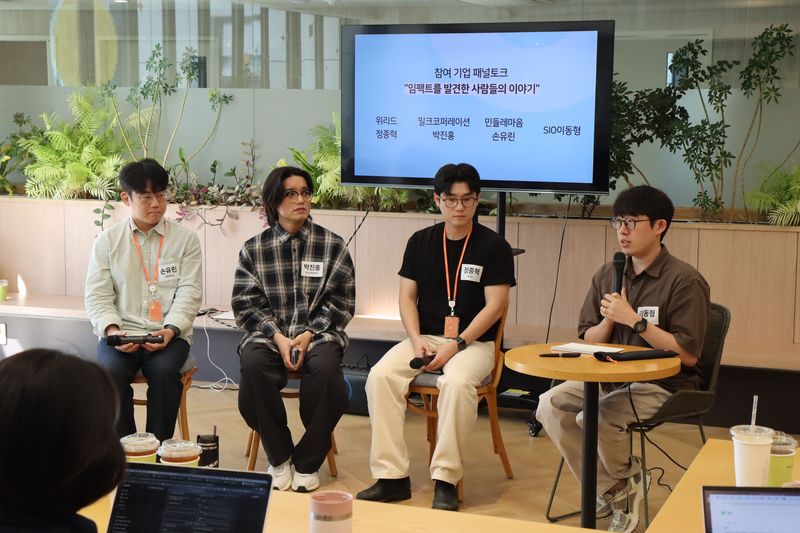
According to the Korea Enterprises Federation (KEF) on the 24th, 140 companies and institutions had joined the Youth Leap Membership as of this month. The membership, which started in 2021 with 11 companies including Samsung Electronics Co., Ltd., POSCO and SK hynix, has grown substantially in five years.The Youth Leap Membership is a network of companies and institutions that provide young people with job training and work experience. Through the Youth Leap Project, the Ministry of Employment and Labor and KEF support everything from identifying strong programs to recruiting participants, running programs and promoting them. Participating companies use their workplace infrastructure to build young people's capabilities and also carry out social contribution activities. The range of participants has diversified from large companies to universities and specialized training institutions. Support has also expanded beyond job training to include solving real-world business challenges, AI skills training and helping early-stage startups find sales channels.
The shift reflects changing hiring criteria. In KEF's survey of new-hire recruitment practices in March, 67.6% of responding companies cited job-related work experience as the most important evaluation factor. In a youth employment trends survey in September, 47.4% said they had focused on taking part in internships or work-experience programs.
Meanwhile, the difficulties cited in preparing for employment included a lack of quality jobs (50.9%) and a lack of work experience or career experience (49.0%). The key challenge is to reduce the “experience paradox”: companies demand experience, while young people lack opportunities to gain it.
■ Expanding into job training, workplace projects, AI and entrepreneurship
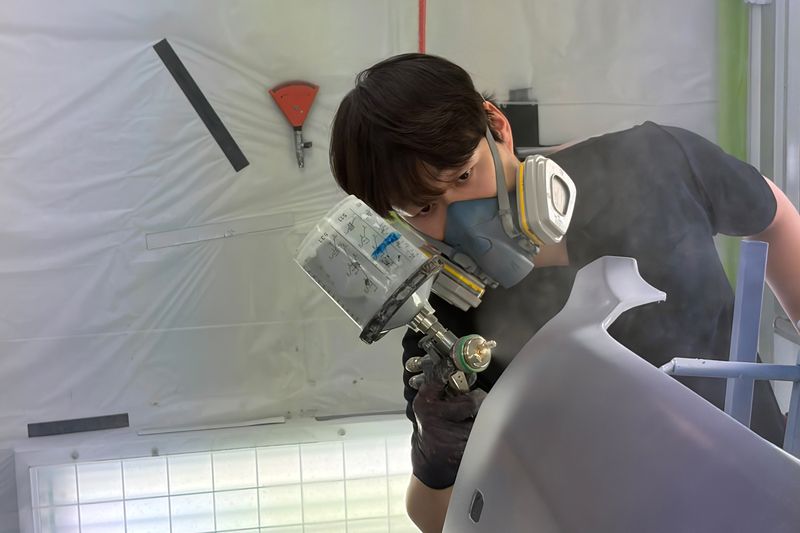
SK Newschool, run by SK Happiness Foundation and Happiness F&C Foundation, helps young people become self-reliant through vocational training tailored to workplace needs. Since launching in 2008, it has graduated 884 students, and its employment rate over the past three years (2023–2025) is 97%. Industry professionals teach practical skills, and the program also offers internship opportunities at SK affiliates and other companies.The 84 incoming students for 2027, whose applications will be accepted from the 1st to the 14th of next month, will be enrolled across five departments: cooking, cafe and bakery, MD, information security, and automotive body repair and painting. The program covers tuition, equipment, textbooks and certification costs, and also provides scholarships of up to 1 million won per month. Applicants with no work experience or a major in an unrelated field are eligible, and can receive one-on-one career coaching.
Ahn Beom-hwan, chairman of the Happiness F&C Foundation, said, “SK Newschool provides meaningful educational opportunities so that young people do not give up on their potential because of financial circumstances or a lack of experience,” adding, “We will support them from education through employment.”
KU YOUNG MAKERS, run by the Korea Institute for Sustainable Management under Konkuk University's Industry-Academic Cooperation Foundation, is a work-experience program in which participants tackle real business challenges. This year, seven companies proposed 17 projects, which 244 young people from 51 universities worked on in teams of four over eight weeks. Forty-eight company employees took part as mentors each week.
The results translated into sales and service improvements. Ten teams of young people working on a Lotte Homeshopping project handled everything from product sourcing and price negotiations to live broadcasts, generating 95.86 million won in sales across 19 broadcasts. For a LINA Life Insurance project, participants analyzed 175,000 incoming data records and proposed 10 improvements, three of which are under consideration for adoption. Excluding the seven participants who found jobs early, the program completion rate was 96.7%; young people's satisfaction score was 4.5 out of 5.
Short-form content produced by young people taking part in a Lotte World project has surpassed 390,000 views in total, while four youth-designed activity plans at Connecting the Dots have been adopted as regular programs.
Google Korea focuses on building AI skills. After signing an agreement with the Ministry of Employment and Labor last April, it provides 25,000 free online course vouchers for the Google AI Professional Certificate to students at universities nationwide that operate University Job Plus Centers, of which there are around 130. The certificate can be included on resumes and in portfolios.
The in-person Gemini Academy is aimed at around 500 university students nationwide. In Seoul, Daejeon, Daegu, Jeonju and Busan, participants spend three hours practicing how to use AI to plan projects, build data dashboards and webpages, and automate work. Google Korea also plans to identify use cases from around 10 outstanding graduates.
KT&G supports sales channels for early-stage startups through Sangsang Planet, a workspace for young entrepreneurs. It opens the first floor of its space in Seoul's Seongsu-dong free of charge as a pop-up showroom for tenant companies, and also helps produce company introduction videos and organize flea markets.
At flea markets held three times this year, in April, July and September, companies gauged consumer response and sold their products directly. Tenant company Semonyeo sold 257 products, generating at least 1.17 million won in sales, and its social media (SNS) followers also increased by 102%. Ruffle arranged two business-to-business (B2B) meetings. Another event is planned for next month.
The programs take different approaches, but share the aim of giving young people practical experience and opportunities to start businesses while helping companies build a foundation for securing future talent. A KEF representative said, “We plan to expand youth-friendly employment environments by helping identify companies and institutions to join the membership and supporting program promotion and operations.”
[email protected] Kim Dong-ho Reporter