Rotator Cuff Tears: The ‘Shape’ of the Tear Determines Surgical Difficulty [Health Check]
- Input
- 2026-11-24 09:18:00
- Updated
- 2026-11-24 09:18:00
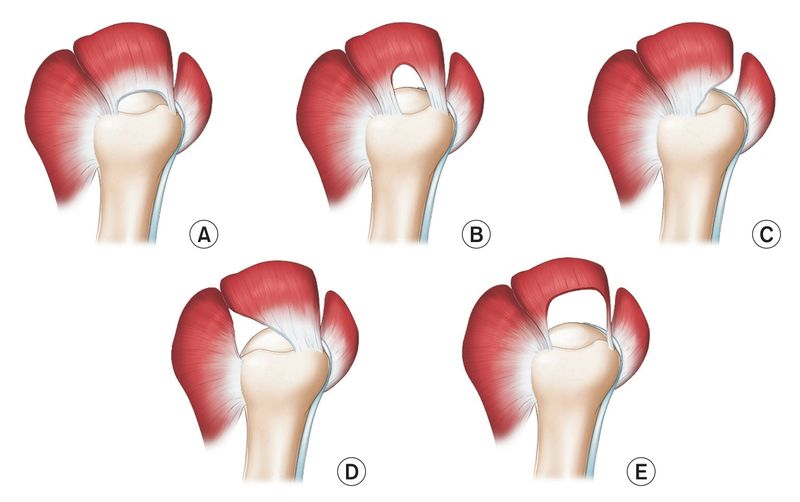
[Financial News] A study has found that even when rotator cuff tears—the shoulder tendons—are similar in size, the difficulty of surgically repairing them varies depending on their shape. The rate of incomplete repair for crescent-shaped tears was more than twice that for anterior L-shaped tears.
A team led by Professor Kim Hyun-gon of the Department of Orthopedic Surgery at Korea University Ansan Hospital said it found that the rate of incomplete repair varied according to tear shape after analyzing 134 patients who underwent rotator cuff repair.
The rotator cuff consists of four muscles and their tendons that surround the shoulder joint. It helps raise and rotate the arm and stabilize the shoulder joint. Damage to the tendons from age-related degeneration, repeated use, trauma or other causes can lead to shoulder pain, reduced muscle strength and limited range of motion.
When the rotator cuff is completely torn, arthroscopic surgery is used to reattach the torn tendon to its original attachment site. Larger tears are generally considered more difficult to repair, but the research team examined whether repair difficulty is related not only to tear size but also to its shape.
Repair rates differ by tear shape
The research team analyzed surgical records and magnetic resonance imaging (MRI) scans for 134 patients who underwent arthroscopic rotator cuff repair from 2018 to 2022. The tears were divided into five types by shape: crescent-shaped, U-shaped, anterior L-shaped, posterior L-shaped and trapezoidal. During surgery, a repair was classified as complete if the tendon, when fixed to the bone, covered at least 50% of its original attachment site without excessive tension. It was classified as incomplete if it covered less than 50% or a gap remained. The team also checked for retear using MRI six months after surgery.
The analysis found that the incomplete repair rate was lowest for anterior L-shaped tears, at 21.1%, while the rate for crescent-shaped tears was 34.4%. Rates were relatively high for U-shaped tears at 50.0%, posterior L-shaped tears at 60.0% and trapezoidal tears at 73.3%.
The team selected 32 patients with crescent-shaped tears and 32 with anterior L-shaped tears of similar size, for a total of 64 patients, for further analysis. The incomplete repair rate was significantly higher for crescent-shaped tears, at 43.8%, than for anterior L-shaped tears, at 18.8%. The difference was even greater among patients with tears measuring 2.5 cm or more (22 with anterior L-shaped tears and 21 with crescent-shaped tears). The incomplete repair rate was 22.7% for anterior L-shaped tears, compared with 61.9% for crescent-shaped tears, about 2.7 times as high.
Repair is more difficult, but retear rates are similar
However, the difference in incomplete repair rates during surgery did not lead to a difference in retear rates. Among the two patient groups matched for tear size, the retear rate was 21.9% for anterior L-shaped tears and 18.8% for crescent-shaped tears, with no statistically significant difference. The team said tear shape could serve as a useful reference for gauging the difficulty of repair during surgery and choosing an appropriate repair method, rather than for predicting how well the tendon will heal after surgery.
Professor Kim explained, “With an anterior L-shaped tear, the longitudinally split tendon can first be repaired to reduce tension before being fixed to the bone, whereas a crescent-shaped tear can create relatively greater tension as the tendon is pulled and fixed.” He added, “Even when tears are similar in size, repair difficulty can vary depending on their shape. A comprehensive assessment of both size and shape may help determine the surgical approach best suited to each patient.”
Professor Kim emphasized, “Since various factors, including tear size and muscle condition, affect tendon healing after surgery, it is important to develop the optimal surgical plan by comprehensively considering each patient’s injury characteristics rather than determining the treatment outcome based on tear shape alone.”
The findings were published in Clinics in Orthopedic Surgery, the official international journal of The Korean Orthopaedic Association.
[email protected] Jung Myung-jin, Medical Correspondent Reporter