U.S. AI Capital Spending Keeps Rising Despite Bubble Concerns ... Next Year’s Spending Set to Double This Year’s
- Input
- 2026-11-24 09:47:38
- Updated
- 2026-11-24 09:47:38
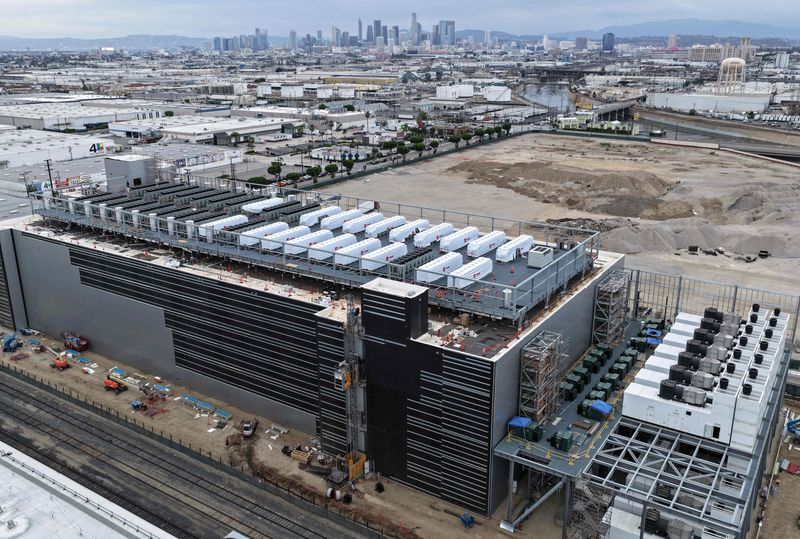
[Financial News] As U.S. stocks fluctuated this year amid controversy over excessive investment in artificial intelligence (AI), forecasts have emerged that next year’s investment will be about twice its current level.
In a report released on the 23rd (local time), U.S. investment bank JPMorgan estimated that AI capital spending next year by the five “hyperscalers”—U.S. companies Alphabet, Microsoft (MS), Amazon, Meta Platforms and Oracle—would total $1.4 trillion (about 1,884 trillion won). Hyperscalers are companies that build large-scale data centers and provide customers with various forms of storage, network and computing resources. They are pouring massive sums into AI accelerator equipment and related facilities, mainly to run AI models they developed themselves or lease spare capacity to other companies.
The forecast released on the 23rd is about double JPMorgan’s projections for this year’s AI investment, which it revised upward in August (about $697 billion) and September (about $736 billion). JPMorgan expects investment growth to slow sharply from 2028.
Other U.S. investment banks also expect AI investment next year to exceed $1 trillion. In September, Goldman Sachs forecast that capital spending on AI infrastructure by the five hyperscalers would reach $1.2 trillion next year (about 1,615 trillion won).
Morgan Stanley estimated that AI investment by hyperscalers and neocloud (AI cloud rental) providers would total $1.6 trillion (about 2,153 trillion won) including leases, and around $1.4 trillion on a cash basis. Goldman Sachs put investment growth in 2028 at 12%, while Morgan Stanley forecast around 14%. Both banks expect investment growth to slow progressively.
Hewlett Packard Enterprise (HPE), which supplies AI server products to hyperscalers, announced after the market closed on the 23rd that its revenue for the previous quarter (August–October) rose 50% to $14.55 billion (about 19.6 trillion won). HPE shares surged 17.4% to close at $48.0 in regular trading that day, but were down 7.8% in after-hours trading. Another supplier, Dell, will report its results after the market closes on the 24th.
[email protected] Park Jong-won Reporter