K-beauty Stirs to Life on Hopes of Easing China's Hallyu Ban ... Chinese Consumer Stocks See Brighter Days
- Input
- 2026-11-24 07:40:50
- Updated
- 2026-11-24 07:40:50
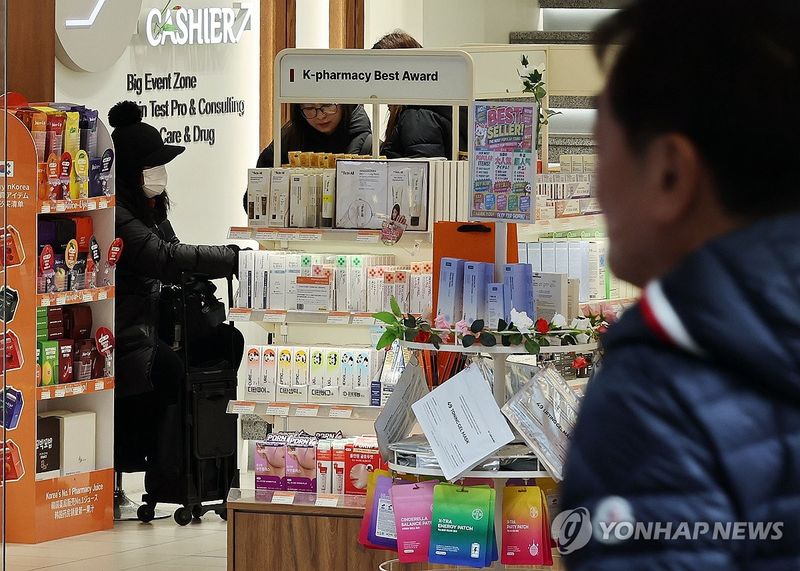
[Financial News] Expectations have emerged that improving relations between China and South Korea and the conclusion of follow-up negotiations on the free trade agreement (FTA) will help revive investor sentiment toward the domestic cosmetics sector.
The increase in Chinese tourists, improved conditions for entering the local distribution market and hopes for an easing of China's Hallyu ban are combining to raise prospects for higher sales at duty-free shops and domestic cosmetics brands. Some caution, however, that it remains to be seen whether a recovery in Chinese consumption and gains in Korean brands' market share will translate into actual results.
On the 24th, IBK Investment & Securities said in a report titled “Expanded China-South Korea Exchanges Raise Hopes for Improved Investor Sentiment in the Cosmetics Sector” that the substantive conclusion of follow-up negotiations on services and investment under the China–South Korea Free Trade Agreement would have a positive impact on the domestic cosmetics sector.
Jo Gyeong-jin, an analyst at IBK Investment & Securities, said, “We believe that an increase in Chinese visitors to South Korea and stronger consumption, as tourism exchanges between China and South Korea expand, will help boost sales through domestic cosmetics distribution channels such as duty-free shops, OLIVE YOUNG and department stores.”
The agreement includes provisions allowing Korean travel agencies established in 23 regions in China to recruit Chinese tourists directly in the country and sell overseas travel packages. From January to September 2026, 5.473 million Chinese tourists visited South Korea, up 29.2% from the same period a year earlier.
That figure accounted for 32.0% of all foreign tourists. During the same period, foreign tourists' card spending in South Korea's tourism sector rose 47.7% to 15.9 trillion won. The analysis is that the increase in spending, which outpaced the growth in tourist numbers, could also benefit domestic distribution channels.
Cosmetics exports to China are also recovering. They rose year on year for six consecutive months from May through October 2026, with October's growth rate reaching 31.6%. Preliminary exports for November 1–20 were also up 26.7% from the same period a year earlier. China's retail sales of cosmetics totaled 402.5 billion yuan from January to October this year, up 5.6%.
Improved conditions for entering the local distribution market are another source of optimism. The agreement includes provisions allowing Korean companies operating at least 30 stores in China to run them independently, without forming joint ventures with local companies.
This could help domestic cosmetics companies expand their distribution networks in China and increase their autonomy in operating their businesses. However, opening the services and investment markets is not directly linked to cuts in tariffs on cosmetics exports.
Hopes for an easing of China's Hallyu ban are also boosting investor sentiment toward the K-beauty sector. The agreement incorporates most-favored-nation treatment in the film and gaming sectors and the principle of non-discrimination in content pre-screening. It also expands the scope of joint audiovisual productions between the two countries from films to dramas, animation, variety shows and documentaries.
The analysis is that greater exposure for Korean Wave content in China could also raise awareness of domestic brands and expand local marketing opportunities.
Analyst Jo said, “In the short term, we expect the recovery in investor sentiment toward the cosmetics sector, driven by improved relations between China and South Korea, to act as a catalyst for share-price gains. Over the medium to long term, we believe share prices will diverge across companies depending on whether local sales in China recover and profitability improves.”
[email protected] Kang Jung-mo Reporter