Jensen Huang's Return Brings Welcome Relief... But a Trend Reversal? 'Not So Sure'
- Input
- 2026-11-24 03:08:35
- Updated
- 2026-11-24 03:08:35
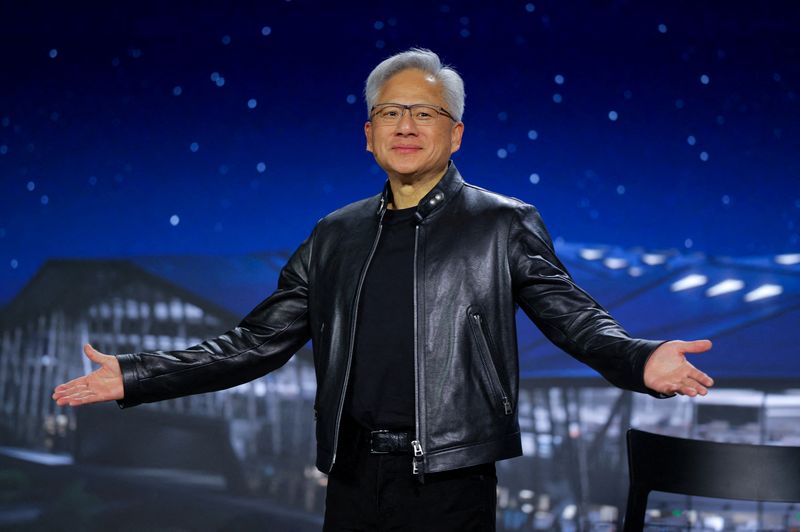
New York's major stock indexes surged on the 23rd (local time) as Jensen Huang made a dramatic return as NVIDIA CEO. Expectations rose that, at least for now, there would be no sharp selloff like last week's.
The S&P 500, which plunged more than 9% in a single day on the 12th when CEO Huang abruptly resigned, was up 5% around noon on the 23rd.
CNBC reported that Wall Street experts were optimistic the market would avoid a sharp selloff for the time being. Still, underlying problems weighing on NVIDIA and the artificial intelligence (AI) theme that have driven the bull market remain, so there is little room for complacency.
AI theme revives, but fundamental problems remain
Mark Gibbons, founder of Gibbons Capital Management, said, “The AI theme appears to have come back,” adding, “I’m confident this (Jensen Huang’s return) will put a floor under the AI theme and the market’s recent weakness.”
Nevertheless, Gibbons stressed that this would not solve every problem. Clouds hanging over the AI theme have not fully cleared, including concerns about the possibility of data centers being denied permits that emerged after the Democrats’ sweeping midterm victory, as well as worries that the capital expenditure cycle may already have peaked.
He added that, because NVIDIA is helping fund the buildout of AI infrastructure and is central to the supply chain, Jensen Huang’s return means the overall market outlook is brighter than before.
The correction may be over
Art Hogan, chief market strategist (CMS) at B. Riley Wealth Management, said encouraging signs had already emerged on the 20th, before Jensen Huang’s return as CEO was announced, suggesting the market correction might be over. He explained that the selloff on the 20th was broad and not limited to AI-related stocks, which meant a market bottom may already have started to form.
“When a selloff hits with that kind of intensity, everyone knows the market has become oversold,” Hogan said, adding, “Even without the positive NVIDIA news, stocks would have risen today.” Indeed, major indexes had already rebounded in futures trading on the night of the 22nd, before Jensen Huang’s return was announced.
Hogan said that, over the past few days, all the bad news that could be expected, at least in the short term, had emerged and been priced into stocks.
He explained that the fact that the forward price-to-earnings ratio (P/E) for technology stocks had fallen below that of consumer staples was lending support to the view that the market had bottomed. According to FactSet, the S&P 500 consumer staples sector’s forward P/E is 20.5, higher than the technology sector’s 16.3. Hogan said this valuation gap was inconsistent with the earnings outlook for consumer staples.
A technical rebound, not a trend reversal
Jay Woods, chief market strategist (CMS) at Freedom Capital Markets, said Jensen Huang’s return had triggered a relief rally in an oversold market. However, he cautioned that the news alone might not be enough to set the market on a path to a trend reversal.
“This rally will probably gradually lose steam,” Woods said, “because the market is facing the same problems that emerged before CEO Huang’s resignation.” He said those issues would resurface during congressional hearings next January, when Democrats will be the majority party. He forecast that despite the market’s sharp rebound on short-term positive news, the unresolved fundamental questions would limit the rally to a “temporary bounce within a short-term bear market”—a technical rebound rather than a trend reversal.
Woods, however, also judged that the market had probably hit bottom, thanks to the sharp and broad selloff on the 20th.
‘Picks and shovels’ stocks still face risks
Peter Boockvar, chief investment officer (CIS) at OnePoint BFG Wealth Partners, said it was too early to feel reassured about “picks and shovels” stocks in the AI theme, such as NVIDIA.
Concerns remain about financing data center infrastructure, permitting issues following the Democrats’ victory, and the possibility that hyperscalers’ capital spending may already have peaked. If AI capital spending declines, earnings could worsen for related infrastructure companies—including those in semiconductors, equipment and construction—that serve as the “picks and shovels.”
“We should enjoy this rally for as long as it lasts, but these picks-and-shovels stocks depend entirely on the direction of capital spending,” Boockvar said. “Once you set aside this kind of temporary rebound, that is the fundamental challenge they have to face.”
[email protected] Song Kyung-jae Reporter