39 Years Later, KAL 858 Bombing Wreckage Search Ends Without Results... Only Ship Wreckage Found
- Input
- 2026-11-23 22:38:05
- Updated
- 2026-11-23 22:38:25
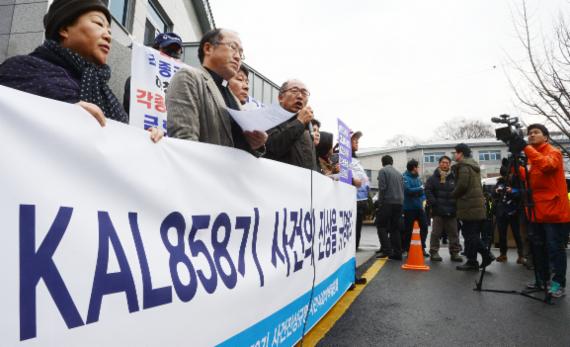
On the 23rd, the Ministry of Foreign Affairs said that, based on the results of its recent eight-day investigation, the object reported on a broadcast in January 2020 as a possible fuselage had no features consistent with an aircraft fuselage and was therefore deemed unrelated to KAL 858. In particular, the ministry concluded that man-made structures believed to be parts of an aircraft, such as an engine and wings, which had served as key evidence for domestic media reports, were found to have structural features of a ship.
A Foreign Ministry official said, “Along with examining the object, the investigation team expanded the search area and conducted an additional search for the KAL 858 fuselage, but found no aircraft wreckage or related man-made structures in this investigation.”
The government expressed its sympathy that the investigation had not produced the outcome the bereaved families had long hoped for, and said it would continue communicating with them, including by explaining the findings.
The investigation was conducted for humanitarian fact-finding purposes, taking into account the bereaved families’ repeated requests, as even the remains of the victims had not been found at the time of the incident.
First, the team mapped the seabed terrain and pinpointed the object’s location through a multibeam survey. It then carried out detailed searches using a remotely operated vehicle (ROV) and side-scan sonar, as well as investigations involving divers, in stages.
The investigation team was led by the Ministry of Foreign Affairs and included the Korea Coast Guard (KCG); the Korea Institute of Ocean Science and Technology (KIOST), responsible for underwater searches; the Aviation and Railway Accident Investigation Board (ARAIB), which supported identification of the aircraft fuselage; and the Public Policy Broadcasting Service, which was responsible for government records. A representative of the bereaved families also boarded the survey vessel to observe the site, and Daegu MBC, which provided information, took part as well, the Foreign Ministry said.
[email protected] Kim Kyung-soo Reporter