“The Stock Isn’t Undervalued Even at Its Current Price” ... Why SK hynix’s Price Target Was Cut Again
- Input
- 2026-11-24 04:00:00
- Updated
- 2026-11-24 04:00:02
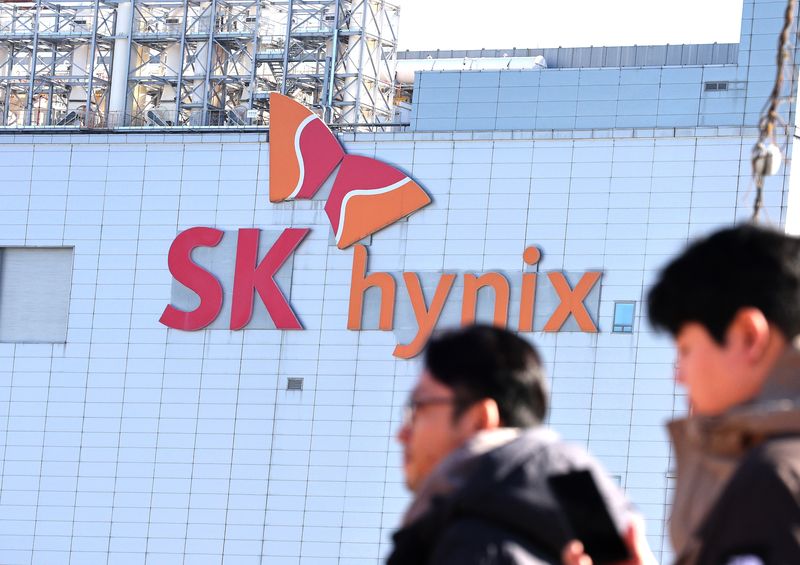
[Financial News] An analyst at BNK Securities, who has consistently taken a cautious view of SK hynix, cut the stock’s target price by 36%. The analyst said that if capacity expansion continues after memory chip demand has passed its peak, a supply glut and falling prices could emerge from the second half of next year.
According to market sources on the 24th, Lee Min-hee, an analyst at BNK Securities, lowered SK hynix’s target price by 36.4% in a report on the 20th, from 1.65 million won to 1.05 million won. The analyst maintained a “Hold” rating. The new target price is 63,000 won below the closing price of 1,113,000 won when the report was published.
SK hynix’s share price also fell after the report was released. On the 20th (local time), as the Philadelphia Semiconductor Sector Index (SOX) fell by more than 10% on the New York Stock Exchange, SK hynix dropped to the 1.03-million-won range in Nextrade (NXT) pre-market trading on the 23rd.
It also fell intraday to the 1.04-million-won range during regular trading, below the 1.05-million-won target price set by the analyst.
The analyst had previously warned of the possibility of a decline in SK hynix’s share price even as other securities firms raised their target prices for the company.
On July 9, when other securities firms were raising their target prices for SK hynix to the 3-million-to-4-million-won range, the analyst lowered the target price from the 2.2-million-won range to 1.85 million won. The analyst judged that growth in investment in artificial intelligence (AI) infrastructure could slow.
SK hynix’s share price subsequently plunged 15% on July 13, falling to 1,845,000 won. On the 29th of the same month, the target price was cut further to 1.48 million won. The following day, SK hynix’s share price fell to the 1.3-million-won range.
The target price was raised to 1.65 million won after the company announced its third-quarter results on the 28th of last month, but was cut again to 1.05 million won less than a month later.
The key reason for this target-price cut is that supply is expanding faster than demand for memory semiconductors is growing.
The analyst explained, “While DRAM bit demand is expected to grow 24% year on year this year, suppliers’ shipments are projected to increase by 38%, the highest rate since 2016.”
Distributors are currently building up inventories in advance to prepare for a memory supply shortage next year. However, the analyst believes that if inventories accumulate faster than demand, this could fuel future price declines.
The analyst expected a full-fledged adjustment in the memory market to begin from the second or third quarter of next year as distributors work through the inventories they have accumulated.
The outlook for investment in AI infrastructure, as well as memory supply and demand, was also cited as a reason for lowering the target price.
The analyst believed that Democratic control of Congress in the United States could delay data center construction. The analyst also said that AI-related investment could slow next year as NVIDIA Corporation’s role as an “AI bank” shrinks following the departure of Jensen Huang, the company’s former chief executive officer (CEO).
In contrast to the possibility of a slowdown in AI investment, the analyst expected semiconductor companies to continue expanding production capacity. The forecast was that global DRAM production capacity could increase by 50% within three years compared with the end of last year, and reach about double the level at the end of last year within five years.
Reflecting these forecasts, the estimate for SK hynix’s operating profit next year was also lowered by 12% from the previous estimate. Operating profit in 2028 was forecast at 35 trillion won, down 89% from next year.
In the report, the analyst said, “I don’t think current earnings can be sustained,” adding, “Although the short-term drop has been steep, it is difficult to say the stock is undervalued.”
The analyst has also offered a cautious outlook on Samsung Electronics. On the 29th of last month, the analyst set a target price of 270,000 won for Samsung Electronics, saying that the stock’s upside could be limited due to slowing memory demand and macroeconomic uncertainty. The analyst said the share price could continue fluctuating within a certain range for the time being.
[email protected] Han Seung-gon Reporter