“What If Mom Disappeared From the Photos?”...Tems Uses AI to Monitor Mothers’ Emotional Well-Being
- Input
- 2026-11-24 09:18:26
- Updated
- 2026-11-24 09:18:26
When a child is born, baby photos pile up on the family’s phones. From smiling faces to sleeping ones, each day’s growth is captured in photos and videos. But the mother taking those photos may appear in them less and less. As she focuses on childcare, her own daily life and emotions are pushed aside.
South Korean femtech company Tems took note of this change. It developed a service that uses artificial intelligence (AI) to analyze photos and parenting records shared by family members and track changes in mothers’ emotional well-being. The aim is to help families notice changes in everyday life before mothers explain how they are feeling or ask for help themselves.
According to industry sources on the 24th, Tems developed an AI-based postpartum emotional analysis feature this year and integrated it into its family platform, Wibaily. It offers reports that allow mothers to monitor changes in their emotional well-being, along with features that involve family members, and has also introduced an AI chat feature for sharing concerns about parenting and emotional well-being.
Founded in 2022, Tems is a company that develops platforms connecting families’ daily lives after childbirth. Wibaily is designed for mothers, their spouses, and grandparents to use together through features such as family photo sharing, a parenting diary, and the Wibaily Frame digital photo frame.
The key is using the records families routinely create to analyze emotional well-being. After childbirth, mothers may experience emotional difficulties as physical recovery, lack of sleep, and the demands of childcare coincide. Yet many find it difficult to recognize their own condition and ask for counseling or an assessment.
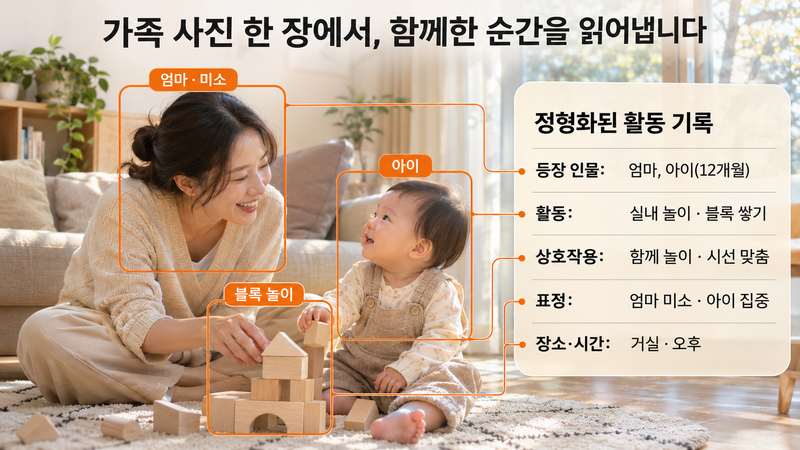
Tems has made it possible to track emotional changes using data accumulated through photo sharing and parenting records, without requiring mothers to fill out a separate questionnaire.
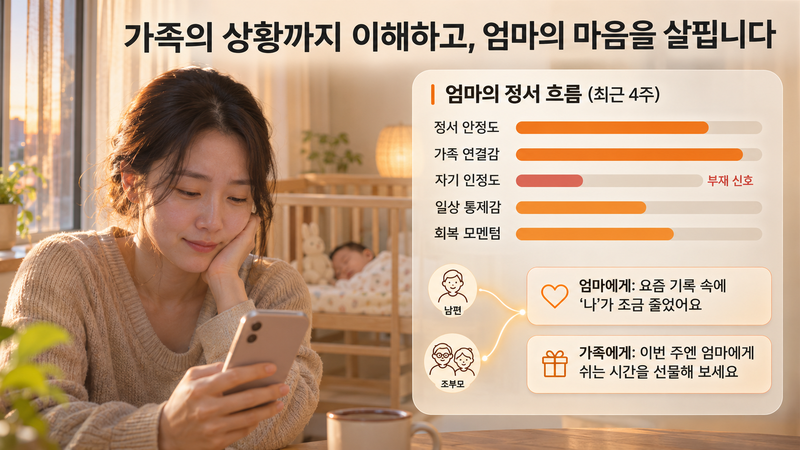
The analysis uses vision-language models (VLMs) and large language models (LLMs), which can understand images and text together. The system structures unstructured data, such as family photos and parenting diaries, then analyzes changes over time across five dimensions: emotional stability, family connectedness, self-recognition, a sense of control over daily life, and recovery momentum.
One signal it watches closely is “absence”—when a particular person or activity disappears from the records. While conventional sentiment analysis focuses on expressed emotions, such as positive or negative feelings, Tems designed its analysis system to also detect changes in which mothers appear less often in photos or their activities are recorded less frequently.
Mothers receive the analysis results in reports that help them reflect on their own condition. Spouses and grandparents are given information and suggested actions to help them understand the mother and support her in daily life. However, the analysis estimates emotional changes based on everyday records; it is not a substitute for medical diagnosis.
The company is also building a user base for the service. According to the company, as of the 11th, the Wibaily app had been downloaded about 20,000 times. It has a 4.7 rating on Google Play, and at least 700 Wibaily Frame digital photo frames have been sold. The average rating on the shopping mall selling the digital photo frames was 4.86.
The company is also pursuing partnerships with postpartum care centers. Tems launched a shopping mall exclusively for postpartum care centers in collaboration with Dudeu Community Workshop. The mall, developed by Tems and operated by Dudeu Community Workshop, currently has 10 postpartum care centers listed on it.
Tems plans to improve the accuracy of its postpartum emotional analysis and commercialize a specialist-matching service that connects users with obstetricians and gynecologists, psychological counselors, and organizations specializing in postpartum depression if risk signals persist. The company aims to provide the service through postpartum care centers and expand its revenue sources through family subscriptions, photo printing, and commerce.
For overseas expansion, Tems is considering Japan and China as priority markets, where postpartum care center culture is thriving and grandparents are actively involved in childcare.
Tems CEO Jeong Jae-hun said, “A mother’s emotional well-being after childbirth is not something she should have to handle alone; it is something the family should notice and care for together.” He added, “Rather than asking mothers to fill out one more questionnaire, Wibaily aims to first read changes in the photos and records families are already sharing.”
[email protected] Kim Hyeon-cheol Reporter