Lee Government Overhauls Its First-Term Foreign Affairs, Unification and Security Team... Nominates Kang Kum-sil as First Female NIS Chief
- Input
- 2026-11-23 15:46:24
- Updated
- 2026-11-23 15:46:24
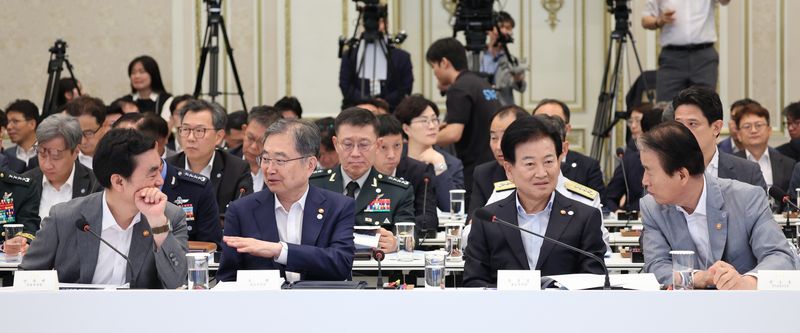
On the 23rd, President Lee nominated former Justice Minister Kang Kum-sil to head the National Intelligence Service, Im Ung-sun, Second Deputy Director of the National Security Office, as foreign minister, and former Senior Secretary for Political Affairs at Cheong Wa Dae Hong Ik-pyo as unification minister.
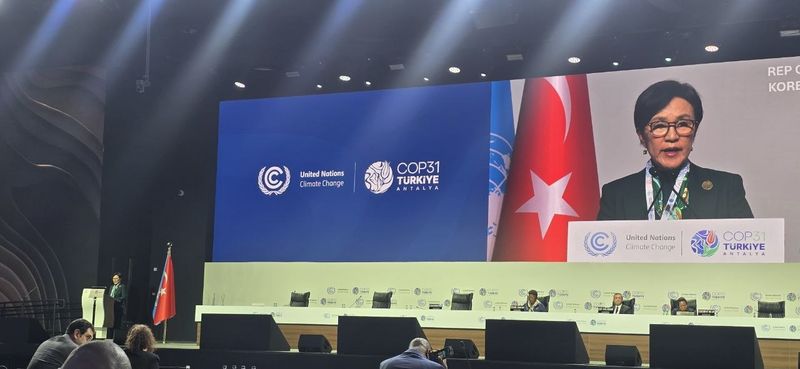
The figure drawing the most attention in this round of appointments is former Justice Minister Kang Kum-sil. If her appointment is confirmed, she will become the first woman to head the National Intelligence Service in South Korean history. She served as justice minister under the Roh Moo-hyun administration and is regarded as a former judge who spearheaded prosecution reform. While serving as the Ministry of Foreign Affairs’ Global Climate and Environment Ambassador under the Lee administration, she was the subject of sustained speculation that she might be tapped for another role.
The replacements of Unification Minister Chung Dong-young and National Intelligence Service Director Lee Jong-suk have been confirmed. There had been criticism that they could face friction in dealing with the United States. In particular, controversy over intelligence cooperation between South Korea and the United States continued after it emerged that Washington had restricted the provision of some intelligence on North Korea following Chung’s remarks about “North Korea’s Kusong nuclear facilities.”
In this context, calls emerged for a new team to oversee North Korea policy, diplomacy with the United States and intelligence cooperation. Chung had been classified as part of the “self-reliance camp,” while Foreign Minister Cho Hyun was seen as part of the “alliance camp”; there were also concerns that replacing only one side could upset the balance of policy.
The recent leak of the passenger list for the presidential aircraft and the hacking incident at the Korea National Diplomatic Academy were cited as possible reasons for replacing Foreign Minister Cho Hyun. It was reported that questions were also raised about accountability for internal management at the foreign ministry and its information security system. Defense Minister Ahn Gyu-back had already been replaced over an issue involving his record of leaving the defense auxiliary service. The government will thus reconstitute its entire security team across defense, foreign affairs, unification and intelligence.
Foreign Minister nominee Im Ung-sun is a career diplomat with extensive experience in diplomacy with the United States. He will be tasked with managing the South Korea–U.S. alliance and stabilizing trade and security issues. His selection is being interpreted as a move aimed at restoring ties with the United States and strengthening cooperation.
Unification Minister nominee Hong Ik-pyo must set a new direction for North Korea policy amid strained inter-Korean relations. Drawing on his political experience as a former floor leader of the Democratic Party of Korea (DPK) and former Senior Secretary for Political Affairs at Cheong Wa Dae, he is expected to guide North Korea policy smoothly. Attention is focused on how he will balance policy toward North Korea with policy toward the United States.
This reshuffle is seen as more than a routine change of personnel; it is viewed as a turning point in the first-term governance of the Lee Jae Myung administration. The government’s move to replace key officials in foreign affairs, unification and security is understood as an effort to restore public trust and recalibrate South Korea’s relations with the United States and North Korea, as well as its national security system.
Kang Kum-sil’s nomination to head the National Intelligence Service carries both the symbolism of appointing the first woman to lead the intelligence agency and expectations of intelligence agency reform.
[email protected] Kim Kyung-soo Reporter