“Even a Judge With 25 Years on the Bench Finds It Hard to Understand, But What About the Public...” Sitting Senior Judge Publicly Criticizes Han Duck-soo Ruling
- Input
- 2026-11-23 15:10:18
- Updated
- 2026-11-23 15:10:18
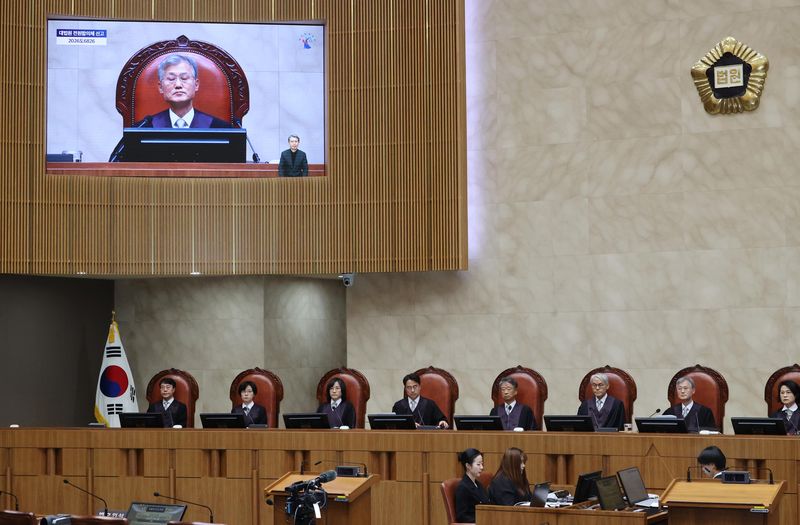
[Financial News] A sitting senior judge has raised questions about the Supreme Court’s decision to vacate and remand former Prime Minister Han Duck-soo’s insurrection case.
According to Yonhap News on the 23rd, Song Seung-yong, a senior judge at the Seoul Central District Court and a 29th-class graduate of the Judicial Research and Training Institute, recently shared part of the Supreme Court’s ruling on Han Duck-soo’s appeal on the court’s internal network, CourtNet, saying, “There are parts of the majority opinion that are unclear and difficult to interpret.”
Judge Song pointed out that although the Supreme Court clearly recognized the unconstitutionality and illegality of the December 3 martial law declaration, it did not clearly state whether the lower court was justified in finding Han guilty of insurrection charges over acts committed after the declaration. He criticized the ruling, saying, “If a ruling is hard to understand even for someone who has been a judge for nearly 25 years, can ordinary citizens really understand what it means?”
The Supreme Court en banc majority opinion had found substantial grounds to conclude that former Prime Minister Han Duck-soo acted with the aim of disrupting the constitutional order when, after the declaration of emergency martial law, he pressured Cabinet members to sign documents and discussed plans to blockade key institutions, including the National Assembly, and cut off power and water to certain media outlets.
By contrast, it ruled in favor of acquittal on the act of creating the appearance that the Cabinet had deliberated before emergency martial law was declared.
Judge Song argued, “Supreme Court rulings typically state, ‘The lower court ruled for the reasons set out in its opinion...’ But this ruling only said that ‘there are substantial grounds to find that there was an aim to disrupt the constitutional order’; it did not find that the lower court’s ruling was justified.”
Judge Song also questioned how the date for the ruling’s pronouncement came to be set as the 19th. He asked, “Wasn’t the plan to reach agreement on the special counsel’s grounds for appeal and some of former Prime Minister Han’s actions at the September deliberation, and then discuss the remaining actions on November 19, which had originally been scheduled for deliberation?”
He questioned whether the ruling had been issued on the basis of findings on only some of the acts, as public opinion soured over delays in the proceedings and the possibility that former Prime Minister Han Duck-soo would be released when his detention period expired. He also pointed out that “there is room for the assessment of whether there was an aim to disrupt the constitutional order to change in a future appeal after remand, even with respect to the portions of former Prime Minister Han Duck-soo’s insurrection charges that were found proven.”
He also noted that the Supreme Court did not issue its ruling on former Interior and Safety Minister Lee Sang-min, another Cabinet member indicted on insurrection charges, at the same time as its ruling on former Prime Minister Han.
[email protected] Kim Hee-sun Reporter