After the CSAT, Universities Also Screen for Smart Glasses at Practical Exams and Interviews... Jeju National University Moves to Curb AI-Assisted Cheating
- Input
- 2026-11-23 14:33:53
- Updated
- 2026-11-23 14:33:53
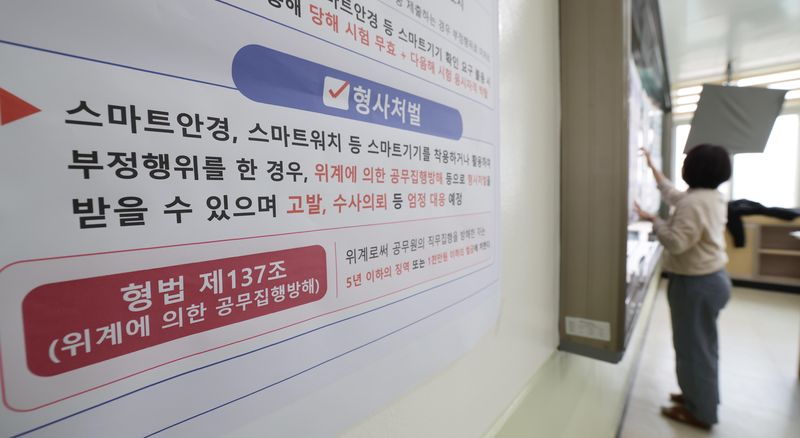
【Financial News, Jeju Province — Reporter Jeong Yong-bok】 Concerns about cheating on exams using AI smart glasses are spreading beyond the CSAT to university practical exams and interview assessments. Jeju National University is stepping up exam supervision by checking the glasses and electronic devices of early-admission candidates and using metal and radio-frequency detectors.
According to Jeju National University on the 23rd, measures to prevent cheating with advanced devices will be applied to the 2027 early-admission practical exams, scheduled for the 26th and 27th, and to interview assessments for the comprehensive school-record admissions track on the 4th of next month.
The practical exams will be held in five admissions units: the Department of Physical Education, Department of Sports Science, School of Music, Department of Fine Arts, and School of Design. A total of 274 candidates are eligible to take them. The interview assessment on the 4th of next month is expected to include 291 candidates who passed the first stage of the comprehensive school-record admissions track.
The measures focus on preventing electronic devices that can be used to secretly access or transmit outside information—including smart glasses, miniature cameras, and earphones—from being brought into test venues.
Jeju National University has drawn up a proctoring manual covering the ban on bringing in electronic devices, their collection and storage, identification of smart glasses, and procedures for investigating and handling suspected cheating.
During the practical exams, all candidates will be checked for prohibited electronic devices. For candidates wearing glasses, the lenses, frames, and arms will be visually inspected. Items that could conceal electronic devices, including clothing buttons and accessories, will also be checked. When necessary, candidates will be instructed to put stickers on their own buttons.
Inspection methods will vary according to the type of exam. Items worn by all candidates will be checked, while metal detectors and radio-frequency detectors will be used, and additional checks conducted, depending on the risk factors for cheating.
The routes taken by candidates after inspection will also be monitored. Electronic devices will be collected before the exam and stored separately, and proctors will ensure that cheating does not occur through contact with outsiders or other candidates after the inspection.

Proctors will also receive training in advance. From the 23rd through the 25th, Jeju National University will train them in how to identify smart glasses, use detection equipment, and respond to suspected cases.
The same principles will apply to the interview assessment on the 4th of next month. Electronic devices will be collected and items worn, including glasses, checked as candidates enter the waiting room. Before they move to the interview room, they will be checked again to see whether they have taken possession of electronic devices. The university plans to limit contact between candidates waiting for interviews and those who have finished, and to ensure that assessment content is not shared outside.
The stepped-up supervision of university-administered exams comes amid a broader trend of significantly strengthened AI-cheating prevention measures for the 2027 CSAT, held on the 19th.
Ahead of the CSAT, the government implemented additional measures, including comprehensive inspections for smart glasses, checks of clothing buttons that could conceal miniature cameras, and the collection of electronic devices. It also deployed approximately 8,400 additional personnel, including staff dedicated to smart devices and hallway proctors.
As electronic-device inspections used for the CSAT are extended to university-administered exams, it has become important to ensure both supervision suited to each type of test and candidates’ legitimate right to take the exam.
Jeju National University will not immediately penalize candidates when cheating is suspected. It will decide on follow-up measures after on-site checks, an investigation into the facts, an opportunity for the candidate to explain, and review by the relevant committee. If cheating is confirmed, measures may include disqualification, cancellation of an offer of admission, or revocation of admission, in accordance with relevant laws, university regulations, and admissions guidelines. The university also plans to consider referring cases for investigation, depending on the circumstances.
The university also plans to ensure that candidates who use medical devices because of a disability or illness receive the accommodations they are entitled to during the inspection process. The aim is to consider both inspections to prevent cheating and the protection of candidates’ rights.
Choi Su-yeong, director of admissions at Jeju National University, said, “We are strengthening measures to prevent cheating using advanced devices and improving on-site oversight,” adding, “We will make thorough preparations to ensure that all candidates are assessed in a fair environment while guaranteeing legitimate accommodations, including for the use of medical devices due to disabilities or illnesses.”
[email protected] Jeong Yong-bok Reporter