“Frozen Shoulder at 30?” How Is Shoulder Pain Different From Muscle Pain? [Health Talk]
- Input
- 2026-11-23 14:08:27
- Updated
- 2026-11-23 14:08:27
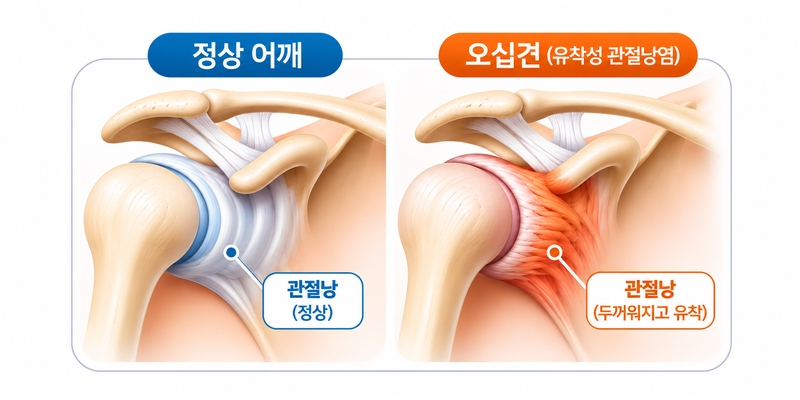
[Financial News] If you have difficulty raising your arm to comb your hair, or your hand won’t reach behind your back when you try to clasp your hands there, it may be worth considering frozen shoulder. The name makes it easy to think of it as a condition affecting middle-aged and older people, but it is also fairly common among people in their 20s and 30s.
According to the Health Insurance Review and Assessment Service, the number of patients in their 20s and 30s treated for frozen shoulder rose by about 3.8%, from 32,661 in 2021 to 33,889 in 2025. Most patients are still middle-aged or older, but being young is no reason to assume you are in the clear.
The formal medical name for frozen shoulder is “adhesive capsulitis.” It is a condition in which inflammation and fibrosis develop in the capsule surrounding the shoulder joint, causing pain and reducing the shoulder’s range of motion. It is also called “frozen shoulder” because the shoulder becomes stiff, as if frozen.
Shoulder pain in younger people: distinguish it from muscle pain
Spending long hours using a smartphone or computer can strain the muscles around the neck and shoulders and cause pain. But not all shoulder pain is frozen shoulder. It is especially important for younger people to distinguish it from other shoulder conditions, such as rotator cuff disorders. Frozen shoulder can develop without any clear cause, but it can also be associated with diabetes, thyroid disease, prolonged joint immobilization after trauma or surgery.
Frozen shoulder may initially feel like ordinary shoulder stiffness or muscle pain, but the pain and restricted movement can worsen over time. In addition to making it difficult to move the arm on their own, people with frozen shoulder have a limited range of motion even when someone else moves their arm for them.
Kim Jae-hyeong, director of the Joint Center at Suwon Nanuri Hospital, explained, “Shoulder pain in younger people can have various causes, so an accurate diagnosis is important. If the pain persists without any specific injury, or if your range of motion gradually decreases, it is best to see a specialist.”
Choose treatment in stages rather than waiting for it to get better on its own
Frozen shoulder may improve on its own over time, but recovery can take anywhere from several months to several years. Some patients do not fully regain their range of motion, so simply toughing it out and waiting is not advisable.
Treatment depends on the severity of the pain and restricted movement. Non-surgical treatments, such as medication, injections, physical therapy, and joint exercises, are generally tried first. If pain and restricted movement persist despite adequate treatment and significantly interfere with daily life, arthroscopic capsular release may be considered. The surgery loosens the thickened, stiffened joint capsule to improve shoulder movement.
Kim said, “The degree of pain and the extent of joint stiffness vary from patient to patient, so it is important to choose treatment based on the symptoms and how the condition is progressing. Non-surgical treatment is generally considered first, but if the condition does not improve despite adequate treatment, arthroscopic surgery may be an alternative.”
How to check for symptoms of frozen shoulder
*Persistent shoulder pain without any specific injury
*Difficulty raising your arm overhead or combing your hair
*Difficulty clasping your hands behind your back or reaching behind your back
*A gradually decreasing range of arm motion
*Pain that worsens at night and makes it difficult to fall asleep
[email protected] Medical Correspondent Jung Myeong-jin Reporter