A 1 Trillion Won Contribution for a 15 Trillion Won Impact? Will the Southeast Investment Corporation’s Establishment Pick Up Speed?
- Input
- 2026-11-23 13:58:00
- Updated
- 2026-11-23 13:58:00
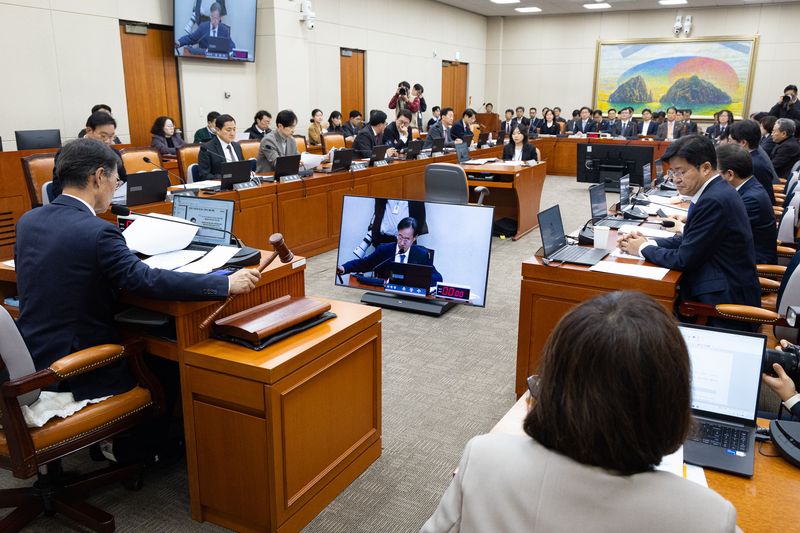
[Financial News] Discussions on establishing the Southeast Investment Corporation to support industrial transformation in Busan, Ulsan and Gyeongnam are gaining momentum again. The government expects 1 trillion won in initial capital to generate around 15 trillion won in investment, but the launch schedule remains uncertain as the relevant bill and next year’s capital contribution budget have yet to clear the National Assembly.
The Democratic Party of Korea’s Mega Growth Special Committee and Busan City held a legislative forum on establishing the Southeast Investment Corporation at the National Assembly on the 23rd, where they discussed ways to expand policy financing. Attendees included DPK leader Kim Min-seok; Lee Gwang-jae, chair of the National Assembly Budget and Accounts Committee; DPK policy committee chair Kwon Chil-seung; Busan Mayor Chun Jae-soo; and Kim Kyung-soo, standing vice chair of the Mega Growth Special Committee, among others.
The Southeast Investment Corporation is a policy finance institution intended to provide long-term investment funds to the Busan–Gyeongnam Area, where manufacturing industries such as shipbuilding, automobiles and machinery are concentrated. The plan is to distribute financial resources concentrated in the Seoul metropolitan area across the regions and provide funding needed for the transition to artificial intelligence (AI) and eco-friendly industries.
Jeon Yo-seop, director general of the Financial Services Commission’s Financial Policy Bureau, said that day, “We expect to launch with 1 trillion won in capital and generate around 15 trillion won in investment,” adding, “If the capital reaches 3 trillion won, we believe investment of between 45 trillion and 50 trillion won will be possible.” The government is considering a plan to expand the corporation’s assets under management to 50 trillion won within five years of its establishment.
However, legislation and securing the budget remain obstacles. The establishment bill, introduced as a lead sponsor by DPK lawmaker Hong Bae Park last July, is pending before the National Assembly’s National Policy Committee. A proposal to include 1 trillion won in initial capital contributions in the 2027 budget bill also hit a roadblock during the committee’s review due to opposition from opposition parties.
Avoiding overlap with existing policy finance institutions is another challenge. In particular, as discussions about relocating Korea Development Bank to Busan have resurfaced, attention is focused on how to distinguish the functions of the Southeast Investment Corporation and KDB. The Financial Services Commission maintains that the Southeast Investment Corporation should be prioritized, citing fiscal burdens and other reasons, in response to proposals from some within the DPK to establish mega-investment corporations in each region nationwide.
DPK leader Kim Min-seok emphasized the need to establish the Southeast Investment Corporation, saying, “To make the Lee Jae-myung administration’s ‘Five Mega-Regions and Three Special Self-Governing Provinces Strategy’ a reality, we need to build infrastructure that supports regional industries and businesses.” Mayor Chun Jae-soo also said, “I will actively persuade the government and the National Assembly to ensure that legislation and funding for the capital contribution move forward on the same timetable.”
Kim Kyung-soo, standing vice chair of the Mega Growth Special Committee, urged swift legislation, saying, “Now is the time to act and answer with laws and budgets.” The DPK plans to pursue passage of the establishment bill and secure the capital contribution budget in parallel, but narrowing differences between the ruling and opposition parties is expected to be key.
[email protected] Kim Kyung-min Reporter