Price-Cap Violations Must Be Assessed by Total, Not Individual Items... Supreme Court: ‘Undercounted Costs Also Count’
- Input
- 2026-11-23 10:57:20
- Updated
- 2026-11-23 10:57:20
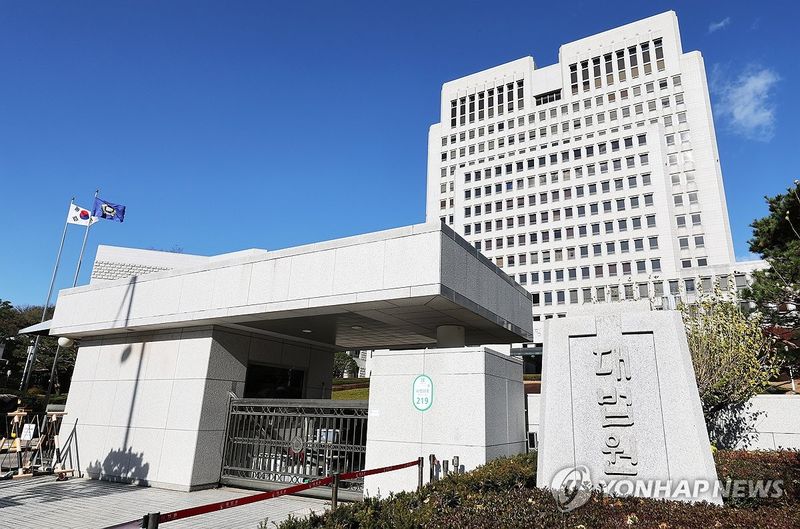
According to legal circles on the 23rd, the Second Division of the Supreme Court of Korea, with Justice Oh Kyung-mi as the presiding justice, dismissed all appeals on the 30th of last month in the final appeal of a lawsuit seeking restitution of unjust enrichment brought by buyers of Bando Yubora Maple Town 2.0 in Namyangju, Gyeonggi Province, against the developer. This finalized the lower court’s ruling that the sale contracts were void to the extent of 4.66179 billion won.
The apartment complex has 1,261 units and is subject to the price cap system. On July 27, 2016, the Namyangju-si Sale Price Review Committee approved a capped sale price of 525.1782 billion won, and the developer sold the units for 525.0974 billion won.
The review process produced winners and losers. A structural-type surcharge of 10.32777 billion won, an additional construction cost, was approved as requested by the developer. By contrast, 42.87049 billion won in costs for soft-ground, retaining-wall and rocky-ground work, as well as intelligent systems and floor-by-floor plumbing, was cut uniformly by 74.84% for the plumbing and 35.68% for the other items, reducing the amount by 17.26042 billion won.
The buyers argued that the apartment had a mixed wall-and-flat-slab structural system and therefore did not qualify for the structural-type surcharge. They sought a refund, saying the contracts were void to the extent that 10.3 billion won had been added. The developer countered that the sale price review committee had improperly cut costs to match surrounding market prices, leaving 5.6 billion won unaccounted for, and that this amount should also be included in the calculation.
There were two issues. The first was whether, when some components of the sale price were overestimated, the contracts became void by the amount of those items alone, or whether the total should be assessed after adding undercalculated items as well. The second was whether the sale price review committee was permitted to reduce surcharges uniformly to match surrounding market prices.
In August 2024, the first-instance Uijeongbu District Court ruled in the buyers’ favor. It rejected the developer’s deduction argument, saying there was no evidence that the costs had been cut across the board based on nearby market prices, and that the recommended adjustment rates cited by the developer were merely standards issued in November 2021, after the review. In October last year, the Seoul High Court, the second-instance court, overturned that ruling. It found that the committee had made uniform cuts without detailed verification to meet a pre-set price ceiling, deducted the undercalculated amount of 5.65555 billion won, and reduced the scope of invalidity to 4.66179 billion won.
On the first issue, the Supreme Court said the second-instance court’s reasoning was flawed. Citing a precedent from July 2013, the justices said, “The fact that individual amounts were overestimated or underestimated does not, by itself, constitute a violation of the price cap system or make those amounts subject to restitution of unjust enrichment. Only when the total sale price, calculated by adding them together, exceeds the total proper price ceiling” does the excess portion become void. The proper price ceiling must first be established by subtracting overestimated amounts and adding undercalculated ones, and then compared with the actual sale price. The court pointed out that it reversed the order of analysis to immediately find the contracts void to the extent of 10.3 billion won based solely on an overestimated item.
The second-instance court was right on the second issue. The justices made clear that, without a detailed review of whether the costs were appropriate or of the supporting materials, “it is not permissible to reduce the costs arbitrarily and uniformly in order to meet a pre-set price ceiling, taking into account surrounding market prices for similar homes, an entirely unrelated factor.” The basis was that the relevant rules require the actual costs incurred for these surcharges to be added, but contain no provision allowing them to be adjusted at discretion. The court also noted the contrast with the rule for terrace installation costs, which limits them to “the amount deemed necessary by the mayor, county governor or district head.”
In the end, the figures were the same. The second-instance court’s deduction of 5.6 billion won was no different from adding together the overestimated and undercalculated amounts, setting the proper price ceiling at 520.4356 billion won, and comparing it with the actual sale price. That is why the Supreme Court corrected only the reasoning and dismissed the appeals. The buyers recovered no additional money through the appeals.
[email protected] Kim Dong-gyu Reporter