Game Market Growth Slows to 3.6%... In-App Advertising Forecast to Grow 7.5%
- Input
- 2026-11-23 10:50:46
- Updated
- 2026-11-23 10:50:46
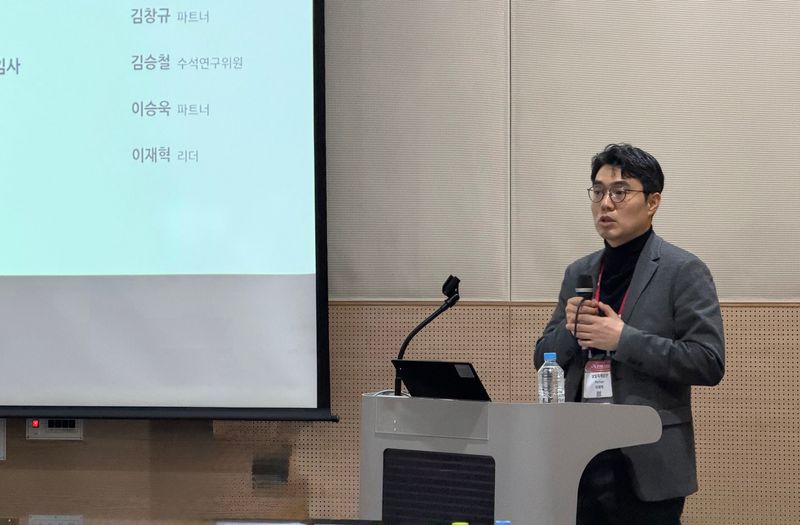
According to accounting industry sources on the 23rd, Samil PwC held a seminar at G-Star 2026, held at BEXCO in Busan on the 20th, to discuss growth strategies and key management issues facing the game industry.
Samil PwC projected that the global gaming market would grow at an average annual rate of 3.6% through 2030, reaching $306.3 billion. By contrast, the in-app advertising market is expected to grow at an average annual rate of 7.5% over the same period. That is more than twice the overall gaming market’s growth rate.
Samil PwC partner Jeong Won-seok said that a hybrid revenue model combining payments and advertising would become the standard for the game industry. He cited the Middle East, Latin America, South Asia and Southeast Asia as new growth markets.
For game companies, recurring revenue and the predictability of performance are becoming as important to corporate valuation as the success of new releases. Samil PwC partner Kim Chang-gyu analyzed disclosures from 11 publicly listed game companies in the United States, China and Europe, and outlined strategies for managing recurring revenue to prepare for gaps between blockbuster releases and reducing platform fees by expanding direct payments. He also highlighted the risk of asset impairment resulting from the suspension of new-game development or poor commercial performance.
Changes to accounting standards are another factor. Under IFRS 18, which takes effect in 2027, game companies must update their classification of profit and loss across operating, investing and financing categories, as well as their disclosure framework for management-defined performance measures (MPMs). In particular, companies with a high proportion of financial assets and investments in associates may have to present profit and loss differently depending on the nature of their investing activities. This means reported operating profit could change even if the performance of existing businesses does not.
Key tax areas for review included foreign tax credits on income from overseas platforms, the capitalization of development costs, and research and development (R&D) tax credits.
There were calls to expand the use of AI beyond simple task automation to redesigning work across organizations. Samil PwC partner Lee Seung-uk said, “The adoption of AI has reduced the time individuals spend on tasks, but the way work flows remains rooted in the old way of doing things,” stressing that work should be broken down into individual tasks and the roles of AI and people redefined.
Lee Jae-hyeok, Samil PwC’s technology, media and telecommunications (TMT) industry leader, said, “As the game market enters a low-growth phase, global expansion, securing investor confidence and AI-driven innovation are emerging as key priorities for game companies.”
[email protected] Kim Hyun-jung Reporter