K Bank and ABL Life Receive Presidential Citations... Lee Eog-weon: “We’ll Thoroughly Address Money Laundering Through the Abuse of Virtual Assets”
- Input
- 2026-11-23 10:50:13
- Updated
- 2026-11-23 10:54:00
On the 23rd, the Financial Services Commission held a ceremony at The Westin Josun Seoul in Jung District, Seoul, marking the 25th anniversary of the establishment of the Financial Intelligence Unit (FIU) and the 20th Anti-Money Laundering Day. The event shared policy directions for anti-money laundering and presented awards to eight institutions and 26 individuals for their contributions to the effort.
The institutional awards went to two companies for Presidential Citations, two organizations for Prime Minister’s Citations, and four organizations for Financial Services Commission Chairman’s Citations.
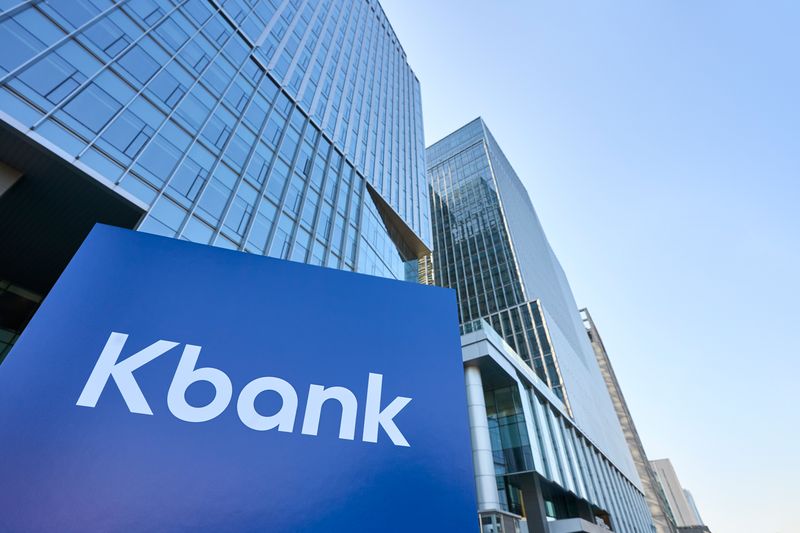
K Bank received a Presidential Citation in recognition of its efforts to build a response system for crimes that harm the public using artificial intelligence (AI), and to strengthen the identification and detection of suspicious transactions related to money laundering.
Daishin Savings Bank and Sumitomo Mitsui Banking Corporation’s Seoul Branch were selected for Prime Minister’s Citations. Daishin Savings Bank was praised for improving the effectiveness of internal controls by conducting ongoing customer identification checks and incorporating the results of its responses to financial fraud and on-site inspections into departmental evaluations. Sumitomo Mitsui Banking Corporation’s Seoul Branch received high marks for establishing a specialized risk management system to prevent indirect transactions linked to nearby sanctioned countries. It was recognized for its expertise in analyzing the routes used to transport goods and funds and managing countries neighboring or serving as transit points for sanctioned countries. Four organizations—KB Savings Bank, iM Securities, BC Card, and Haman County Forestry Cooperative—were honored with Financial Services Commission Chairman’s Citations.
Twenty-six people were selected for individual awards (Financial Services Commission Chairman’s Awards), including Son Ye-ri, deputy general manager at Woori Bank; Choi Ji-min, team leader at KB Kookmin Bank; Nam Ha-eun, staff member at Shinhan Investment & Securities; Han Su-ui, professional at Samsung Fire & Marine Insurance; and Yu Yeong-jin, director at KIWOOM Securities Co., Ltd.
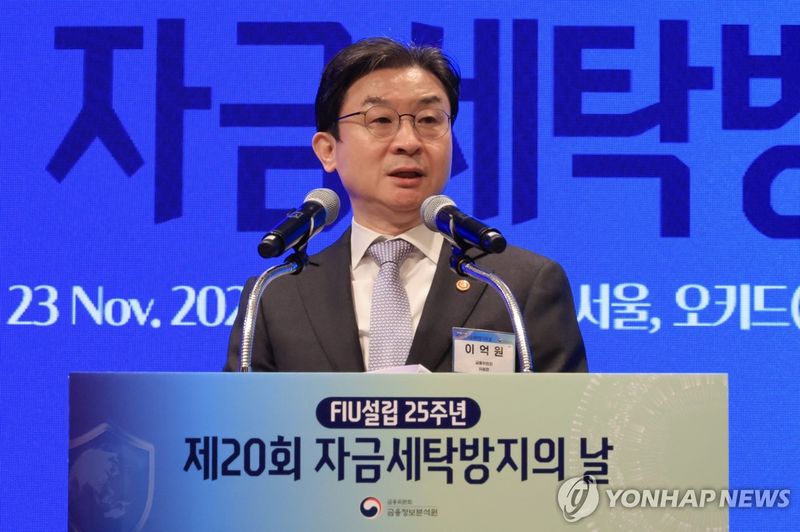
In his commemorative address that day, Chairman Lee Eog-weon emphasized, “The anti-money laundering system is essential infrastructure for maintaining a sound financial order and trust by preventing criminal funds from infiltrating the financial system.”
Chairman Lee presented three key anti-money laundering tasks: strengthening the response to crimes that harm the public, such as new forms of phishing; detecting money laundering that exploits virtual assets; and working to close gaps in anti-money laundering safeguards, including by imposing anti-money laundering obligations on professionals such as lawyers, accountants, and tax accountants.
In August, the financial authorities clarified the reporting requirements concerning virtual asset service providers’ financial soundness and social credibility, as well as the scope of major shareholder reviews, through revisions to the Enforcement Decree of the Specified Financial Information Act. They aim to strengthen the reporting and review of virtual asset service providers and, while abolishing the minimum threshold for applying the Travel Rule, to rigorously monitor transfers of funds to high-risk overseas virtual asset service providers and personal wallets.
The Travel Rule requires information about the sender and recipient to be verified in virtual asset transactions, just as it is confirmed who sent money to whom in a bank transfer. It was introduced in South Korea in March 2022. Until now, it has applied to virtual asset transfers of 1 million won or more, but beginning January 1 next year, it will apply to all transactions. This brings even small virtual asset transfers within the scope of regulation for anti-money laundering.
[email protected] Jo Eun-hyo Reporter