Korean Positioning System Begins Full-Scale Production, Assembly and Testing Procedures
- Input
- 2026-11-23 12:00:00
- Updated
- 2026-11-23 12:00:09
[Financial News] The overall system design of the Korean Positioning System (KPS) will be assessed for completeness, and full-scale production procedures will begin.
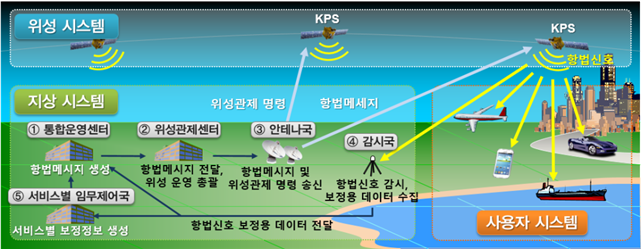
The Korea AeroSpace Administration (KASA), the Ministry of Land, Infrastructure and Transport, the Ministry of Oceans and Fisheries, the Korea Coast Guard and other agencies will hold a KPS Integrated Critical Design Review (CDR) at the Korea Aerospace Research Institute over four days, from the 24th to the 27th, they announced on the 23rd. The government is pursuing the KPS development project (2022–2035, involving multiple ministries) to provide precise positioning, navigation and timing information to the Korean Peninsula and nearby areas, and plans to deploy a total of eight satellites by 2035.
At the meeting, participants will comprehensively review the design results for the satellite, ground and user systems that make up KPS, and check whether they have been designed to work together as a single satellite navigation system and deliver the required functions and performance. Once this detailed design review is complete, the necessary procedures will begin for manufacturing and assembling KPS satellite No. 1 and building a ground system for verification.
To that end, the review will examine the overall appropriateness of the design, with a particular focus on the links among the KPS satellite, ground and user systems and on the design of their key functions and performance. This will include a comprehensive review of whether the satellite’s provision of navigation signals and the ground system’s processes for managing and using those signals have been adequately reflected in the design.
The KPS development project held a detailed design review of the payload for satellite No. 1 in September this year, followed by a detailed design review of the satellite’s system in October. With the integrated detailed design review now following those reviews, the project has reached the stage of verifying the completeness of the overall system design, moving beyond design checks at the individual-component and satellite levels.
The relevant ministries, including KASA, MOLIT, MOF and KCG, plan to manage areas requiring refinement in each field based on the results of this integrated detailed design review, and to flesh out plans for satellite-system manufacturing, construction of the ground and user systems, and test preparations. They also plan to review development progress with the relevant ministries and research and development institutions and continue follow-up development toward the goals of launching satellite No. 1 in 2029 and completing KPS in 2035.
Hong Ji-seon, Minister of Land, Infrastructure and Transport, said, "We will work to develop precise satellite navigation services and establish the basis for their use so that KPS can be used reliably in aviation and transportation settings." Hwang Jong-woo, Minister of Oceans and Fisheries, said, "We will work with relevant institutions to ensure the smooth development of high-precision satellite navigation services that can be used in the maritime and fisheries sectors’ AI transformation (AX) and digital transformation (DX), including for autonomous ships and smart ports."
Ha Man-sik, Commissioner of the Korea Coast Guard, added, "We will work closely with relevant institutions to ensure that search and rescue functions are implemented reliably during KPS development."
Oh Tae-seok, head of KASA, said, "Through this review, we will comprehensively assess the design completeness of the entire KPS system and work closely with the relevant ministries and research and development institutions to ensure that follow-up development also proceeds reliably according to plan."
[email protected] Yeon Ji-an Reporter