"If the Supply Chain Is Taken Away Amid the AI and Robotics Boom, It's Over"... Will Samsung Electronics and SK hynix Pursue Direct Acquisitions of Key Materials, Parts and Equipment Firms?
- Input
- 2026-11-23 11:13:06
- Updated
- 2026-11-23 11:13:06
[Financial News]"An era is coming when robots and AI proliferate and immediately carry out every request made by humans."As the "physical AI and robotics era" recently forecast by global big tech leaders, including Tesla CEO Elon Musk, becomes reality, concern about the threat facing South Korea's two leading semiconductor companies, Samsung Electronics and SK hynix, is higher than ever.
The real threat lurking beneath the unprecedented boom is "supply-chain bottlenecks and technological dependence on key suppliers." As the success of sixth-generation high-bandwidth memory (HBM4) and next-generation ultra-fine processes hinges directly on a stable supply of key front-end and back-end equipment and materials, cautious speculation is emerging in investment banking (IB) circles that Samsung Electronics and SK hynix may seek to acquire direct stakes in key materials, parts and equipment companies or make bold acquisitions of controlling stakes.
The era of 3.2 quadrillion won in mega-investments: "We can't entrust key processes to others"
According to financial investment industry sources on the 23rd, Samsung Electronics and SK hynix have outlined astronomical medium- to long-term semiconductor investment plans through 2040, of about 2,100 trillion won and 1,100 trillion won, respectively. Both companies are posting record-setting results, with their cash-generating capacity at a peak.The market's focus is shifting beyond simple capacity expansion to supply-chain internalization (vertical integration). As global big tech companies maximize their in-house AI chip design and control over their supply chains, Samsung Electronics and SK hynix, too, would inevitably suffer a devastating blow if key equipment and materials suppliers defected to rivals or were acquired by overseas private equity (PE) firms or foreign equipment makers.
A contact in the IB industry said, "Now, while the two semiconductor leaders are sitting on record levels of cash, is the optimal time to bring key process materials, parts and equipment suppliers entirely in-house or exercise firm control over them." The contact added, "Small and midsize materials, parts and equipment suppliers with high sales dependence—which helps secure negotiating leverage—yet possessing irreplaceable core technologies are being cited as top M&A targets."
From wafer cleaning to HBM inspection... domestic equipment makers in focus
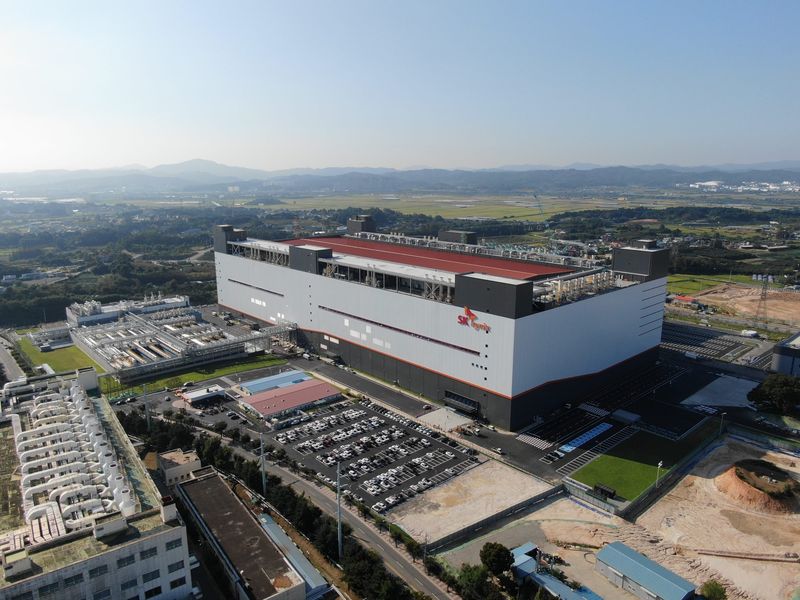
As SK hynix brings new production lines, including M15X in Cheongju, online, attention is also turning to domestic partners that supply wafer-cleaning and etching equipment. Cleaning removes impurities from the wafer surface, while etching removes unnecessary material to leave the desired circuit pattern. Both types of equipment are used in the early stages of semiconductor manufacturing.LTC and VM supply equipment for these processes. LTC supplies wafer-cleaning equipment to SK hynix through its subsidiary LSI. LTC, which also operates in semiconductor process materials, recorded cumulative revenue of 353.9 billion won and operating profit of 62.5 billion won in the first three quarters of this year. VM localized etching equipment that had previously relied heavily on foreign imports, and a large share of its domestic sales is tied to SK hynix.
Equipment used for memory testing and high-bandwidth memory (HBM) production stands out in Samsung Electronics' supply chain. Exicon, whose largest customer is Samsung Electronics, makes testing equipment to check whether memory semiconductors are functioning properly. YEST supplies equipment that applies pressure to wafers during HBM production, as well as cooling equipment that keeps process temperatures stable. As the number of stacked HBM layers increases, reducing chip warpage and maintaining a stable yield of good products become more important.
A securities firm source said, "The reason these equipment makers are being considered from an M&A perspective is their existing supplier relationships." The source added, "To bring new production lines online on time and improve yields for next-generation memory, companies need a stable supply of equipment and must be able to adjust it with suppliers when processes change."
"Even M&A Rumors Can Send Trading Activity Soaring... Valuation Reassessment Is Near"
Securities industry analysts expect M&A deals and battles for stakes in materials, parts and equipment companies led by large corporations to emerge as a major market theme as the semiconductor supercycle lasts longer.A financial investment industry source said, "In the past, materials, parts and equipment companies with a high dependence on a single customer were treated as a 'discount factor.' But in the AI and robotics era, when supply-chain security is the top priority, they are being revalued in the opposite way—as 'irreplaceable lock-in assets.'" The source assessed that "key suppliers with both strong earnings and core technologies have significant potential to see their share prices make a quantum leap, accompanied by a hefty control premium, as soon as large companies' plans to bring operations in-house or acquire stakes become clear."

[email protected] Choi Doo-sun Reporter