Retail Investors and Foreigners Are Exhausted... No One Is Left to Buy KOSPI Stocks
- Input
- 2026-11-23 09:04:46
- Updated
- 2026-11-23 09:04:46
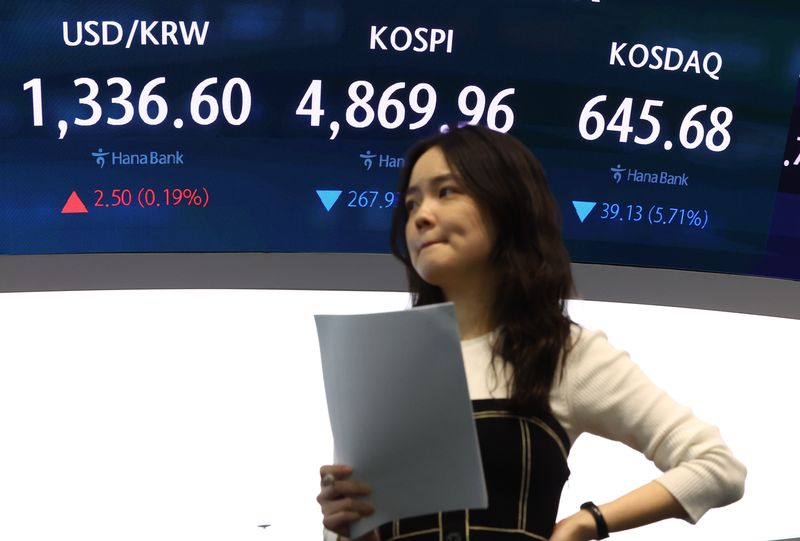
[Financial News] The Korean stock market has struggled to find a bottom. When stock prices fall sharply, bargain hunters may step in and a rebound may be expected, but the situation is different now.
Individual investors, who have supported the Korean stock market this year, have already poured in huge sums, while foreign investors continue to sell aggressively, especially large-cap semiconductor stocks. Analysts say a supply-demand vacuum is taking shape, with no buyers left to support the market as prices fall.
According to Hyundai Motor Securities on the 23rd, the KOSPI had fallen 46.6% from its peak as of the 20th. The firm said the current correction was the largest since the global financial crisis.
In a report, Hyundai Motor Securities analyst Kim Jae-seung said, “Although the market decline is deepening, the bottom of the Korean stock market remains out of sight amid deteriorating investor sentiment and a supply-demand vacuum,” adding, “With no clear buyer in sight to support the index’s lower end, it is difficult to expect bargain buying and a rebound.”
The first to grow weary are individual investors. This year, individuals have net bought a cumulative total of more than 100 trillion won in the KOSPI and poured 54 trillion won into domestic equity exchange-traded funds (ETFs), excluding inverse products.
In particular, they actively bought on dips even when the KOSPI was in the 6,000–6,500 range in the second half of the year. But with the index falling below 5,000, a considerable number of investors are thought to have entered loss territory.
Analyst Kim said, “With the KOSPI falling below 5,000, a considerable number of individual investors are likely to be recording losses,” adding, “Because they bought on dips in the 6,000–6,500 range even during the second-half correction, their capacity for further buying is limited.”
Signs that individual investors are leaving the market are also emerging. Trading value in the Korean stock market has fallen to its level at the start of the year, and individuals’ share of KOSPI trading value has dropped to its lowest level since 2020.
Even investors with spare cash are turning to high-interest products or U.S. stocks instead of Korean shares. Hyundai Motor Securities believes that individual investors could actually sell during a rebound, limiting gains in the index.
Foreign investors’ retreat is even more serious. Hyundai Motor Securities put their net sales in the KOSPI this year at 223 trillion won. Net sales of Samsung Electronics and SK hynix shares totaled 190 trillion won, accounting for about 85% of the total.
Factors cited behind foreign investors’ sales of Korean semiconductor stocks include a shift in funds from global AI-related stocks to non-AI sectors, supply-demand pressure from Anthropic’s mega-sized initial public offering (IPO), and a stronger U.S. dollar. In fact, foreign investors are net sellers in the Korean and Taiwanese stock markets, while they are net buyers in Japan.
The outlook is that it will take time for foreign capital to return. Analyst Kim stressed, “For foreign investor flows to improve substantially, uncertainty over the Fed’s tightening path and the pressure from fund movements following Anthropic’s listing must ease.”
Hyundai Motor Securities identified the December 9 Federal Open Market Committee (FOMC) meeting and the completion, in mid-to-late December, of rebalancing related to Anthropic’s inclusion in major stock indexes as a turning point for easing foreign selling pressure.
Samsung Electronics’ share buyback is cited as a factor that could improve supply and demand in the near term. The company has put forward 55 trillion to 75 trillion won in remaining funds for shareholder returns in 2026, with specific plans for their use to be decided by its board at the end of January next year.
Hyundai Motor Securities highlighted the possibility that share buybacks will resume starting in February next year. When Samsung Electronics bought back about 15 trillion won of its own shares from August to October this year, its average daily purchases totaled about 500 billion won. Compared with foreign investors’ average daily net sales of 770 billion won in the KOSPI in the second half, that amount could partly fill the supply-demand gap.
However, the advice is to remain cautious until then. Analyst Kim said, “Until a clear buyer and a market bottom are confirmed, investors should refrain from buying in anticipation of a short-term rebound and should preserve cash reserves as they navigate the market,” adding, “They should be prepared for the possibility that high volatility will continue through the first half of next year.”
He also recommended building a defensive portfolio centered on high-dividend financial stocks such as banks and insurers, as well as large-cap pharmaceutical and healthcare companies with high earnings visibility.
[email protected] Kang Jung-mo Reporter