Jeju Plans a 'Sky Taxi' Hub at Seongsanpo Port... Construction Cost: 23.6 Billion Won
- Input
- 2026-11-23 08:37:52
- Updated
- 2026-11-23 08:37:52
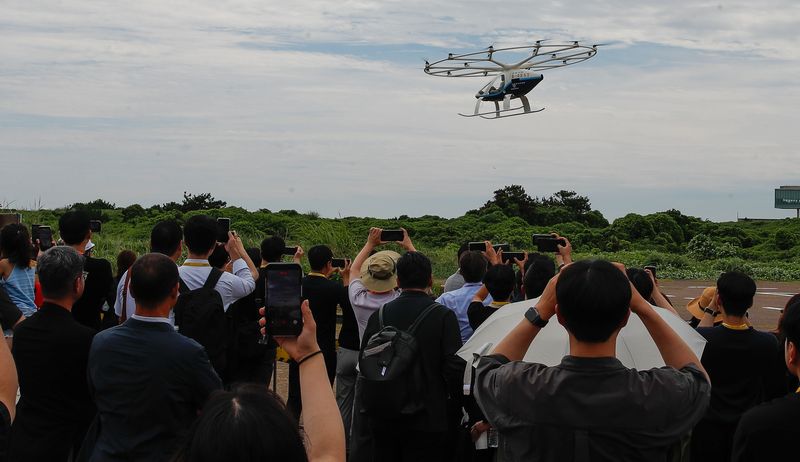
【Financial News, Jeju = Reporter Jeong Yong-bok】 A transfer hub linking maritime transport and urban air mobility (UAM) is being planned at Seongsanpo Port in Jeju. A design competition has begun for a vertiport with estimated construction costs of 23.605 billion won, but the actual flight routes and launch date have yet to be determined.
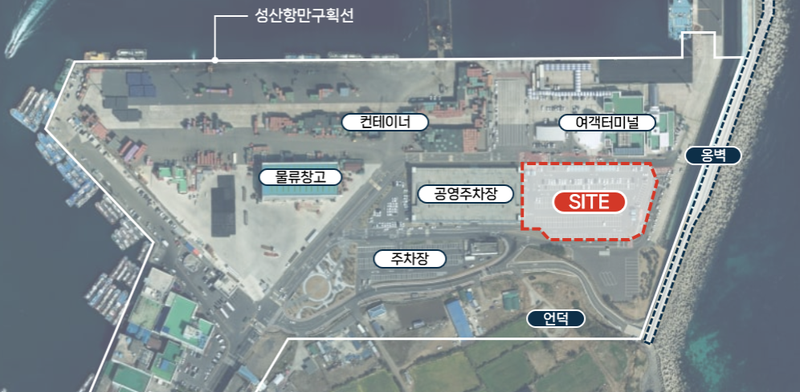
According to Jeju Special Self-Governing Province on the 23rd, the province announced a competition on the 19th for the architectural design of the ‘UAM Seongsanpo Port Vertiport Construction Project.’ The project will develop a transportation facility on and around 347-9 Seongsan-ri, Seongsan-eup, Seogwipo City, with vertical takeoff and landing areas, a passenger terminal, and aircraft hangar and maintenance facilities.
UAM is a new transportation system that uses aircraft powered by electricity and other means to take off and land vertically, carrying people or cargo. A vertiport is a facility where such aircraft take off and land, passengers board, and aircraft are charged or maintained.
The Seongsanpo Port vertiport project site covers 9,021 square meters. The plan calls for a three-story building above ground with a total floor area of about 3,600 square meters; of this, the floor area used to calculate the floor-area ratio, excluding parking and other areas, is 1,500 square meters.
The estimated construction cost, including value-added tax, is 23.605 billion won, and the design service fee is 1.18 billion won. The design period is set at 365 days from the start date after the contract is signed. The construction cost and facility scale may be adjusted during the subsequent design and project implementation process.
The design guidelines specify two takeoff and landing areas for UAM aircraft and two parking stands where aircraft can wait. The plans also include a hangar that can accommodate one aircraft, maintenance facilities, a control room and charging facilities.
The passenger terminal will include waiting areas, passenger check-in facilities and security screening facilities. The guidelines also call for consideration of amenity spaces for tourists and local residents.
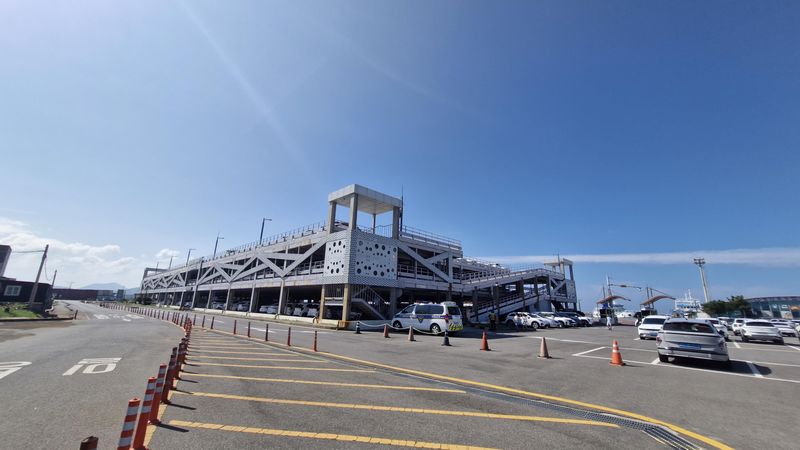
Connecting the vertiport with the existing Seongsanpo Port General Passenger Terminal was presented as a key design condition. Seongsanpo Port is a transportation hub where passengers using ferries to Udo and tourist vehicles converge. Jeju Province required the design to connect pedestrian routes between the existing passenger terminal and the UAM terminal, while separating the routes used by passengers, operations staff and maintenance vehicles.
The parking facilities will also be reorganized. The guidelines specify that at least 250 parking spaces must be provided within the project site. Another 40 general parking spaces are planned in the existing bus parking area outside the site, but that facility is excluded from this design competition.
Ensuring safety is a key design evaluation criterion. Jeju Province required an analysis of wind direction and speed, obstacles and other conditions around Seongsanpo Port to identify safe approach and departure directions for aircraft. It also called for a layout that reduces the strong downwash, noise and interference between aircraft generated during takeoff and landing.
The design must also include fire-response and evacuation systems to prepare for fires that may occur during battery charging and other emergencies. It must also account for the risk of facility corrosion caused by strong winds and salt in Jeju’s coastal areas.
The site is designated as a general industrial area and also falls within a port zone and a height restriction district, among other designations. The design guidelines also note that parts of the site overlap with a Historic and Cultural Environment Preservation Area and an Absolute Preservation Area. This means that land-use regulations and aviation safety standards must both be considered during the design and permitting process.
The project is linked to the government’s policy of supporting regional UAM pilot projects. In August last year, the Ministry of Land, Infrastructure and Transport announced the results of its call for regional pilot project support and selected Jeju to receive funding for vertiport design. The decision followed an assessment of the specificity of the plan to connect Jeju Airport with major tourist destinations and the local government’s commitment to moving the project forward.
Jeju Province is planning a tourism and transportation UAM system linking Jeju International Airport, Jungmun Tourist Complex and Seongsanpo Port. Seongsanpo Port is intended to serve as the hub for the eastern part of the proposed system.
The government is pursuing initial UAM commercialization in 2028 as a policy goal. However, selection for regional pilot project support and actual authorization to operate aircraft are separate procedures.
On the 18th, Jeju Province held a kickoff briefing for a commissioned project to advance the regional UAM pilot program and began preparations to apply for designation of a pilot operating area. It will need to consult with the Ministry of Land, Infrastructure and Transport on flight zones, operational safety and infrastructure development.
Even if the design competition for the Seongsanpo Port vertiport proceeds, this does not mean that the construction start date or commercial flight schedule has been finalized. The aircraft and operators needed for service, flight paths, safety standards and fares are also subject to further review.
Companies that meet the requirements for architect qualifications and registration of an architectural firm may enter the design competition. Domestic and international architectural firms based outside Jeju must enter into a joint contract with a Jeju-based architectural firm for at least 30% of the work.
Participants can register through Architecture HUB, the architectural design competition information service, until 6 p.m. on the 23rd. Proposals are due on December 14, and the winning design is scheduled to be announced within seven days of the judging on December 22.
The winner will be granted the right to carry out the design services. Even after the design is completed, further procedures will remain for construction of the facility, designation of a pilot operating area and aircraft operations.
The success of the Seongsanpo Port vertiport project will depend not only on building the facility but also on operational safety, demand and links with existing modes of transportation. What role tourism-oriented UAM can play in Jeju’s transportation system is expected to become clearer as the design, demonstrations and operating plans are developed.
[email protected] Jeong Yong-bok Reporter