Kim Jong Un’s First Diplomatic Move After North Korea–U.S. Summit Falls Through... Receives Credentials From Ambassadors to North Korea for First Time in 30 Years
- Input
- 2026-11-23 08:33:48
- Updated
- 2026-11-23 08:33:48
Although Kim did not appear on the diplomatic stage during the Asia-Pacific Economic Cooperation (APEC) meeting in Shenzhen, China, his move seemed to show that he is keenly interested in diplomacy.
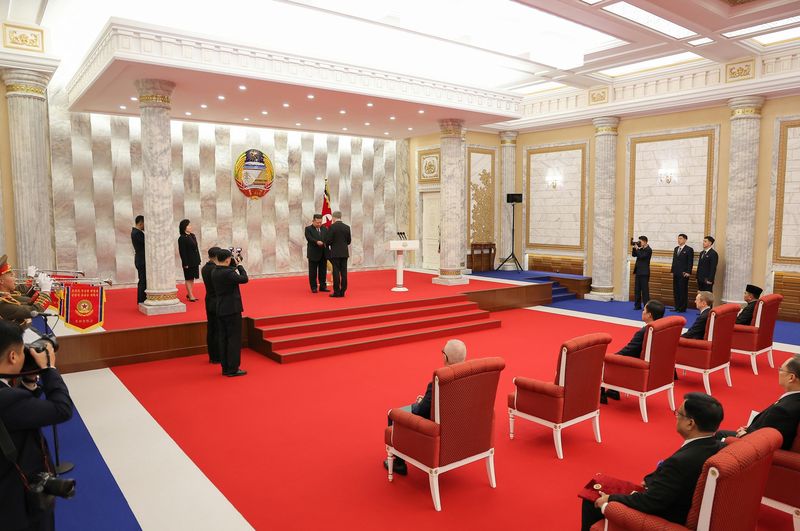
According to the Korean Central News Agency on the 23rd, Kim received credentials the previous day from newly appointed ambassadors of Indonesia, Sweden, Vietnam, Russia, Brazil, the Czech Republic, India, the Philippines, Thailand and Bangladesh at the headquarters of the Central Committee of the Workers’ Party of Korea. Foreign Minister Choe Son-hui attended the credential-presentation ceremony.
Although they had been stationed in Pyongyang, ambassadors from countries other than China and Russia had not had an opportunity to meet Kim Jong Un in person. In that context, his acceptance of their credentials appears intended to signal that he plans to pursue more active diplomacy in the future.
Moreover, it is unusual for North Korea’s top leader to receive credentials directly from foreign ambassadors. During Kim Il Sung’s rule, the top leader received credentials directly from foreign ambassadors, while during Kim Jong Il’s rule, the chairman of the Standing Committee of the Supreme People’s Assembly handled this duty.
Kim personally exercised the authority set out in the constitution amended by the Supreme People’s Assembly in March this year, apparently seeking to further underscore his status as the country’s top leader in diplomatic protocol as well.
Russia’s state-run TASS news agency reported the previous day that “it is the first time in more than 30 years that a ceremony has been held at which North Korea’s top leader directly receives credentials from foreign ambassadors.”
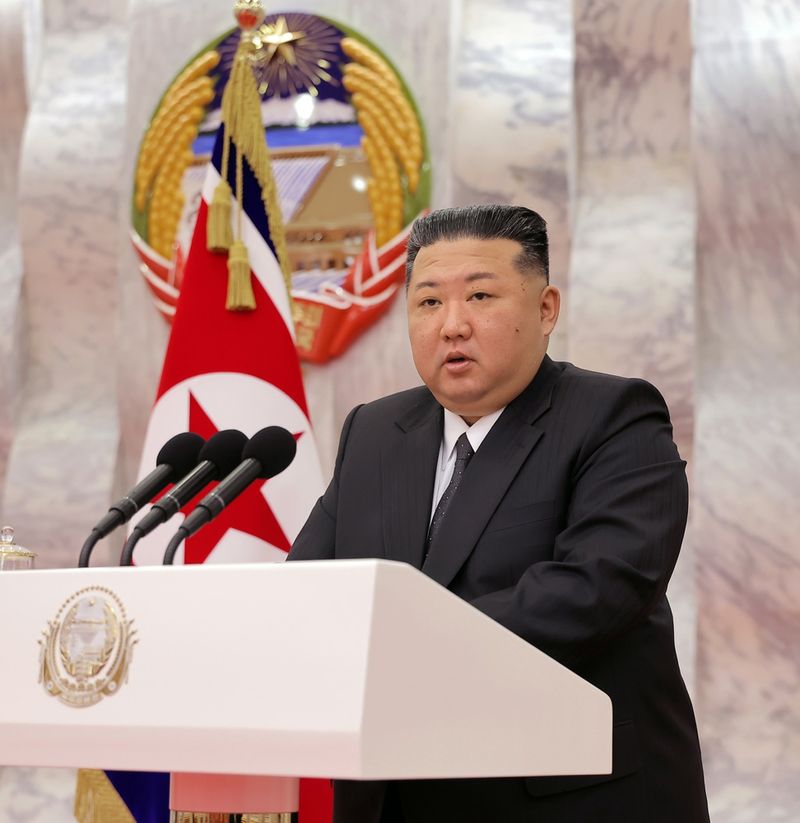
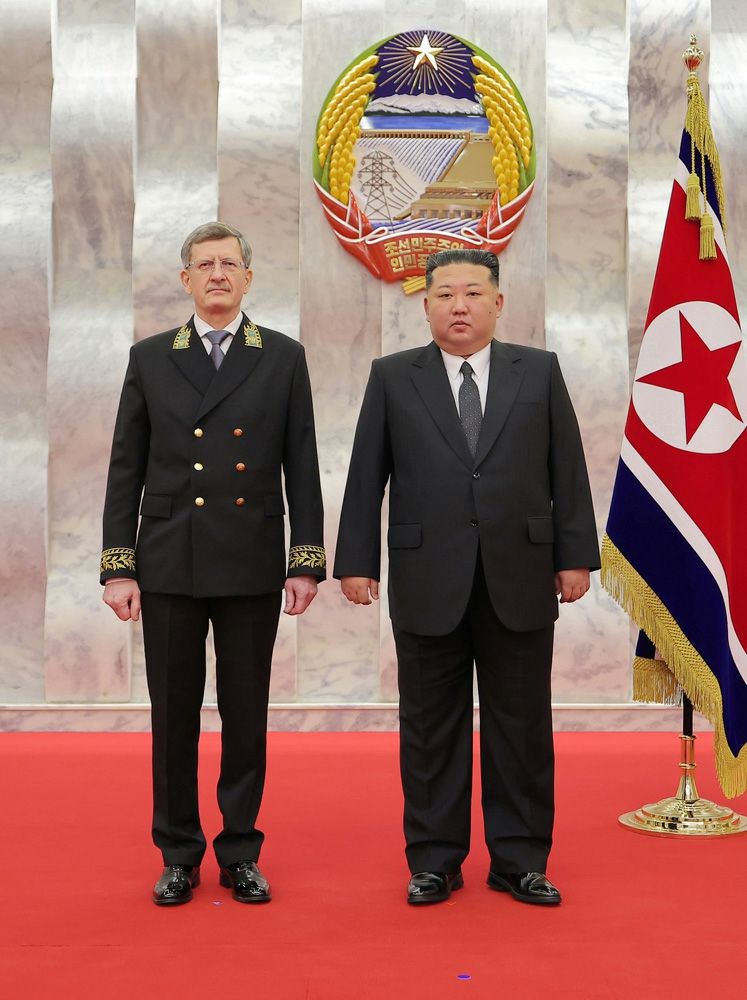
After receiving credentials from the ambassadors of various countries and taking a commemorative photo, Kim explained the international situation as well as North Korea’s policy direction in a speech.
Commenting on the current international situation, Kim said, “The world is now witnessing a global crisis of security instability and political and economic turmoil, which is adding volatility and unpredictability to the overall complex international situation.” He assessed that “the current international situation is bringing about significant changes in all of our perceptions of sovereignty and security.”
He argued that North Korea’s “security situation and the political and military environment in East Asia urgently demand that we have the strength and capability to ensure a sufficient sense of security and confidence in peace.” This appears to be an oblique explanation of the justification for North Korea’s nuclear armament.
He also emphasized that “peace, development and prosperity are core values of the Democratic People’s Republic of Korea’s foreign policy,” adding, “The Democratic People’s Republic of Korea seeks neither hegemony nor expansion. Coercion and pressure have nothing to do with the Democratic People’s Republic of Korea’s foreign policy.” North Korea has long criticized U.S. hegemony, but did not mention the United States directly in these remarks.
Kim stressed, “We do not approve of attempts to restrict and suppress the inherent independent rights and right to development of sovereign states, which all countries of the world are equally entitled to enjoy, and we will do everything to fully and completely safeguard our rights and interests.”
[email protected] Kim Kyung-soo Reporter