"1,000-Won Bread" Bought at a Subway Station Still Fine Six Months Later ... A Look at the Country of Origin Comes as a "Surprise"
- Input
- 2026-11-23 09:54:53
- Updated
- 2026-11-23 09:54:53
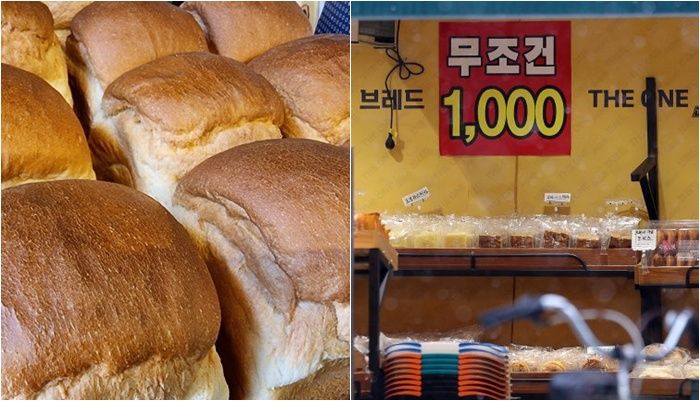
[Financial News] As the price of domestically made bread has risen sharply, so-called “1,000-won bread,” which costs about a third as much, is gaining prominence in the retail sector. However, consumer concerns are mounting as Chinese-made bread whose safety has not been verified is sold at subway station stores, supermarkets, unattended retail outlets and other venues.
According to a recent report by Chosun Biz, the Seoul Regional Office of the Ministry of Food and Drug Safety began inspecting Chinese-made bread at the import stage on the 3rd. This followed an order from the Ministry of Food and Drug Safety (MFDS) on the 16th of last month to strengthen inspections of Chinese bread products. On the 23rd of last month, the Busan Regional Office of the MFDS also released a list of 51 overseas manufacturing establishments with a history of noncompliance involving Chinese bread products and began testing for preservatives.
While domestically made bread has a use-by period of just 3–5 days, Chinese-made bread sold on the market in the 1,000-won price range has a much longer use-by period, sometimes reaching as long as two years.
In fact, the Seoul Metropolitan Government Research Institute of Public Health and Environment tested 104 samples of imported low-priced bread, including Chinese-made products, sold at subway stations, supermarkets, unattended retail outlets, traditional markets and international snack shops around Seoul. Preservatives were detected in 54 samples.
Propionic acid was detected in 54 samples and sorbic acid in 30, among other preservatives. Most of the bread in which preservatives were detected was made in China (51 samples), followed by two samples from France and one from Vietnam. The levels detected did not exceed domestic permitted limits, but the high proportion of positive results increased consumer anxiety.
Propionic acid and sorbic acid are known to be widely used in food markets around the world. However, major South Korean bakery brands, where same-day production and consumption is the norm, are reportedly not using them.
According to the Korea Trade Statistics Promotion Institute and Agro-Food Export Information, South Korea imported 8,495 tonnes of bread products from China from January to September this year, up 34.3% from the same period a year earlier. Chinese-made products accounted for 42.5% of all imported bread by weight and 28.9% by value. The range includes sliced bread, breakfast rolls, red bean buns and castella, as well as waffles, croquettes and egg tarts.
An MFDS official said the inspections were not prompted by a problem found in a specific product, but were intended to proactively and closely check whether imported products meet domestic standards and specifications.
[email protected] An Ga-eul Reporter