UN Climate Summit Ends in Deadlock Over Fossil Fuel Dispute, Fails to Adopt Final Agreement for First Time in 17 Years
- Input
- 2026-11-23 01:22:42
- Updated
- 2026-11-23 01:22:42
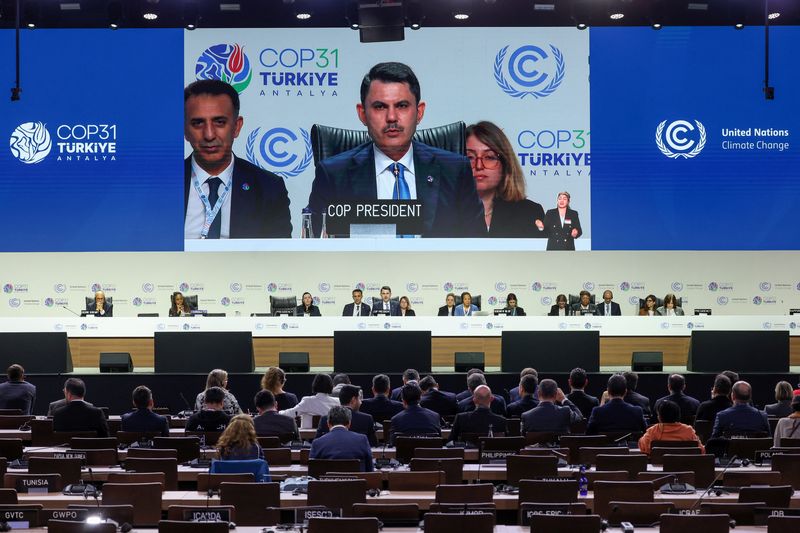
[Financial News] The 31st Conference of the Parties to the United Nations Framework Convention on Climate Change (COP31), where countries from around the world gather to discuss ways to respond to the climate crisis, failed to adopt a final agreement after failing to bridge differences over the transition away from fossil fuels and climate finance. It was the first time in 17 years that a comprehensive formal agreement (cover decision) was not adopted at a UN climate conference, since COP15, held in Copenhagen, Denmark, in 2009.
According to The Associated Press, CNN and other foreign media on the 22nd (local time), COP31, which opened in Antalya, Türkiye, on the 9th, was originally scheduled to close on the 20th. However, after last-minute wrangling, negotiations were extended by two days, setting a record for the longest conference ever and surpassing the 2019 summit in Madrid, Spain. But the final agreement, which required unanimous approval, was ultimately not approved, and the conference ended empty-handed that day.
■ Fossil fuel reference deleted after oil-producing nations object; talks collapse amid opposition from EU and climate-vulnerable countries
The decisive issue behind the collapse of the negotiations was whether to include wording on phasing out fossil fuels. The first draft, released early this week, called for an “immediate transition away from fossil fuels in the energy system (a phaseout),” and at least 100 countries called for the language to be retained. But after strong pressure from major oil-producing countries, including Saudi Arabia, all references to fossil fuels were removed from the second draft released on the 19th.
The European Union (EU), Norway, Panama, the Marshall Islands and others rejected the final proposal put forward by co-hosts Türkiye and Australia, saying it fell far short of what was needed to address global warming. Ireland’s climate minister Darragh O’Brien, who led negotiations on behalf of the EU, firmly stated, “The EU will not approve an agreement that doesn’t even mention fossil fuels.”
At the closing plenary, COP31 President Murat Kurum, Türkiye’s minister of environment, urbanization and climate change, signaled that no agreement would be reached, saying, “There is nothing more we can do. There will be no new text from now on.” While Kurum was away, Vice President Elchin Allahverdiyev, director of the Climate Diplomacy Department at Azerbaijan’s Ministry of Foreign Affairs, formally announced that the talks had failed to reach an agreement.
■ Disputes over acknowledging a possible 1.5°C overshoot, carbon capture and climate finance also stalled talks
The parties also failed to find common ground on expanding carbon dioxide removal (CDR) technologies and providing climate finance to developing countries. Australia’s Minister for Climate Change and Energy Chris Bowen said differences over fossil fuels and climate finance were the main reasons for the breakdown.
This was the first conference since the UN Environment Programme confirmed last month that the rise in global average temperatures was projected to exceed 1.5°C above pre-industrial levels, the target set by the Paris Agreement. The proposed agreement from the host countries acknowledged for the first time that keeping the temperature rise below 1.5°C would be difficult and called for accelerating the development of carbon removal and capture technologies to reverse the trend. But environmental groups and some delegations opposed the provision, which oil-producing nations had strongly pushed for, saying it “could be misused to justify continued fossil fuel production.”
Developing countries vulnerable to climate change were also deeply dissatisfied. The $120 billion (about 160 trillion won) target for expanding climate adaptation finance, which had been included in the first draft, was dropped from the second. The wording calling for adaptation finance to be increased at least threefold by 2035 also specified neither a baseline year nor a concrete amount.
■ International climate diplomacy faces inevitable setback; Guterres: “Fossil fuels are driving the crisis”
Although the failure to reach an agreement does not erase countries’ commitments made at previous conferences, there are concerns that it will significantly weaken momentum for international climate action. In a statement, UN Secretary-General António Guterres said, “I share the deep frustration of everyone who had hoped governments would respond to the gravity of the climate crisis,” and strongly criticized the outcome: “Those who profit from destroying the planet must never be allowed to determine the terms of the fight to save it. Fossil fuels are causing the climate crisis.”
[email protected] Park Ji-hyun Reporter