“He Delivered a Championship and Developed His Successor”: Kim Tae-gun Has Justified His 2.5 Billion Won Price Tag, but He and KIA Differ on “Starter vs. No. 2 Catcher” Expectations
- Input
- 2026-11-23 08:00:00
- Updated
- 2026-11-23 08:03:38
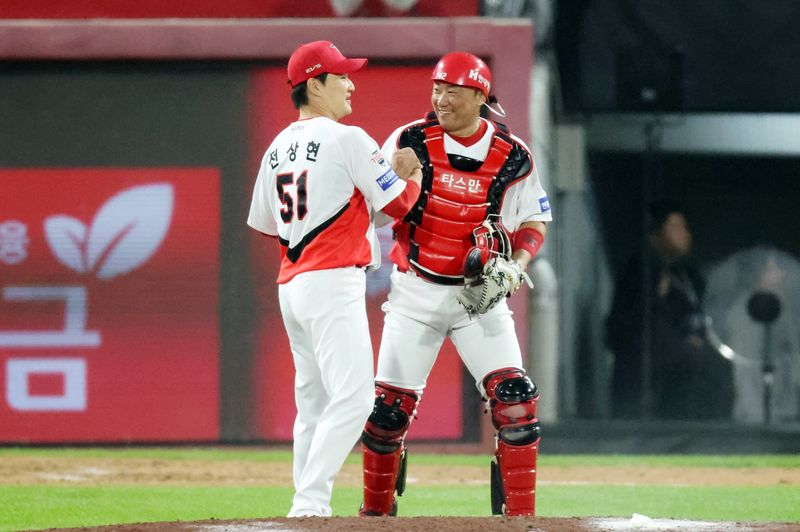
[Financial News] The Kia Tigers need Kim Tae-gun, 37. But they do not need him as the “unquestioned starting catcher” he was three years ago.
This subtle but crucial difference in expectations is turning KIA and Kim Tae-gun’s free-agent negotiations into a complicated equation.
In retrospect, KIA’s decision three years ago was a resounding success worthy of a place in KBO League history.
On July 5, 2023, KIA made a bold move, sending key infielder Ryu Ji-hyuk to the Samsung Lions in exchange for Kim Tae-gun. The plan was to fill the gaping hole behind the plate after Park Dong-won’s departure and buy prospect Han Jun-soo time to develop. The non-FA multiyear contract Kim received that October—worth up to 2.5 billion won over three years (2 billion won in salary and 500 million won in incentives)—was fully vindicated by the results.
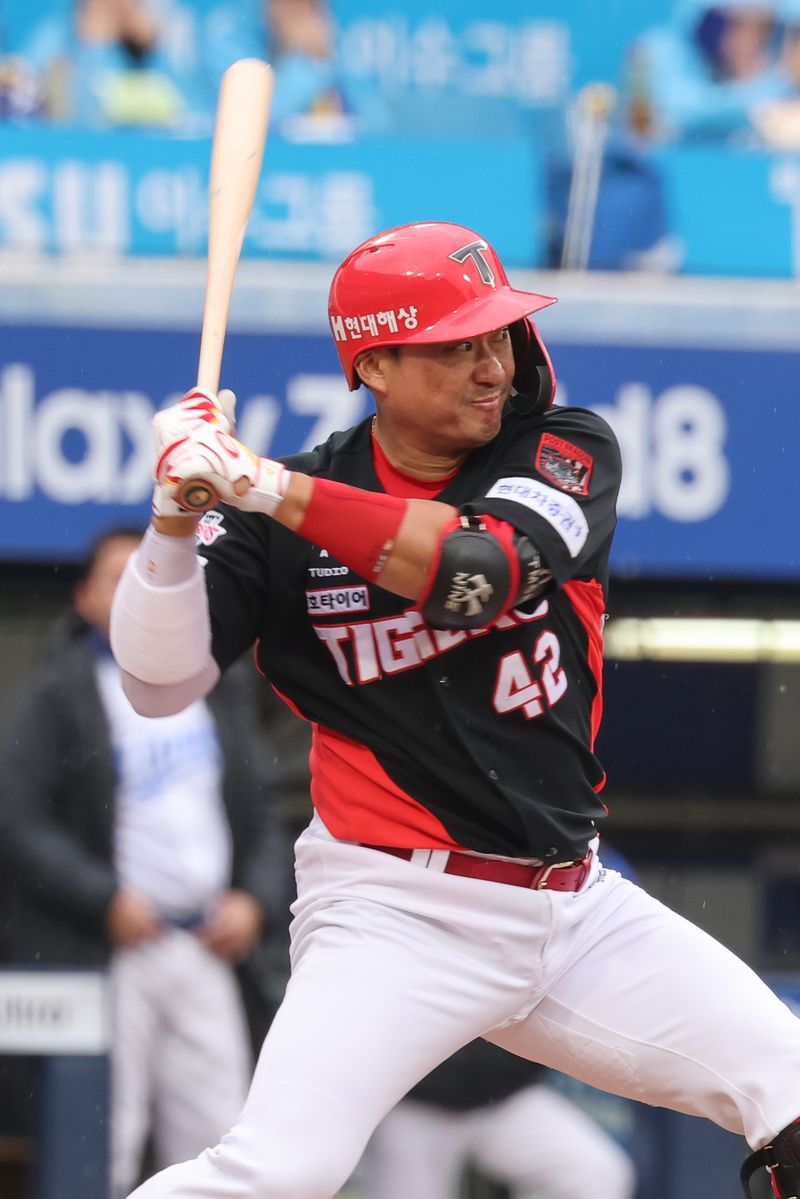
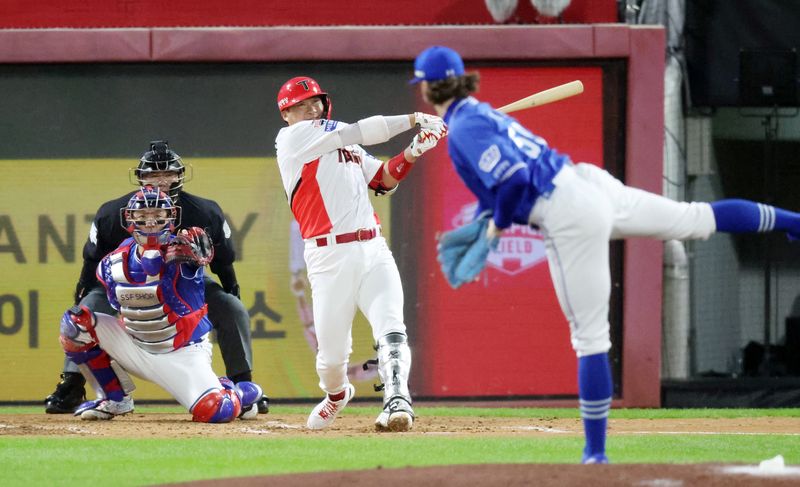
The following year, in 2024, Kim Tae-gun played all five games of the Korean Series and powered KIA to a unified championship with a blistering performance: a .353 batting average, one home run (a grand slam in Game 4), seven RBIs and a 1.047 OPS. His presence was so commanding that he finished just one vote behind Kim Sun-bin in the series MVP voting.
He also helped the team climb to third place in the regular-season standings this year and, above all, developed Han Jun-soo into a bona fide starting catcher while holding down the fort himself. He has more than earned his 2.5 billion won price tag. The trade and multiyear contract were an enormous success.
That does not mean Kim Tae-gun’s job is done. Han Jun-soo took on the lead role behind the plate this year, logging 659 innings, but Kim also handled 5542⁄3 innings despite the effects of shoulder and hamstring injuries.
The gap between the two players in defensive innings was just 1041⁄3. Given how physically demanding the catcher position is, Han Jun-soo could not possibly handle all 144 games on his own.
If Kim Tae-gun leaves, Joo Hyo-sang would have to step in right away, but it is hard to say he has proved himself as a full-time No. 2 catcher. KIA, which needs to contend for the title before Kim Do-yeong moves to MLB, cannot entrust the season to an unproven catching corps. That is why general manager Sim Jae-hak offered Kim another multiyear contract as soon as the season ended.
The real dilemma starts here. There is no disagreement that Kim is needed, but the two sides’ calculations over how much to pay him have changed completely since three years ago.
Three years ago, KIA invested 2.5 billion won in a “starting catcher” who could take charge behind the plate right away. But Han Jun-soo is now the future of KIA’s catching position. From KIA’s perspective, Kim Tae-gun is more of an “elite No. 2 catcher” who can back up Han and steady the team in a crisis. Kim, meanwhile, is the catcher who won the 2024 championship and still has the veteran skill to manage a game; he wants the market to value him fairly.
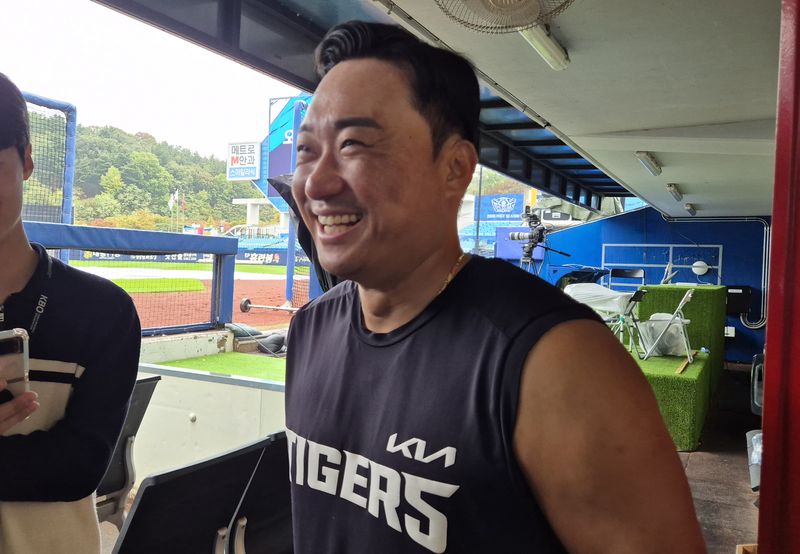
The situation would be different if another club in urgent need of catching help viewed Kim Tae-gun as a “starting catcher who can play right away.”
A starting catcher’s price and a No. 2 catcher’s price are worlds apart. There are hurdles: Kim will turn 38 next year, and as a B-grade free agent, his signing would require compensation of one player plus 100% of his salary, or 200% of his salary. But if a chain reaction of moves takes place in a catcher-heavy free-agent market that includes Park Dong-won, Choi Jae-hoon and Yang Eui-ji, Kim Tae-gun’s market value could swing dramatically.
The dilemma exists, ironically, because the trade three years ago was such a success. The successor Kim helped develop by buying time, Han Jun-soo, has established himself as the starter, changing Kim’s own standing on the team and the club’s criteria for investment.
Three years ago, the problem was that KIA did not have Kim Tae-gun. Now, the team still needs him badly, but setting a “fair price” is difficult. KIA’s most successful trade, which delivered both a championship trophy and a successor, has now returned as the most difficult final challenge of the offseason.
[email protected] Jeon Sang-il Reporter