[Editorial] Make a Change in Education Ministry Leadership a Starting Point for Exam and Education Reform
- Input
- 2026-11-22 18:44:00
- Updated
- 2026-11-22 18:44:00
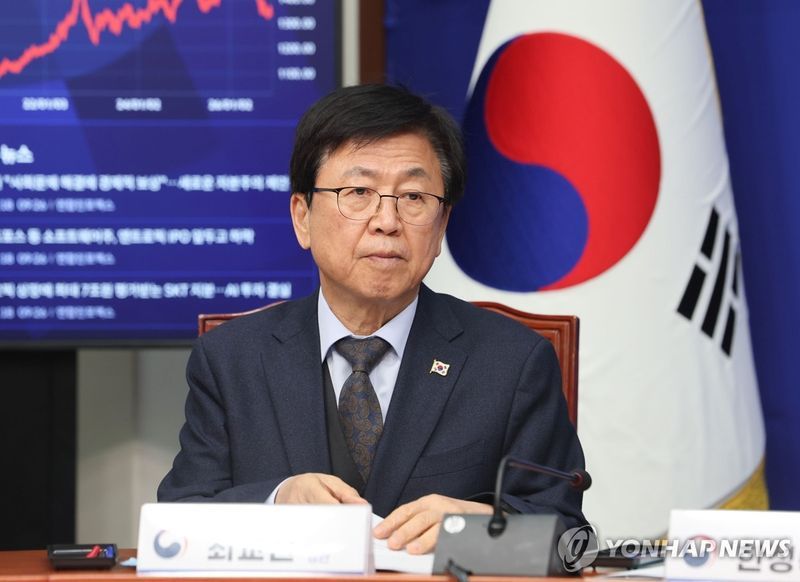
Choi Kyo-jin, the minister of education, eventually tendered his resignation on the 22nd, and President Lee Jae-myung accepted it about an hour later. The reason was that trust in the government's handling of the situation had been damaged as measures were repeatedly changed just days before the exam and the situation on the ground descended into confusion. Moreover, the minister fueled the controversy by saying, in effect, that he was not confident that cheating could be detected, making it difficult for him to avoid responsibility. But we do not believe the confusion will be resolved and things return to normal simply because one minister steps down. This time, the old practice of making a single minister a scapegoat to solve the immediate problem looks unlikely to work.
The problems now spreading fall into two broad categories. First is how to stop cheating, which is spreading like a toxic fungus in the AI era, and safeguard fairness in exams. Of course, as concern grows over exam cheating through the misuse of AI, measures to protect exam fairness through technology can be prepared systematically. Even so, there are countless exams held in South Korea. In particular, cheating may have occurred in exams that have already been held. We cannot rule out cheating incidents in various tests, including school exams held at high schools across the country. We must ensure fairness in exams through a swift technological response, without delay.
The government also cannot avoid criticism that it responded too slowly to cheating using AI. Unusual measures—including sending emergency disaster alerts, placing stickers on clothing buttons, and blocking public Wi-Fi—were all deployed belatedly. The problem is that these measures could have been used earlier but were introduced on the ground only after the situation became serious. Distrust has grown toward government authorities that failed to anticipate a sufficiently predictable cheating controversy and viewed it complacently. Trust, once shaken, cannot be easily restored with a few measures.
Even so, this is no time to get bogged down in a blame game. Urgent steps are needed to establish fairness and stability, the lifeblood of national exams. The government must swiftly put forward effective measures to prevent cheating using AI from infiltrating exams and assessments of all kinds. And if suspicions emerge about earlier exams, clearly establishing the facts is the fastest way to restore trust.
More important is to carefully prepare for a fundamental overhaul of how education is delivered. Calls are growing to go beyond preventing AI-related cheating and change assessment and education themselves in preparation for the AI era. This is partly because the ability to memorize things by rote is no longer needed in the AI era. Of course, improving the quality of our education to keep pace with rapid changes in the times is something we must do. However, if we rush into indiscriminately changing high school grading, the foundations of education could be shaken. We believe, therefore, that the education minister's resignation is not the end, but the beginning of education reform. Alongside restoring trust in education authorities, we must accelerate efforts to modernize the assessment system.