Japan Moves to Build an Independent Military Space Communications Network, Will Launch Hundreds of Laser Communications Satellites [Lee Jong-yoon’s Military World]
- Input
- 2026-11-22 18:39:50
- Updated
- 2026-11-22 20:14:19
Amid the Japanese government’s push to expand its external security posture, NEC, one of Japan’s leading electronics and IT companies, is building an extensive satellite network in low Earth orbit at an altitude of about 1,000 km, with operations targeted to begin in the 2030s. Global security think tanks have viewed Japan’s recent efforts to strengthen its space capabilities as a strategy to secure “Autonomy within the Alliance.”
Since the early 2000s, Japan has steadily launched Information Gathering Satellites (IGS) and now reliably operates a system of more than 10 intelligence and reconnaissance satellites, including electro-optical/infrared (EO/IR) and synthetic aperture radar (SAR) satellites. Together with Michibiki, Japan’s version of the Global Positioning System (GPS), and X-band communications satellites dedicated to the Japan Self-Defense Forces, the country has established a multidimensional space surveillance and communications network. The “laser communications satellite constellation” now being pursued uses laser light rather than conventional radio waves. This form of optical communications can transmit large volumes of data at ultra-high speeds and is extremely resistant to enemy jamming and eavesdropping. The result will be a “Kill Chain” network that sends high-resolution images of enemy vessels and missile bases, captured by reconnaissance satellites over the Korean Peninsula, the East China Sea and the Taiwan Strait, in real time via a low Earth orbit optical communications satellite network directly to Japan Self-Defense Forces and U.S. military command centers on the ground.
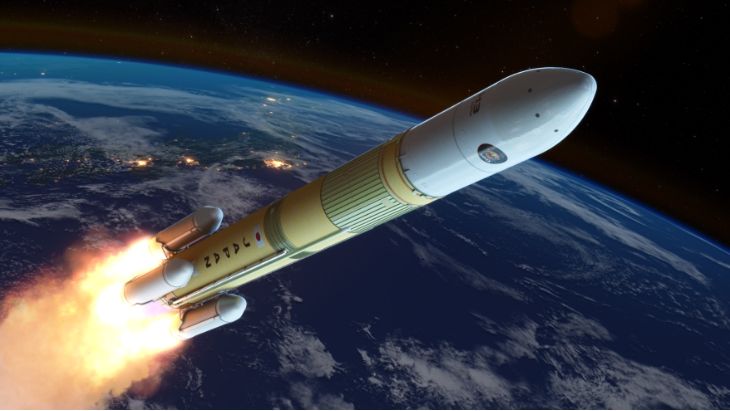
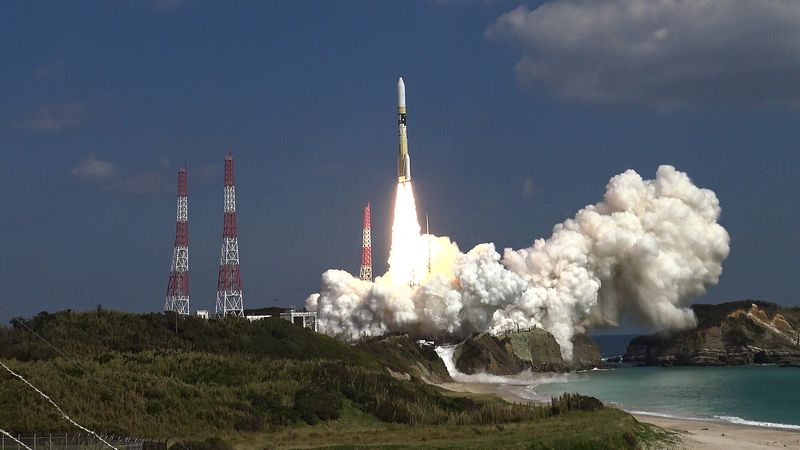
Japan is also pursuing a “two-track strategy” for operating the launch vehicles (rockets) that place its satellite network in orbit, combining rigorous security considerations with economic pragmatism. As a rule, it launches key assets directly tied to national security—including reconnaissance satellites, defense communications satellites (the Kirameki series) and its own satellite navigation system, Michibiki—on domestically built rockets. The next-generation flagship heavy-lift H3, which follows the H2A and has cut launch costs to about half, is central to this effort. By contrast, Japan also uses overseas commercial launch vehicles, including SpaceX’s Falcon 9, to build civilian and commercial low Earth orbit satellite communications networks that require hundreds of satellites to be deployed rapidly and in close formation. This is a practical choice to overcome the limits on annual launches of its domestic heavy-lift rockets (around five to six per year, with a target of increasing that to 30 per year by the early 2030s) and accelerate efforts to secure an early lead in deploying the network. At the same time, Japan is working to prevent technology leaks at the source, foster domestic private small-rocket ventures and expand its capacity to launch replacement satellites.
In late July, about 81 years after Japan’s defeat in World War II, the government officially launched the long-sought National Intelligence Bureau (NIB), a central intelligence agency overseeing intelligence functions, as well as the National Intelligence Council (NIC), the country’s highest decision-making body. Japan is building an integrated “space-and-intelligence” security system in which a control tower directly under the prime minister immediately brings information together for analysis.
[email protected] Lee Jong-yoon Reporter