‘G-Star’ Breaks Down Boundaries in Gaming ... Major Korean Game Companies’ Absence Is a Major Challenge
- Input
- 2026-11-22 18:13:58
- Updated
- 2026-11-22 18:13:58
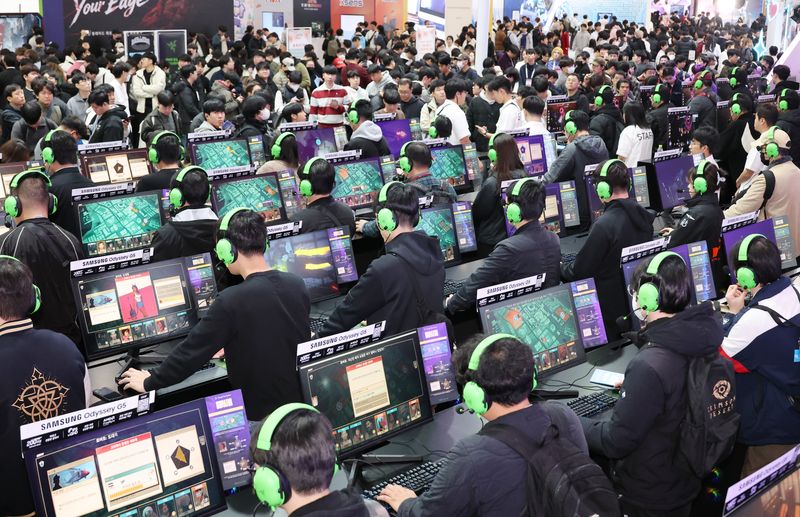
According to industry sources on the 22nd, G-Star 2026, which opened at BEXCO in Busan on the 19th, closed that day. In its 22nd edition, G-Star featured 3,445 booths across its exhibition halls, with 1,237 companies from 41 countries taking part.
The biggest change at G-Star this year was the prominent role of AI. AI company Wrtn Technologies became the first company outside the gaming industry to serve as the main sponsor, unveiling its AI character chat platform Crack. The service uses worlds and characters set by creators to generate stories that change according to conversations between users and AI. The company set up a 200-booth exhibition hall with a 40-meter-wide LED screen and created an experiential space where visitors could chat with AI characters and build stories.
The gaps left by major Korean game companies were filled by overseas companies, including those from China and Japan. Five companies—Sega Corporation, Koei Tecmo Games, Capcom, NetEase Games and CD Projekt Red (CDPR)—took part in the first-ever G-Star Global Game Showcase, demonstrating the event’s potential to grow into a global exhibition. Crowds flocked to HoYoverse’s Zenless Zone Zero experience area, and the queue was closed early. At the Capcom booth, a sign even informed visitors that they would have to wait 150 minutes to try a game. Hyundai Motor showcased an experience combining mobility and gaming through the Hyundai N Virtual Cup, an esports competition based on racing simulations. A record 106 domestic and international indie game developers also participated. The event’s own curated content, including developer talks and creator discussions, became more diverse alongside game demos. It was seen as broadening its role from an exhibition showcasing new releases to an event where the gaming and other content industries exchange creative experiences and technologies.
The low level of participation by major Korean game companies remains a challenge. Krafton Inc. and Webzen Inc., among others, set up large exhibition halls to introduce new releases, but Nexon, NC, Netmarble and Kakao Games did not take part in the exhibition for general visitors. The number of booths rose by 176 to 3,445 this year from 3,269 last year, but the number of participating companies fell by 36, from 1,273 to 1,237. The number of participating countries also declined, from 44 to 41. Since operating a large exhibition hall entails substantial costs, game companies have little choice but to weigh the publicity benefits and business value of taking part in G-Star.
An industry official said, “For G-Star to establish itself as a global game exhibition, it needs to offer new business value that will bring major Korean game companies back next year.”
[email protected] Reporter