Seoul Subway at Crossroads Over General Strike on the 25th... Final Main Labor-Management Talks on the 24th
- Input
- 2026-11-22 16:05:01
- Updated
- 2026-11-22 16:05:01
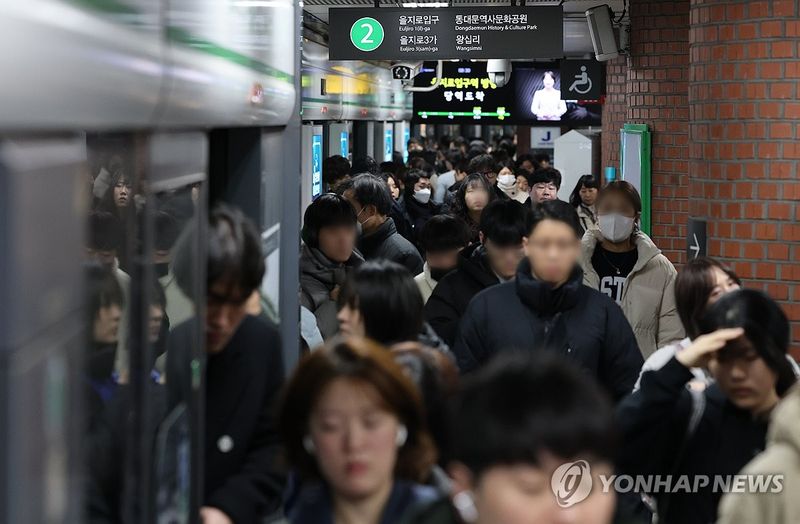
[Financial News] Seoul's subway system faces the prospect of an indefinite general strike on the 25th. Seoul Metro and its labor unions will meet for final talks a day before the planned strike, but their differences over hiring more staff and withdrawing the staffing-cut plan remain unresolved.
According to Seoul Metro on the 22nd, labor and management will hold main negotiations on wages and the collective agreement starting at 10 a.m. on the 24th in the main conference room on the fourth floor of the corporation's headquarters. They will negotiate with the three unions in turn: the Transport Union (the first union) at 10 a.m., the Olbareun Union (the second union) at 11 a.m., and the Unified Union (the third union) at 1:30 p.m.
The biggest variable in the negotiations is Seoul City's position. Although Seoul Metro is the employer-side party to the talks, the city has the authority to approve staffing levels and hiring. The corporation is consulting with Seoul City and the unions on their demands, and is expected to convey the city's position during the talks on the 24th.
The unions are demanding a 3.5% wage increase in line with government guidelines, the complete withdrawal of a plan to cut 2,212 Seoul Metro employees between 2021 and 2026, and the hiring of 1,313 needed workers by the end of the year. Their demands also include national government funding for the cost of public services and mandatory two-person work teams in the field. The unions argue that staffing shortages relative to authorized headcount could threaten subway safety. According to figures compiled by the first union, as of last month there were 311 vacancies relative to the authorized headcount, and 443 long-term absences, including parental, medical and military-service leave.
Seoul City, by contrast, has pursued staff cuts, citing the corporation's financial burden and the need for greater management efficiency. The number of employees actually reduced between 2021 and 2023 was reported to be 684.
Labor and management held three rounds of main negotiations—in June, July and September this year—but failed to narrow their differences, and the September talks were declared deadlocked. In October, they applied to the Seoul Regional Labor Relations Commission for mediation of a labor dispute, but mediation was halted after they failed to find common ground in two sessions. The unions then proceeded with steps toward a strike, including a vote on whether to take industrial action and a resolution declaring a labor dispute.
The first and second unions began a work-to-rule campaign on the 20th. They are strictly following safety regulations and refusing additional inspections and work outside regular hours. The subway is currently operating normally, but some trains could be delayed.
If the talks on the 24th break down, the first, second and third unions plan to launch an indefinite general strike starting on the 25th. Once the strike begins, only essential-service personnel will remain on duty, and the service rate is expected to fall sharply. With fewer trains during commuting hours, severe congestion is expected. In preparation for a strike, Seoul Metro plans to activate its emergency response headquarters, promote on-time service through its control center, and adjust train intervals in real time.
Last year, labor and management reached an agreement in a dramatic breakthrough in the early hours of December 12, the scheduled strike date, and called off the strike.
[email protected] Jeong Ji-woo Reporter