68-Year-Old Analyst Still on the Job: “40 Years of Experience Are a Competitive Edge ... AI Is a New Weapon” [fn’s Person]
- Input
- 2026-11-24 14:27:31
- Updated
- 2026-11-24 14:27:31
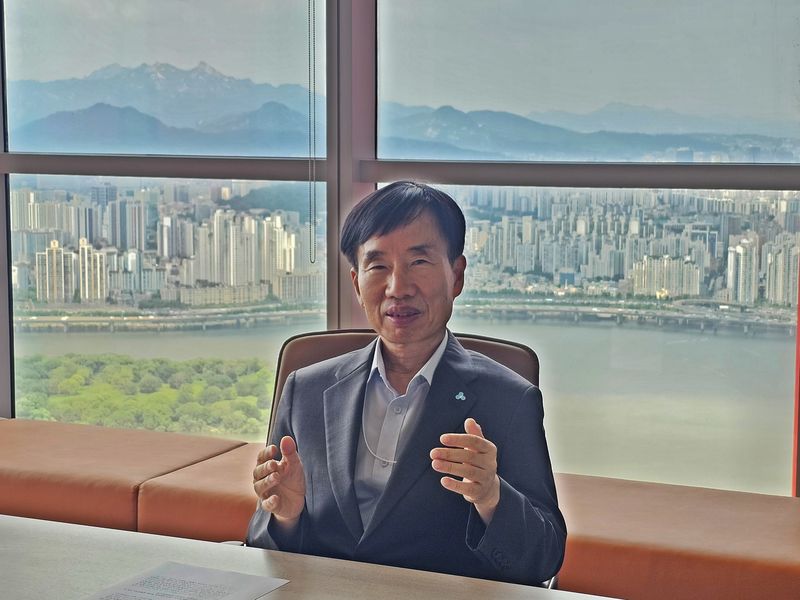
Ha Tae-gi, a researcher at Sangsangin Investment & Securities Co., Ltd., entered the securities industry in 1987. Born in 1958, he is 68 this year and remains an active analyst who has watched the changes in Korea’s capital markets for nearly 40 years. While many of his peers have left the field, he continues to analyze companies and write reports.
On the 24th, Ha cited accumulated experience and a specialty of his own as the competitive advantages that have sustained his long career. “If young analysts are good at quickly analyzing the latest data, people with long careers know how similar situations unfolded in the past,” he said. “Understanding the historical trends of an industry and using them to forecast the future is my competitive edge.”
The advent of artificial intelligence (AI) is, in fact, increasing the value of experience. In the past, gathering and analyzing information took a great deal of time, but now AI enables analysts to focus more on their own judgment and insights.
He stressed, “It is no longer easy to stand out with functional skills alone, such as processing data and producing polished reports. It is important to use AI like an assistant or teacher while developing stories and insights of your own.” The role and standing of analysts also changed significantly over the 40 years he has worked in the securities industry. As recently as the 1980s, securities firms’ research divisions were run like economic research institutes, but after the foreign exchange crisis, demands for corporate information transparency and investor protection grew, broadening analysts’ role.
In recent years, a new kind of competition has begun as YouTube and AI have made information more accessible. Analyst Ha said, “AI knows a lot of publicly available information, but it cannot grasp developments on the ground that can only be learned by meeting people in person.”
This experience is also reflected in his investment philosophy. Having analyzed the pharmaceutical and biotech industries for many years, he stressed, “You should not invest in companies that rest on past glory and fall behind in adapting to change.” While traditional pharmaceutical companies focused on the domestic market, Celltrion, Samsung Biologics and Alteogen Inc. grew by developing new business models and breaking into overseas markets.
He said, “The domestic market is small, so once a company grows beyond a certain level, it needs to achieve results overseas,” placing greater emphasis on companies’ ability to take on future markets than on their current performance. The areas he has recently been watching are an extension of this perspective. Analyst Ha suggested that the success of K-beauty could spread to high-value consumer goods such as fashion and bags. Having previously analyzed the cosmetics industry at Pacific Securities, he said Korean companies succeeded in differentiating themselves through skincare products and gained a competitive edge in global markets as the Korean Wave spread.
He predicted, “Luxury brands from France and Italy currently lead the global market, but global luxury brands could emerge in Korea too. If admiration for Korean culture grows, the day may come when Korean-made bags are recognized as being worth several million won.” Analyst Ha added, “There is no need to try to be better than others in every field. It is important to find an area you can excel in and draw on your experience.”
[email protected] Kim Hyun-jung Reporter