Time-Barred Compensation Claims Over the Yeosu–Suncheon Incident... Supreme Court: “Claims Can Be Reasserted Under Amended Law”
- Input
- 2026-11-22 13:25:32
- Updated
- 2026-11-22 13:25:32
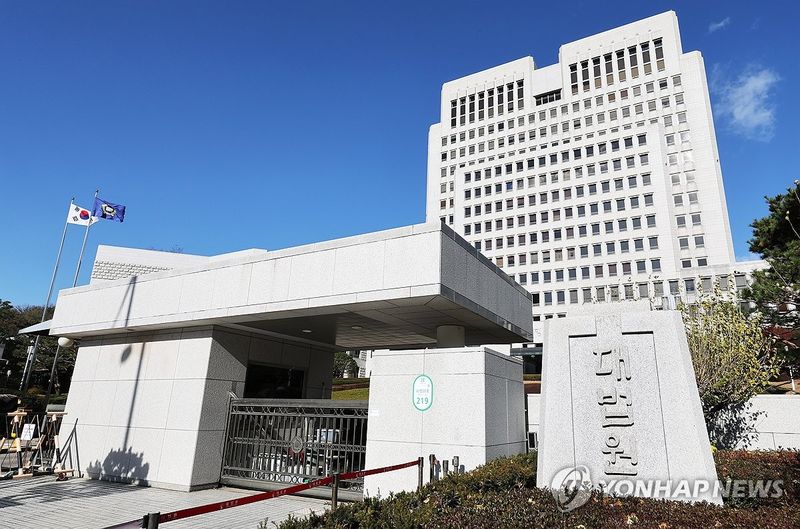
According to legal sources on the 22nd, the Supreme Court of Korea’s Second Division, with Justice Oh Kyung-mi as the justice in charge of the case, overturned a lower court ruling against the plaintiffs in an appeal over a damages lawsuit filed by the family of Jo Il-yong, a victim of the Yeosu–Suncheon Incident, against the Republic of Korea on the 30th of last month and remanded the case to Gwangju District Court.
Jo was killed after being hit by a bullet fired by soldiers while working an emergency shift as an employee at the Yeosu branch on October 27, 1948. The Yeosu–Suncheon Incident began when some soldiers of the Republic of Korea Army’s 14th Regiment, stationed in Yeosu in the early days of the government’s establishment, refused orders to suppress the Jeju April 3 Incident and rose up. Many civilians were killed during the suppression campaign until the ban on entering Jirisan was lifted in April 1955.
On September 20, 2010, the Truth and Reconciliation Commission, Republic of Korea, issued a truth-finding decision that Jo had been among those killed in a mass civilian casualty incident, and notified the applicant, his older brother Jo Man-yong, on October 13 that year. Jo Man-yong did not file a suit seeking state compensation until July 22, 2024. He died on June 25 last year while the case was in its first trial, and his co-heirs took over the lawsuit.
The issue was whether a claim whose statute of limitations had expired three years after notification could still be exercised. In July last year, the Suncheon Branch of Gwangju District Court, the court of first instance, recognized the state’s liability to pay compensation but dismissed the claim, ruling that the statute of limitations under Article 766(1) of the Civil Act began running on the date of notification and had already expired on October 13, 2013. The court held that even if the truth-finding decision had created a basis for reliance, the right should have been exercised within three years at most. Gwangju District Court, the second-instance court, also dismissed the appeal in January this year.
What changed the outcome was an amendment to the law. The Framework Act on the Settlement of Past Incidents was comprehensively amended on February 5 and took effect on the 26th of the same month. Article 61 of the amended law provides that provisions on long-term statutes of limitations under the Civil Act and other such provisions do not apply to claims for damages in cases where a truth-finding decision has been issued. The proviso to Article 5 of the supplementary provisions expressly states that people who received a truth-finding decision before the law took effect include “those whose statute of limitations has expired and those who have received a final judgment dismissing their claim on the grounds that the statute of limitations had expired,” allowing them to exercise their claims within three years of the law’s effective date.
The Supreme Court interpreted the provision as having “the purpose of comprehensively redressing” victims “on the basis of reflection on the fact that the state had not fully compensated victims and others harmed by past anti-democratic or anti-human-rights acts.” It said that claims could be filed again within three years of the law’s effective date even if the statute of limitations had expired, and that “the same applies to cases in which a lawsuit seeking damages had already been filed before the amended Framework Act took effect and was still pending when the amended Framework Act took effect.”
After remand, the lower court will reconsider the scope of compensation, including the amount of consolation money. The Supreme Court had previously ruled on the same grounds last September in a case where a new lawsuit was filed after a judgment dismissing the claim because the statute of limitations had expired became final.
[email protected] Kim Dong-gyu Reporter