Han River Belt Turns Lower After the Three Gangnam Districts... Is This the First Sign of a Downturn?
- Input
- 2026-11-24 07:00:00
- Updated
- 2026-11-24 07:00:01
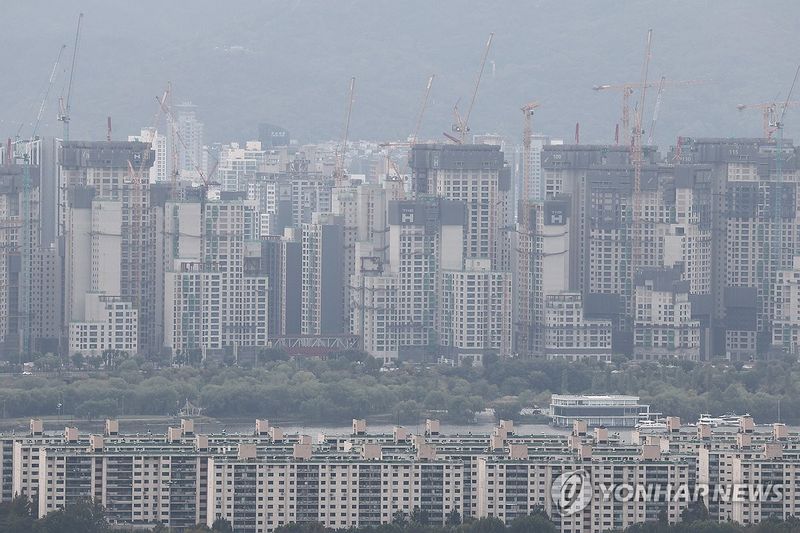
[Financial News] Seoul apartment prices have risen for 93 consecutive weeks, but data show that prices in some parts of the Han River Belt have fallen following declines in the three Gangnam districts. After Seongdong District, Yongsan District and Gangdong District, Dongjak District also turned lower, while gains in Mapo District slowed sharply. Experts are divided on whether this should be seen as the first sign of a decline in Seoul apartment prices.
According to the Korea Real Estate Board (KREB)'s weekly apartment price trends released on the 22nd, Seoul apartment sale prices rose 0.03% in the third week of November (as of the 16th). The increase was 0.04 percentage points smaller than the previous week's 0.07%.
Outlying areas such as Seongbuk District and Jungnang-gu rose, but the declines stand out. The focus of the latest declines is the Han River Belt. While prices in the three Gangnam districts—Songpa District, Seocho District and Gangnam District—continued to fall, Gangdong District, Seongdong District and Yongsan District also posted declines. Gangdong District and Seongdong District fell for a second consecutive week, while Yongsan District reversed from declines to gains and then turned lower again. Dongjak District returned to decline for the first time in eight months, after last March. Mapo District's gains slowed sharply over the past three weeks, to 0.25%, 0.10% and 0.04%.
Actual transaction prices are also falling. A 59-square-meter unit at Hyundai Apartment in Sangdo-dong, Dongjak District, sold for 1.09 billion won on October 31, but fetched 1.055 billion won on the 18th, 35 million won less. An 85-square-meter unit at Haengdang Daelim in Haengdang-dong, Seongdong District, also fell from 1.79 billion won on October 18 to 1.69 billion won on the 17th, a drop of 100 million won (5.6%). A 59-square-meter unit at Ichon Kolon in Ichon-dong, Yongsan District, sold for 2.5 billion won in August, but traded for 2.35 billion won on the 13th, down 150 million won.
Demand from buyers looking to trade up to Gangnam is seen as a major reason for the turn to declines in some parts of the Han River Belt. As prices in the three Gangnam districts have steadily fallen, buyers seeking to enter Gangnam are reportedly putting their existing homes on the market at distressed prices. Nam Hyuk-woo, a real estate researcher at Woori Bank, said, "As the price gap with the three Gangnam districts has narrowed, buyers have become more inclined to wait and see, which appears to have put downward pressure on asking prices." He added, "Distressed listings from buyers looking to first purchase bargain properties in the three Gangnam districts and then trade up are also continuing to come onto the market."
With the market about a month and a half away from recording 100 consecutive weeks of gains, attention is focused on whether this decline will continue. Experts are divided on whether the downturn that has spread from the three Gangnam districts to the Han River Belt should be viewed as the first sign of a broader decline.
There is broad agreement that the decline will continue for the time being. Park Won-gap, a chief real estate specialist at KB Kookmin Bank, said, "The key will be the base-rate decision to be announced next week. If interest rates are raised, the current trend will continue, and I expect prices to turn lower in December."
Others argue that it is difficult to view this as a structural decline. Shin Bo-yeon, a professor in Sejong University's Department of Real Estate AI Convergence, said, "The decline in the three Gangnam districts began with the tax reform plan, and its spread to neighboring areas is a natural progression. Prices may remain flat or fall through year-end, but this looks like fatigue after a sharp rise driven by regulations and other factors, rather than a structural shift resulting from increased supply."
However, forecasts suggest that it will be difficult for outlying areas of Seoul to see declines. Even if prices fall in the three Gangnam districts and the Han River Belt, end-user buyers continue to purchase apartments in Seoul's outlying areas amid lending restrictions.
[email protected] Jeong Gyeong-su Reporter