"No Cash to Average Down, 10 Trillion Won Vanishes in a Week"...Retail Investors Flee the Market: Why Monday Is So Frightening [Money Signal]
- Input
- 2026-11-22 10:49:09
- Updated
- 2026-11-22 10:49:09
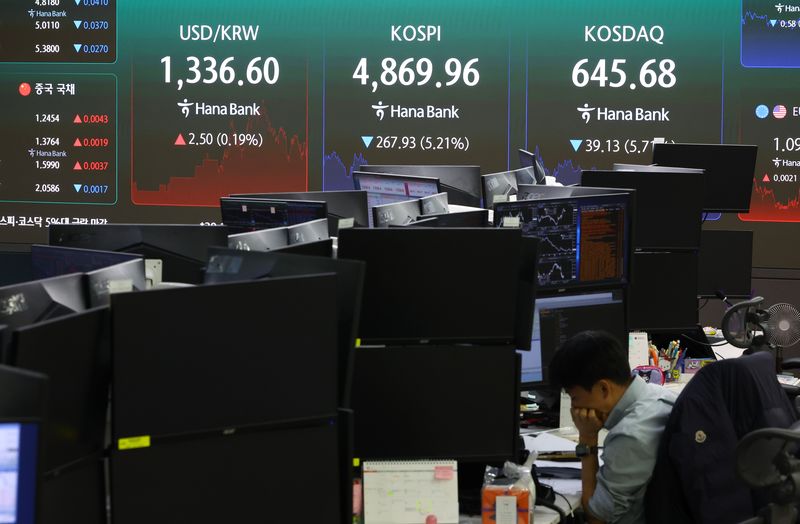
[Financial News] I believed that when stock prices fell, all I had to do was hold on. I was sure that good companies would eventually recover. So whenever prices were down, I bought a few more shares.
But when a market rout becomes the norm, the calculations change completely. At first, investors average down with spare cash, then with the money left in their accounts, but eventually they run out of money to buy more.
No matter how cheap stocks may look, you can’t pull the trigger without ammunition. Right now, that very ammunition is vanishing at an alarming rate from South Korea’s stock market.
More than 10 trillion won disappeared in just one week.
According to the Korea Financial Investment Association (KOFIA), investor deposits in South Korea’s stock market totaled 81.5669 trillion won as of the 19th. That was a sharp drop of 10.6678 trillion won (11.57%) from 92.2347 trillion won just a week earlier, on the 12th. In effect, an average of 1.52 trillion won in funds awaiting investment left the market each day.
Of course, the entire decline in deposits cannot be attributed to losses or investors leaving the market. Deposits also fall during the settlement process when shares are purchased.
But it is difficult to deny that the market’s “firepower” available for immediate additional buying has been depleted by more than 10 trillion won in a week.
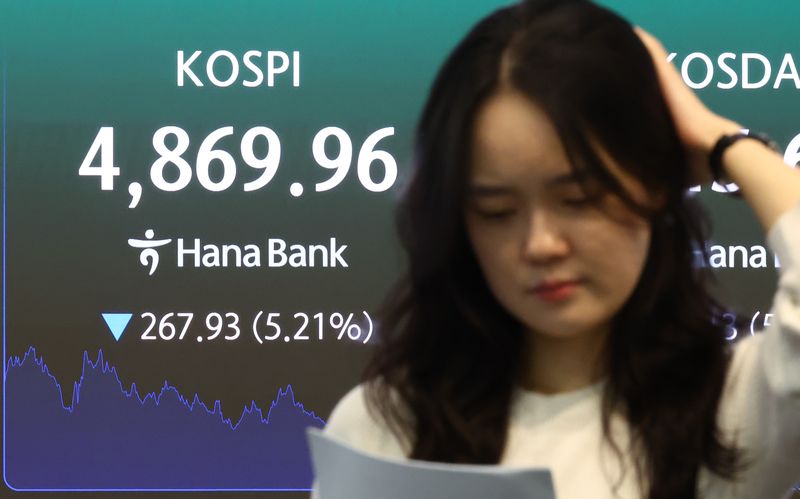
The irony is the aggressive buying by individual investors. On the 20th, the KOSPI plunged 5.21% (267.93 points) from the previous trading day to close at 4,869.96, falling below the 4,900 mark. Samsung Electronics (-7.01%) and SK hynix (-5.92%) tumbled, while foreign investors and institutions each offloaded around 1 trillion won worth of shares on the KOSPI.
By contrast, individual investors absorbed the selling, net-buying a whopping 1.8184 trillion won combined across the main board (1.5381 trillion won) and the KOSDAQ market (280.3 billion won).
With funds awaiting investment drying up quickly, questions are being raised about how much longer individual investors who have already put in large sums can hold out if prices fall further.
A more chilling figure than the depletion of cash is the balance of debt-financed investments. As of the 19th, outstanding margin loans totaled 26.0832 trillion won (20.2068 trillion won on the main board and 5.8764 trillion won on the KOSDAQ), while unsettled brokerage-trading balances amounted to about 970 billion won.
You can wait when stocks bought with your own money fall, but stocks bought with borrowed money don’t let you wait.
Suppose you put in 5 million won of your own money, borrow another 5 million won, and buy 10 million won worth of shares. If the share price falls 30%, the shares are worth 7 million won, but the 5 million won debt remains unchanged. Your net assets shrink to 2 million won, meaning 60% of your own initial capital is wiped out.
If the maintenance margin ratio also falls below the required level, forced liquidations by brokerage firms, can flood the market. The fuse for a brutal vicious cycle—market routs trigger forced liquidations, which in turn drive share prices lower—is embedded throughout the market in the form of 26 trillion won in margin debt.
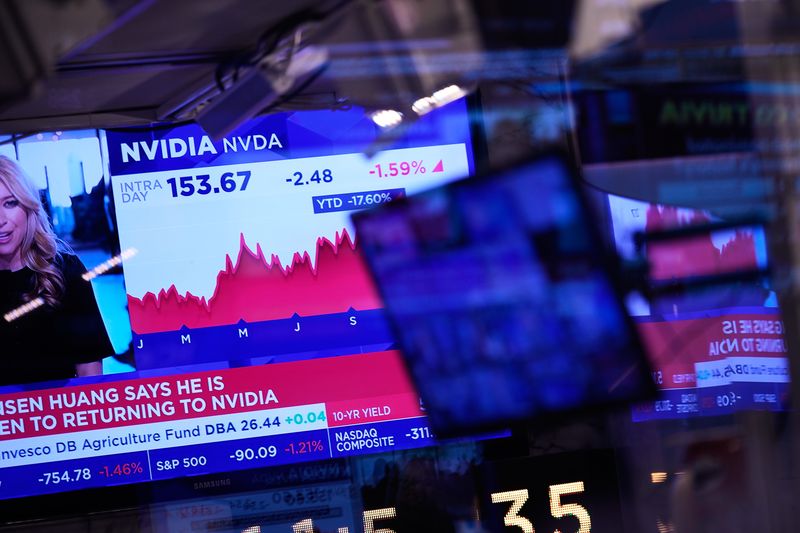
Adding to the woes, a major shock hit the New York stock market after trading closed in South Korea on the 20th. The Nasdaq index plunged more than 5%, and the PHLX Semiconductor Sector (SOX) fell more than 10%. Nvidia, a symbol of AI semiconductors, plunged 14.01% in a single day.
A second shock wave from the United States hit just after individual investors had poured in 1.8 trillion won. That is why investor anxiety is reaching a peak ahead of the market opening on Monday the 23rd.
Of course, losses on U.S. markets will not necessarily be replicated exactly in South Korea. Variables such as exchange rates and institutional investor flows remain.
But with investment firepower dwindling and debt-financed investment balances still high, Monday’s market is likely to become a test of the limits of supply and demand, going beyond simple fluctuations in the indexes.
The most frightening moment an investor faces in a market rout is not the day share prices hit bottom.
It is the moment my money to hold on runs out before share prices even reach the bottom.
This is even more true for ordinary households that have to stretch their salaries to cover living expenses, education costs, and loan principal and interest. Ten trillion won in funds awaiting investment vanished in a week. That cold figure is the most painful warning to us ahead of Monday’s market opening.
[email protected] Jeon Sang-il Reporter