Sprouts and Mold in Soybean Fields... Damage Estimated at 2,812 Hectares of Jeju Food Crops
- Input
- 2026-11-22 09:52:28
- Updated
- 2026-11-22 09:52:28
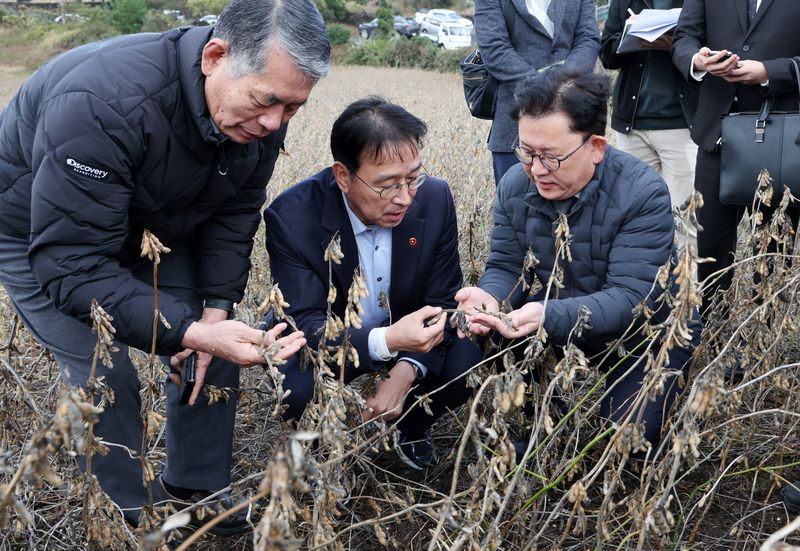
【Financial News, Jeju = Jeong Yong-bok, Reporter】 Frequent rain during the harvest season in Jeju is believed to have caused damage across 2,812 hectares of land planted with soybeans, buckwheat and mung beans. Wi Seong-gon, Governor of Jeju Province, and the head of the Rural Development Administration visited the affected areas, and the government has launched a joint inspection, but recognition as an agricultural disaster and the provision of national funding have yet to be decided.
Jeju Special Self-Governing Province said on the 22nd that Governor Wi visited a soybean farm in Donggwang-ri, Andeok-myeon, Seogwipo City, on the 19th with Lee Seung-don, Administrator of the Rural Development Administration, and Lee Han-yeol, head of Andeok Agricultural Cooperative, among others.
At the site, pre-harvest sprouting—in which seeds sprout inside soybean pods before harvest—as well as mold and discolored beans were observed. Farmers voiced concerns over harvest delays and difficulties getting lower-quality soybeans purchased.
One farmer said, “I’ve been farming for more than 40 years, but I’ve never seen damage this severe before,” adding, “Even after sorting the harvested soybeans, the amount we can sell as a marketable product has fallen sharply, leaving us in a difficult situation.”
Based on weather conditions and surveys of harvests and crop conditions by type, Jeju Province estimated the affected areas at 1,495 hectares of soybeans, 1,132 hectares of buckwheat and 185 hectares of mung beans. The figures have not been finalized through detailed surveys of individual farms, so the actual scale may differ.
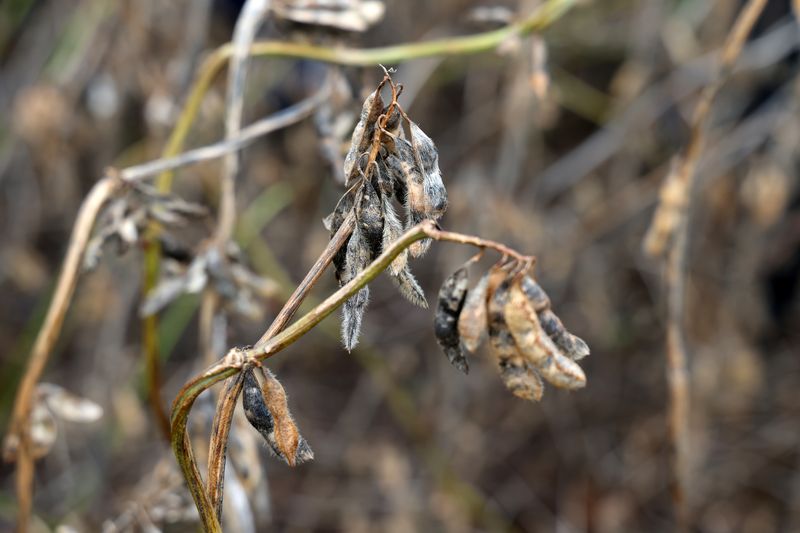
In particular, 2,492 hectares of the 4,229 hectares planted with soybeans for bean sprouts in Jeju remained unharvested as of the 19th. Jeju Province estimated that damage occurred across 1,495 hectares, about 60% of the unharvested area.
Jeju is a major producer of domestically grown soybeans for bean sprouts. If pre-harvest sprouting and mold reduce the beans’ marketability, this could affect not only farmers’ sales revenue but also the supply of domestically grown soybeans for bean sprouts.
Weather conditions during the harvest season also worsened. According to the Jeju Provincial Meteorological Administration, average cumulative precipitation at three locations—Jeju, Seongsan and Gosan—was 377.5 mm from October through mid-November, about 2.9 times the normal 131.8 mm. There were 22 rainy days, and the average temperature was 18.4°C, 1.3 degrees above normal.
Jeju Province believes repeated rainfall delayed mechanized harvesting and that persistent high humidity lowered crop quality.
Governor Wi said, “Since extreme weather cannot be prevented by human intervention, we need agricultural policies to respond to it,” adding, “We will work with relevant agencies, including the Rural Development Administration, to foster food crops suited to Jeju’s climate and growing conditions and to help diversify farmers’ sources of income.” He also stressed, “We need to improve processing facilities for local food crops such as buckwheat and create the conditions for agricultural products to receive a fair price.”
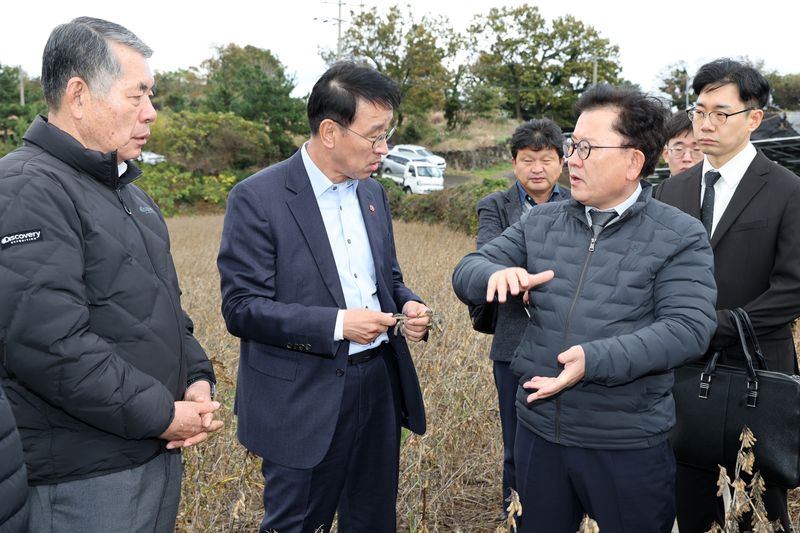
On the 19th, Jeju Province asked the Ministry of Agriculture, Food and Rural Affairs to recognize this case as an agricultural disaster eligible for government support. The following day, the ministry visited cultivated areas in Aewol-eup, Jeju City, and Andeok-myeon and Daejeong-eup, Seogwipo City, together with Jeju Province.
The joint inspection team examined pre-harvest sprouting and discoloration in the crops and reviewed weather and crop-condition data submitted by Jeju Province, along with the Rural Development Administration’s analysis of the causes. The government’s on-site inspection is a step in confirming the extent of the damage. Neither recognition as an agricultural disaster nor recovery-cost assistance has been finalized.
Jeju Province plans to determine the exact area of damage through reports from individual farms and on-site inspections. The Ministry of Agriculture, Food and Rural Affairs will review the inspection results and causes, then decide whether to provide national funding after completing the relevant procedures, including deliberation by the Agricultural Disaster Countermeasures Review Committee.
Kim Young-jun, head of Jeju Province’s Agriculture, Livestock and Food Bureau, said, “Farmers who have been unable to harvest on time and have suffered damage because of frequent rain during the harvest season are facing great difficulties.” He added, “We will work with the administrative cities to ensure that every affected farm can file a report, and actively consult with the Ministry of Agriculture, Food and Rural Affairs so that accurate damage assessments can underpin recognition of the case as an agricultural disaster and the provision of recovery support.”
The incident has also highlighted the challenges of adapting Jeju’s upland farming to extreme weather and stabilizing farm incomes. The immediate priorities are to determine the extent of the damage and whether the government will recognize it as a disaster; over the longer term, cultivation techniques suited to climate change and improvements to harvesting and processing facilities are needed.
[email protected] Jeong Yong-bok Reporter