“Samsung Electronics and SK hynix to Smile Next Year Too”... Why Moody’s Corporation Expects This
- Input
- 2026-11-22 08:22:50
- Updated
- 2026-11-22 08:22:50
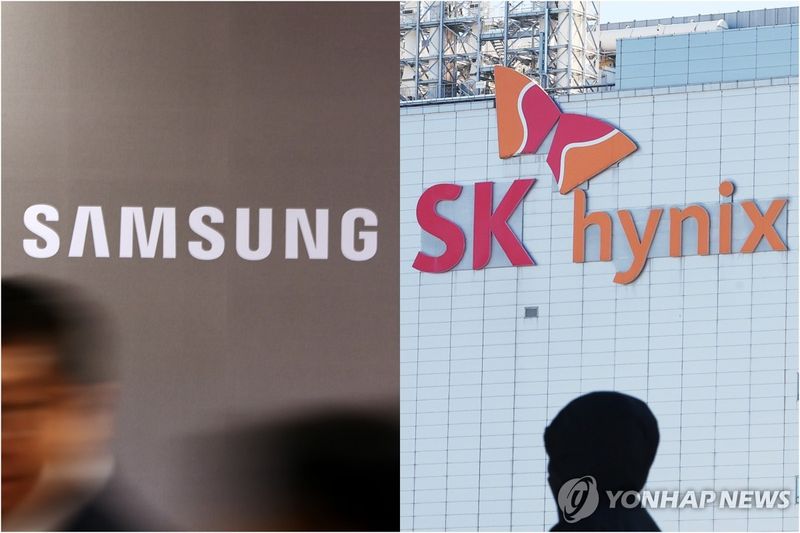
[Financial News] An international credit rating agency has projected that Samsung Electronics Co., Ltd. and SK hynix will continue to improve their performance next year, buoyed by growth in the artificial intelligence (AI) market. As AI-related investment expands, business opportunities are also expected to increase not only for semiconductor manufacturers but for companies involved in data center construction, power equipment and cooling systems.
According to sources in the financial investment industry on the 22nd, Moody’s Corporation said in its “2027 Asia-Pacific Non-Financial Corporates Credit Outlook” report, released on the 19th, that technology-related exports from South Korea would contribute to economic growth next year.
It rated the credit outlook for non-financial companies in the Asia-Pacific region, excluding Greater China, as “stable.”
Moody’s Corporation analyzed that the operating environment for memory semiconductor companies would remain favorable, as AI-related demand stays high while supply growth is limited. It also expected these market conditions to benefit suppliers of semiconductor equipment, materials and specialty chemical products.
It forecast that domestic memory semiconductor manufacturers, including Samsung Electronics Co., Ltd. and SK hynix, would maintain their growth next year as they expand production capacity for AI products and strengthen their competitiveness.
Moody’s Corporation said that improved performance at the two companies had also contributed significantly to the sharp rise in earnings among technology and technology equipment companies in the Asia-Pacific region this year.
Recent results from domestic semiconductor companies also support the growth driven by expanding AI demand.
Samsung Electronics Co., Ltd. announced on October 29 that its memory business had posted quarterly record highs in both revenue and operating profit in the third quarter of this year.
SK hynix likewise announced on October 28 that its third-quarter revenue and operating profit had each set quarterly records. It also said sales of sixth-generation high-bandwidth memory (HBM4) had expanded.
The benefits of increased AI investment are expected to spread beyond the semiconductor industry to related infrastructure sectors as well.
Moody’s Corporation also expects business opportunities to increase for suppliers of power grid equipment, electronic components and cooling systems, as well as for construction companies involved in building large-scale semiconductor plants and data centers.
Among them, Samsung C&T Corporation was identified as a leading company expected to benefit from increased demand for semiconductor plant and data center construction.
However, growth in AI-related industries is not expected to spread evenly across companies throughout the Asia-Pacific region.
Moody’s Corporation forecast that EBITDA at non-financial companies in the region would rise by about 12% in 2027, following a 53% increase this year.
By contrast, excluding the technology, media and telecommunications (TMT) sector, earnings growth is expected to slow from 8% this year to around 2% next year.
The financial burden of large-scale investment was also cited as a factor to consider.
Moody’s Corporation explained that although companies’ performance may improve, their credit quality will not necessarily strengthen, given the enormous sums needed to build semiconductor plants and data centers and the long time it takes to recoup those investments.
Funding conditions are also expected to affect companies’ credit quality. Moody’s Corporation said the risk of being unable to secure new funds when existing debt comes due is limited, but borrowing costs are expected to rise.
Accordingly, companies are expected to favor local bank loans or corporate bond issuance, which have lower funding costs than dollar funding markets.
[email protected] Han Seung-gon Reporter